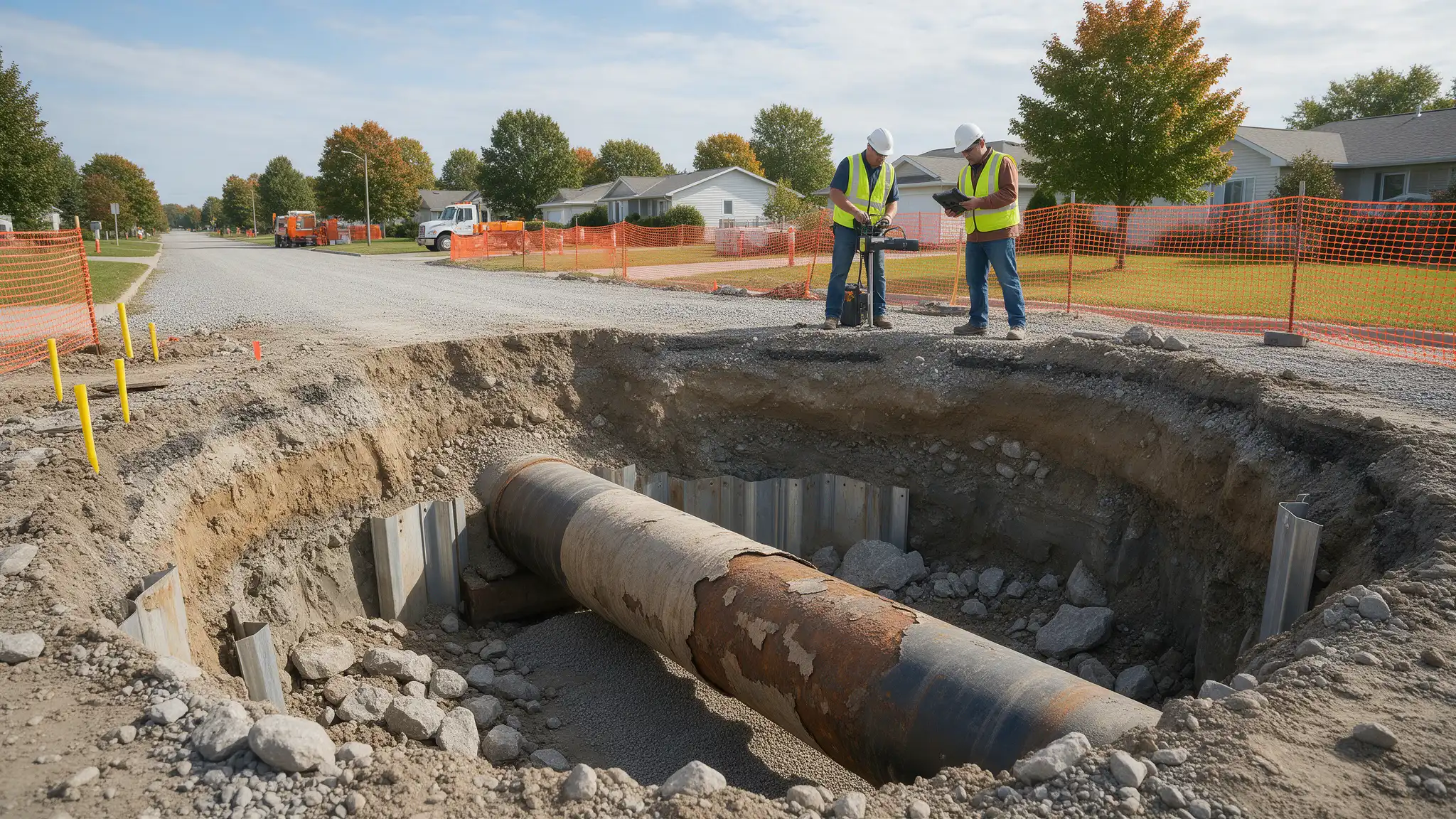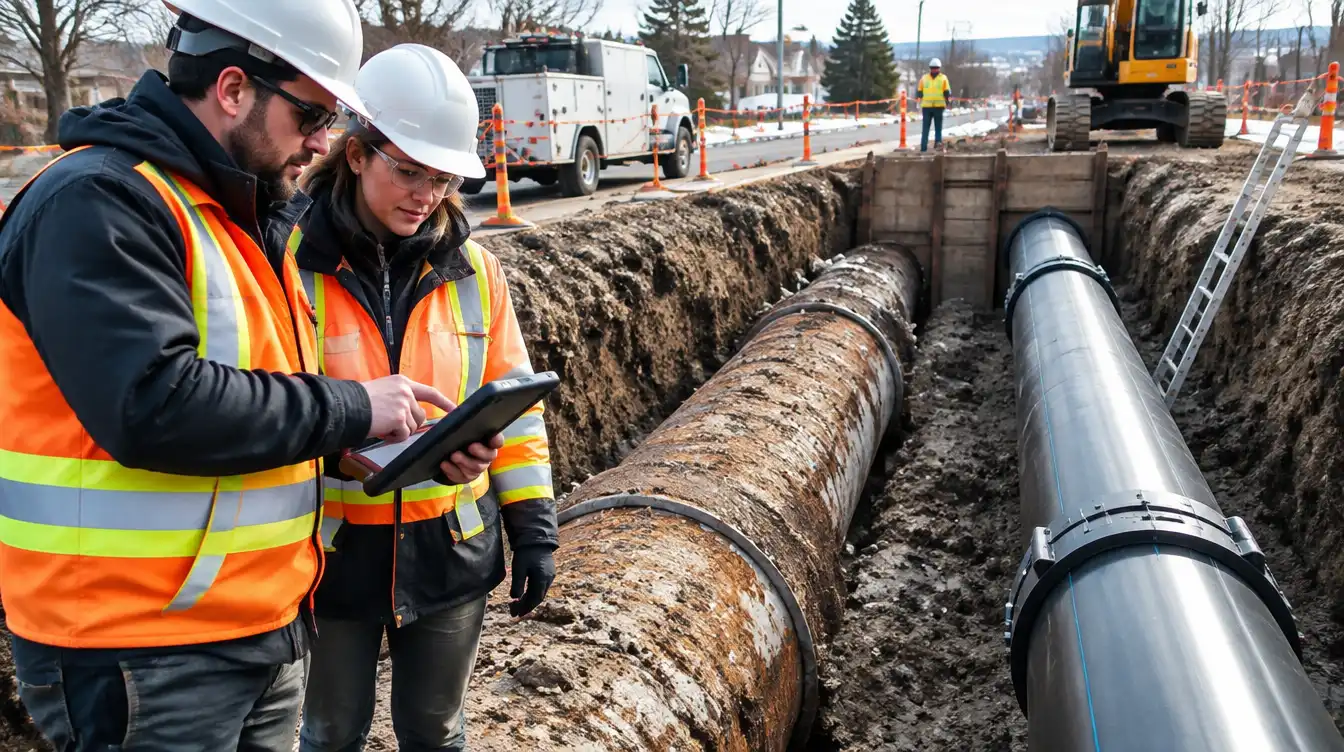
Choosing the right intervention by connecting pipeline condition, service risk, constructability, and lifecycle value.
Pipeline infrastructure renewal is rarely a simple choice between fixing a defect and installing a new pipe. A localized repair may restore service quickly, while rehabilitation can address broader deterioration with less disruption. In other cases, replacement is the only option that provides the required capacity, reliability, or design life.
The right decision depends on what is wrong with the pipeline, how the asset must perform, and what level of residual risk the owner can accept.
Start With the Failure Mechanism
Age alone does not determine the appropriate renewal strategy. The same symptoms can have very different causes, and an intervention that treats the visible defect may not address the underlying problem.
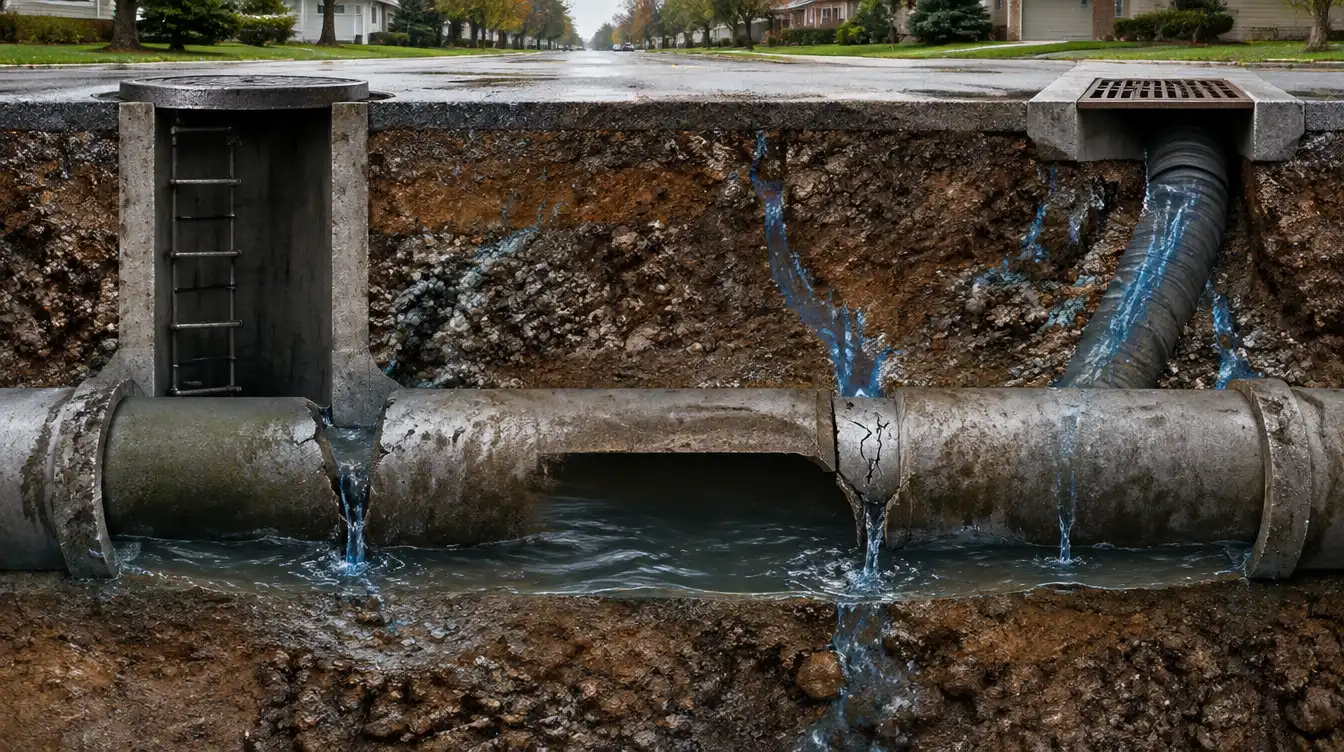
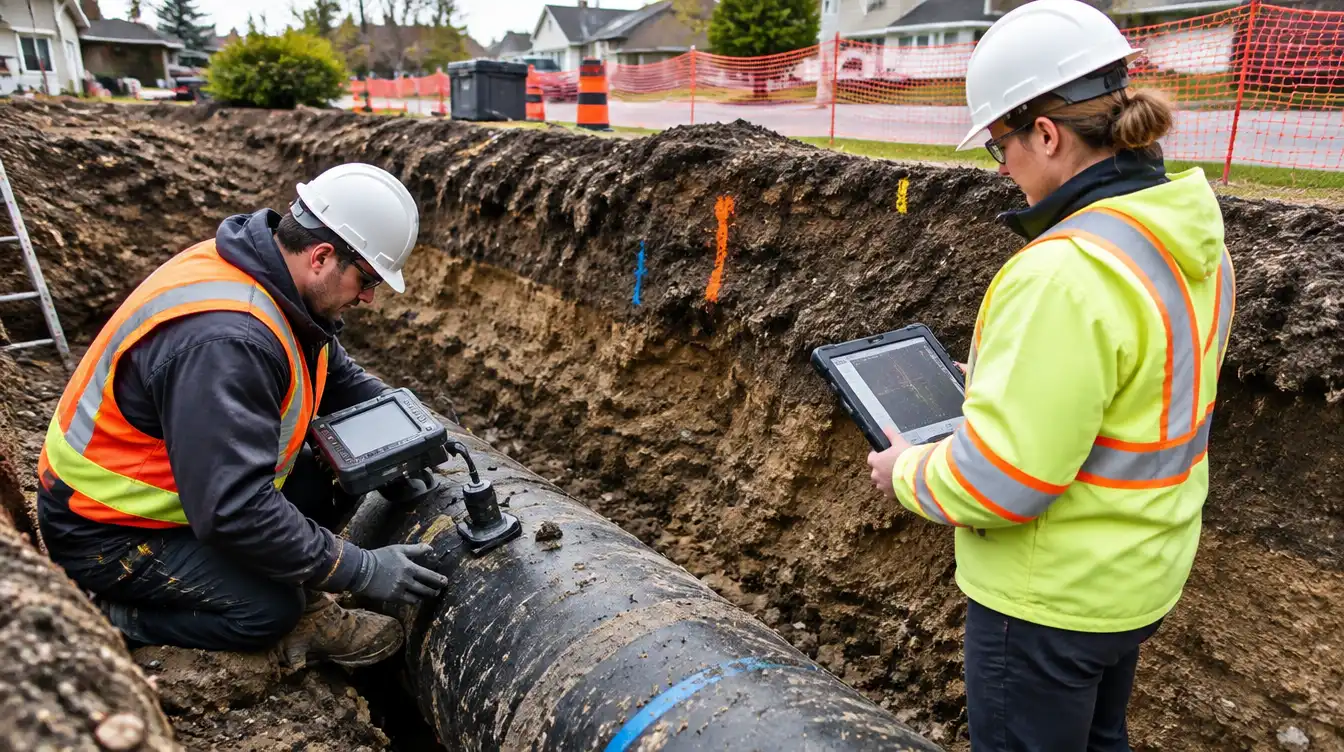
Owners should first identify credible failure mechanisms, such as internal or external corrosion, cracking, joint leakage, deformation, wall loss, erosion, hydraulic transients, ground movement, or inadequate capacity. Records, operating data, failure history, inspection results, and targeted field investigations help establish whether deterioration is isolated or system-wide.
The level of investigation should match the consequence of making the wrong decision. Critical pipelines generally warrant more evidence before a major capital commitment is made.
When Repair Is Appropriate
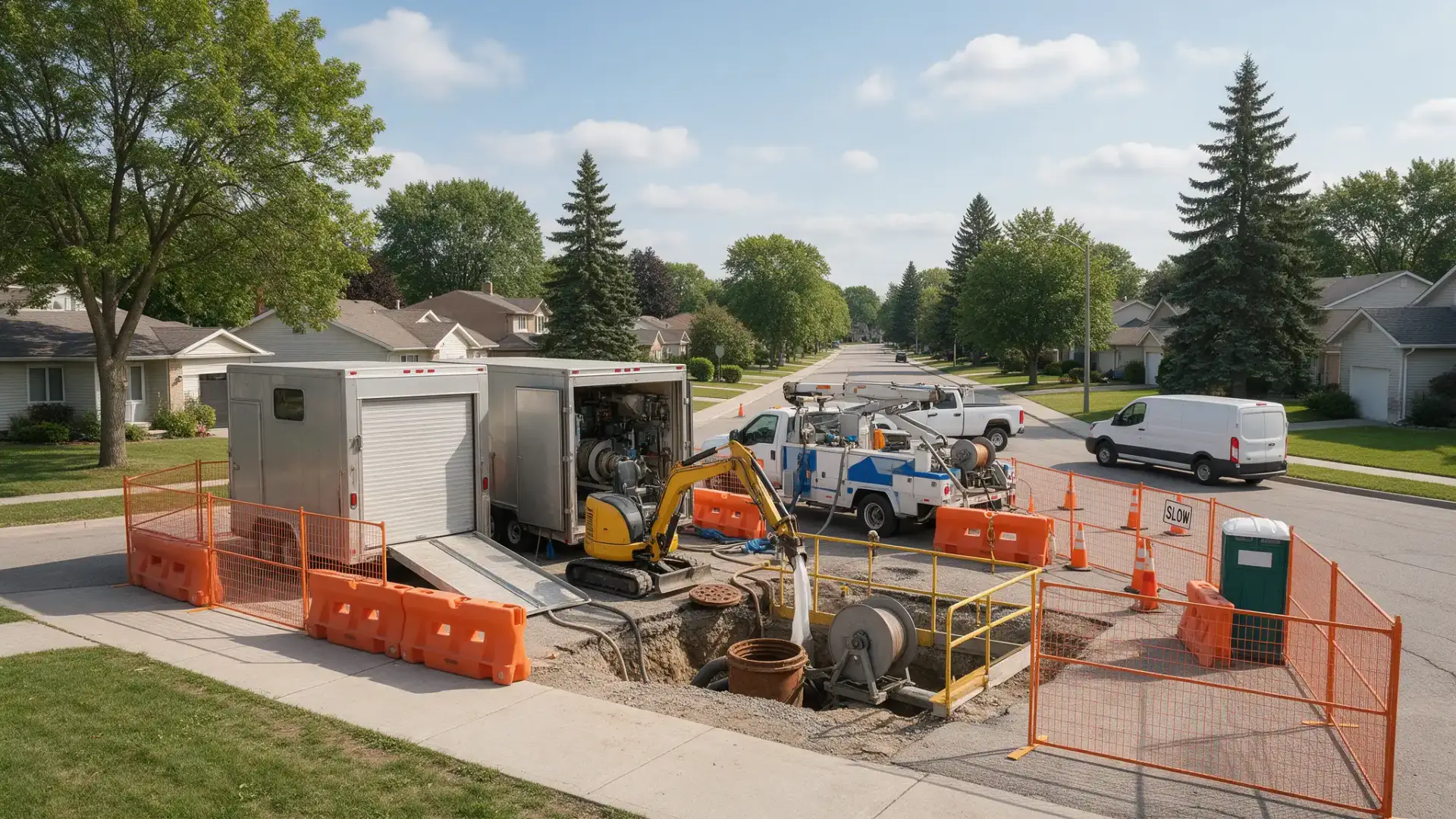
Repair is usually best suited to a defined defect or short section where the surrounding pipeline remains serviceable. Examples include replacing a damaged fitting, installing an engineered repair system, sealing a leaking joint, or renewing a short section around a localized failure.
Repair can be practical when the cause is understood, the defect is accessible, and the completed work restores acceptable performance. It becomes less effective when failures recur, deterioration is distributed, or repeated excavations create rising costs and service disruption.
A repair should therefore be treated as an engineered intervention, not automatically as a long-term solution.
When Rehabilitation Provides Better Value
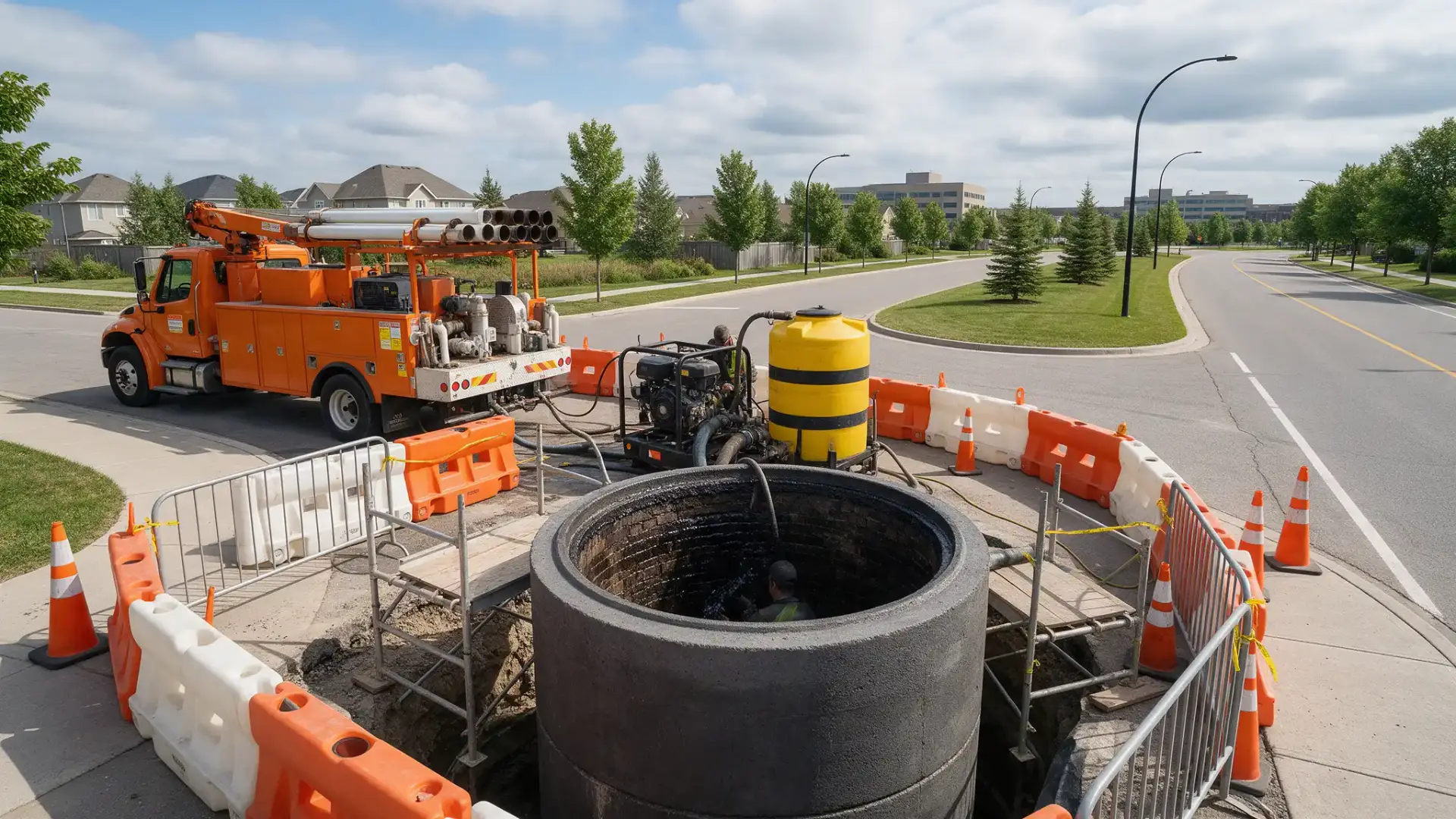
Rehabilitation improves or restores an existing pipeline while retaining some or all of the host asset. Depending on the system, options may include structural or non-structural lining, sliplining, close-fit lining, coatings, cathodic protection upgrades, or sectional renewal.
It may offer strong lifecycle value when deterioration extends beyond one defect but the alignment remains suitable. Rehabilitation can reduce excavation, traffic impacts, restoration work, and construction time.
However, each technology has limits. The host pipe’s geometry, remaining strength, connections, bends, access, hydraulic capacity, and deterioration mechanism must be compatible with the proposed system. A lining that improves corrosion resistance, for example, may not provide independent structural capacity.
When Replacement Is Justified
Replacement becomes more appropriate when the pipeline cannot reliably meet future service requirements or when repair and rehabilitation leave unacceptable risk.
Common drivers include widespread structural deterioration, insufficient capacity, incompatible materials, poor alignment, repeated failures, major ground movement, or the need to change pressure class or operating configuration. Replacement may also create opportunities to improve access, isolation, redundancy, monitoring, and future maintainability.
Although replacement usually has the highest initial cost and disruption, it can provide the best long-term outcome when other options only defer an unavoidable project.
Compare Risk and Lifecycle Value
Renewal options should be compared using more than construction cost. Owners should consider design life, residual risk, future inspection and maintenance, shutdown requirements, environmental and community impacts, permitting, contractor availability, and coordination with roads or other utilities.
The preferred option should provide acceptable service at the lowest justified lifecycle cost—not simply the lowest tender price.
An Integrated Approach
At Avodahtec, we support pipeline infrastructure renewal through condition assessment, failure-mechanism evaluation, risk analysis, rehabilitation and replacement options, constructability review, and lifecycle costing.
By connecting technical evidence with operational priorities and capital planning, we help owners choose interventions that are practical, defensible, and aligned with long-term service needs.
Conclusion
The decision to repair, rehabilitate, or replace should begin with a clear understanding of condition, failure mechanism, and consequence of failure.
Targeted repairs can resolve isolated problems, rehabilitation can extend the life of suitable assets, and replacement can reset performance where deterioration or service limitations are no longer manageable. A disciplined pipeline infrastructure renewal process helps owners invest at the right time and avoid premature replacement and repeated short-term fixes.