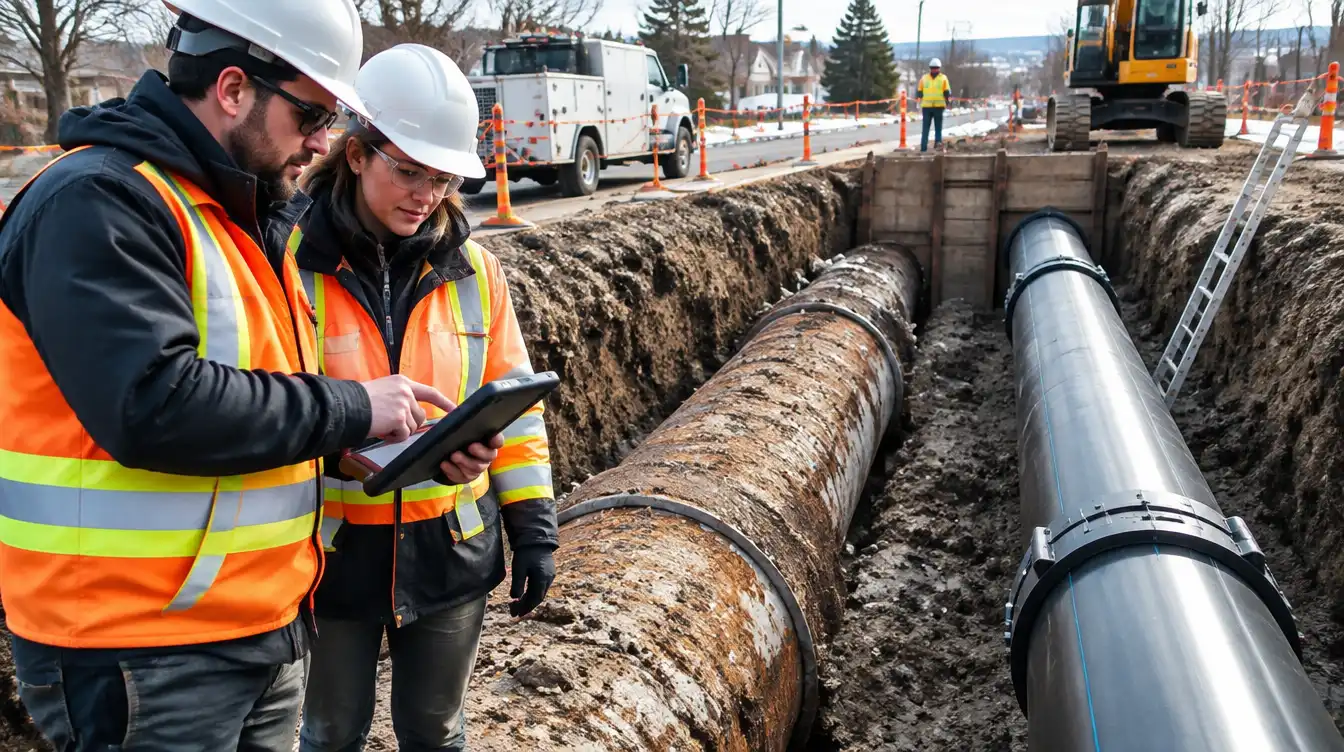
Many aging pressurized and sewer pipes can be rehabilitated rather than replaced. Where technically suitable, rehabilitation can reduce excavation, surface restoration, and disruption. The appropriate investment depends on the asset’s condition, hydraulic requirements, failure consequences, and whole-life cost.
This guide walks through how that decision is made, why replacement carries the costs it does, and which trenchless methods can extend asset life while limiting excavation.
What pipe rehabilitation actually means
Pipe rehabilitation improves the performance or extends the service life of an existing pipe. Depending on the method, it can address leakage, internal deterioration, or structural deficiencies while limiting excavation.
Structural lining can provide a new load-carrying pipe within the existing pipe. Protective coatings and sealing treatments serve different purposes. The required design life and performance must be established for the selected system and project conditions.
Asset renewal options range from localized repairs to rehabilitation and full replacement. Repairs address specific defects, rehabilitation improves the existing asset, and replacement installs a new pipe through open-cut or trenchless methods. These approaches can also be combined—for example, by correcting a localized defect through excavation before lining the remaining pipe.
This guide focuses on choosing between trenchless rehabilitation and replacement, including circumstances where trenchless replacement is feasible.
Rehabilitate or replace? The factors that decide
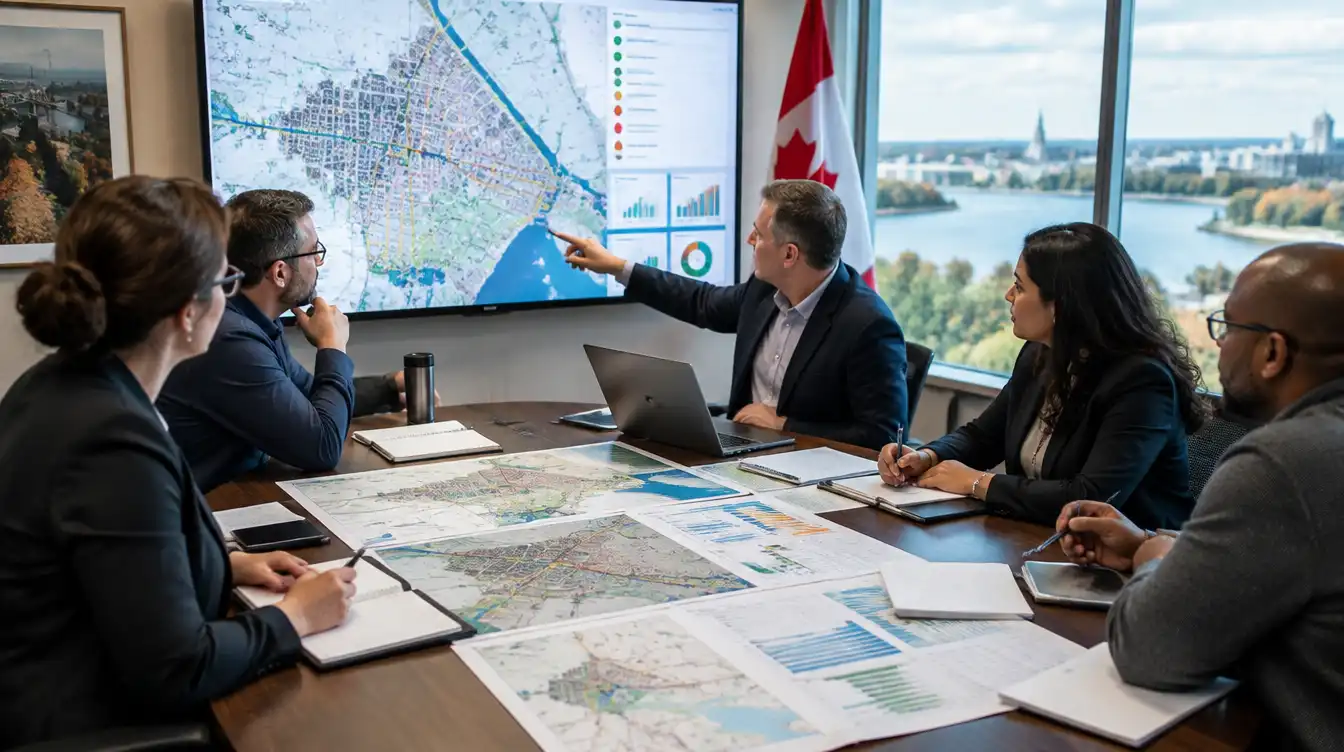
No single rule determines when to rehabilitate or replace a pipe. A practical municipal example is Avodahtec’s Storm Sewer Condition Assessment & Rehabilitation Analysis, where condition data supports rehabilitation planning and renewal decisions. The decision depends on several factors, and the right answer can change from one pipe segment to the next.
Structural condition. Start by identifying the deterioration mechanism and the extent of damage. Significant host-pipe deterioration does not automatically rule out structural lining.
However, collapse, severe deformation, or installation constraints may require preliminary repairs or replacement. The assessment must also distinguish treatments that rely on the existing pipe’s strength from systems designed to carry loads independently.
Remaining service life and capacity. A deteriorated pipe may still be suitable for lining if the proposed system meets structural and hydraulic requirements.
Lining reduces internal diameter, while changes in surface roughness can affect flow capacity. Hydraulic assessment should confirm performance under current and projected conditions. If more capacity is needed, options may include upsizing, a parallel pipe, or other system improvements.
Geometry and ground support. Lining generally follows the existing pipe profile and does not correct significant sags, adverse grades, or ongoing settlement. These conditions may require localized excavation, ground stabilization, or replacement before other rehabilitation work can proceed.
Cost and disruption. Rehabilitation can offer cost advantages where excavation, traffic management, and surface restoration would otherwise be extensive. Replacement can become more economical when coordinated with road reconstruction or other utility work, because some costs can be shared. Both options should be compared on total project cost, expected service life, future maintenance, and residual risk.
Risk and criticality. A trunk main under a hospital corridor or a highway is treated differently from a low-consequence residential branch. Higher failure consequences can justify more detailed investigation, stronger verification requirements, and additional measures to maintain service. The preferred option must reduce risk to a level acceptable to the owner, whether through rehabilitation or replacement.
Alignment with other work. If water, sewer, and road work can be coordinated, replacement economics improve. Where coordination is not practical, trenchless rehabilitation may reduce disturbance to recently restored surfaces and existing infrastructure.
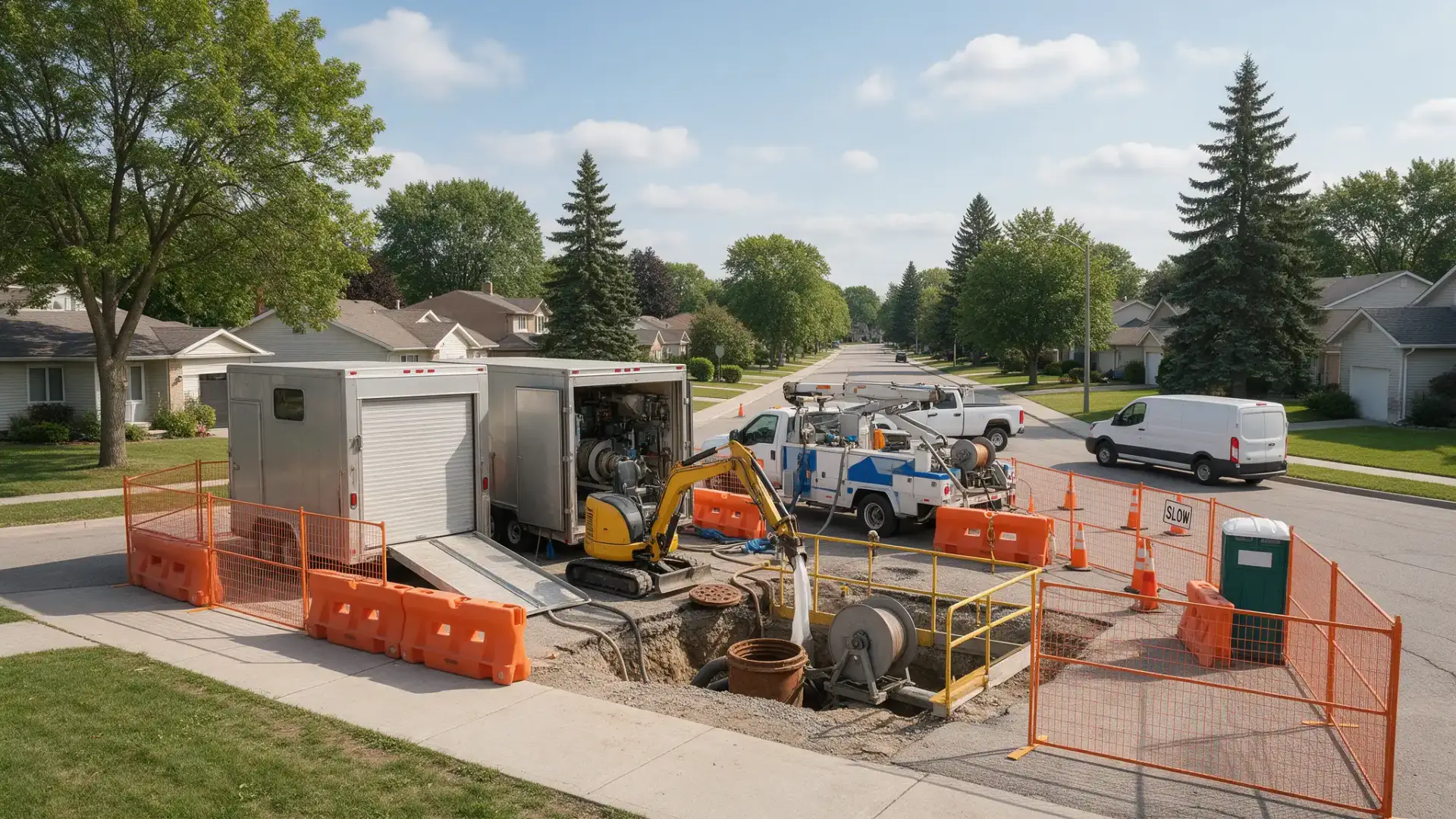
Constructability and service continuity. Access, cleaning requirements, service connections, nearby utilities, and the ability to isolate the pipe can determine which methods are practical. Wastewater bypass pumping or temporary water supply may be needed and should be included in the assessment and cost comparison.
Why sewer and watermain replacement is so expensive
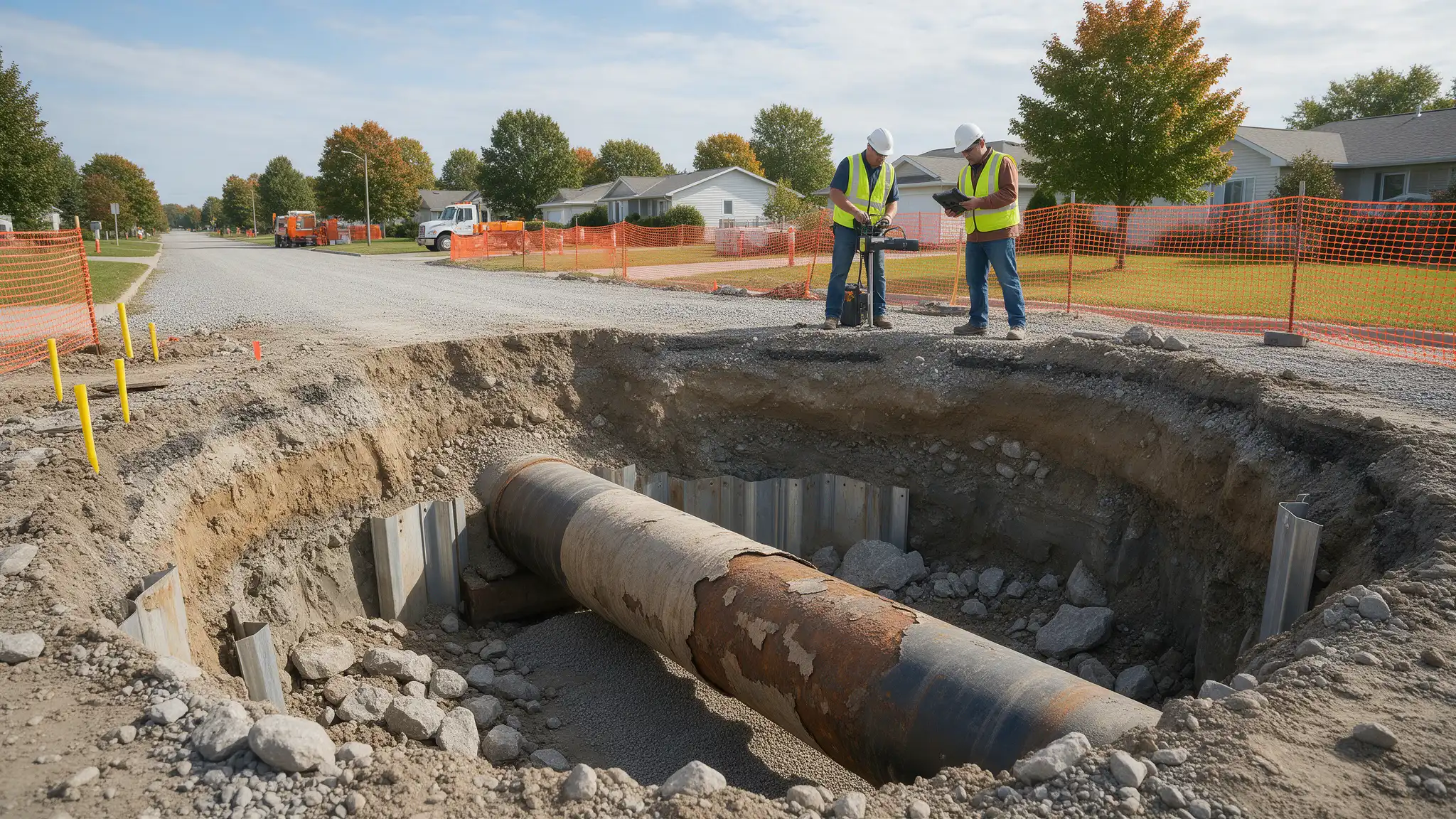
The cost of open-cut replacement extends well beyond supplying the new pipe. Excavation, temporary works, service continuity, and surface restoration can account for a substantial share of the budget.
Several factors can drive up open-cut replacement costs:
- trench depth and ground conditions;
- groundwater and dewatering;
- shoring, bedding, backfill, and compaction;
- nearby utilities and other infrastructure; and
- surface restoration such as roads, curbs, and landscaping.
Sewer mains can sit several metres below the surface, which makes excavation and temporary works especially significant.
Beyond the direct construction cost are the social costs that rarely appear on the invoice but are very real. Lane closures and detours cost the travelling public time and fuel. Local businesses may experience reduced access and revenue during construction. Utilities have to be located and protected, and unexpected conflicts underground can cause delays and additional costs.
Trenchless rehabilitation can reduce these impacts by limiting excavation and restoration. However, it still requires allowances for investigation, cleaning, access, preparatory repairs, bypass pumping or temporary supply, service reconnections, inspection, and testing. A fair comparison includes these activities for each option, together with design, construction administration, contingency, and future maintenance.
Trenchless rehabilitation methods, compared
Trenchless renewal includes several rehabilitation techniques as well as replacement methods such as pipe bursting. The right approach depends on pipe material, diameter, condition, geometry, operating requirements, and whether the goal is structural renewal, corrosion protection, leakage reduction, or additional capacity.
Cured-in-place pipe (CIPP). A resin-saturated liner is inserted into the host pipe and cured in place. Depending on the system, curing may use hot water, steam, or ultraviolet light.
CIPP can provide structural renewal for suitable sewer and stormwater applications. Performance depends on material selection, structural design, installation controls, and verification of the completed liner. Ends and service connections also need appropriate detailing.
Slip lining. A new pipe of smaller diameter is pulled or pushed inside the old one, and the gap is typically grouted in accordance with the design. Suitability depends on installation access, pipe geometry, structural requirements, and whether the resulting internal diameter provides adequate hydraulic capacity.
Pipe bursting. Rather than lining the old pipe, a bursting head fractures it outward while pulling a new pipe into the same path. This is a trenchless replacement method that can also permit upsizing where conditions allow. Feasibility depends on the existing pipe material, ground conditions, cover, nearby utilities, and acceptable ground movement. Access excavations and service reconnections may still be required.
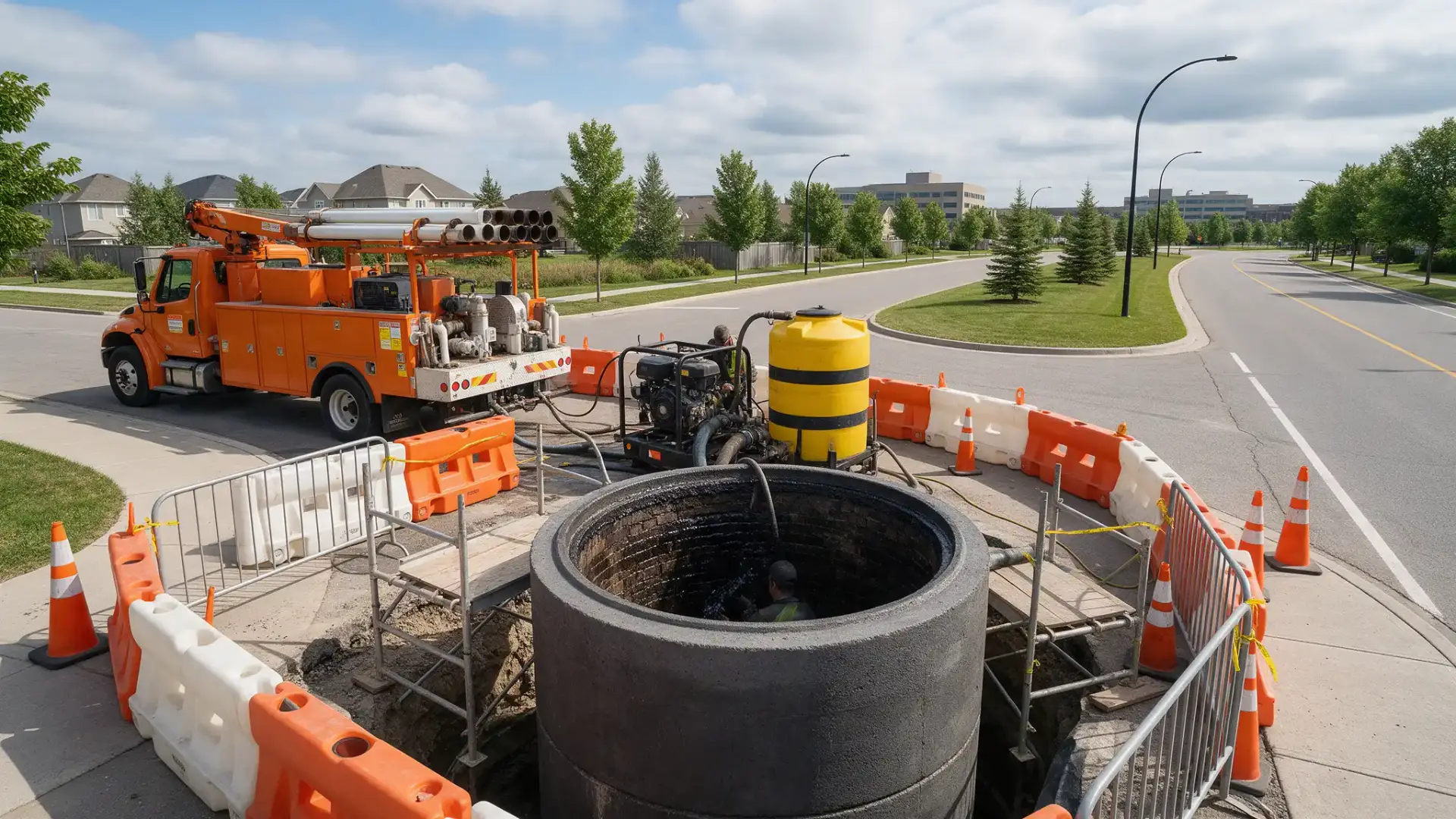
Manhole rehabilitation. Manholes can deteriorate through corrosion, infiltration, and structural damage. Rehabilitation may include leakage sealing, substrate repairs, protective coatings, or structural lining. Epoxy coatings and cementitious or geopolymer systems have different capabilities; structural restoration should only be claimed where the selected system is designed and verified for that purpose.
Pressure-pipe applications require additional considerations. Rehabilitation of watermains and wastewater forcemains must address operating and surge pressures, the structural role of the lining system, connections, and terminations. Potable-water applications also require materials suitable for drinking-water contact and appropriate cleaning, disinfection, testing, and return-to-service procedures. A system suitable for a gravity sewer is not automatically suitable for a pressure main.
Each method has a right place and a wrong place. Because Avodahtec does not install or sell any one of these systems, our recommendation is driven by your pipe’s condition and your budget, together with performance requirements, constructability, and risk. That independence allows feasible options to be evaluated against the same technical and economic criteria.
Assess condition before you decide
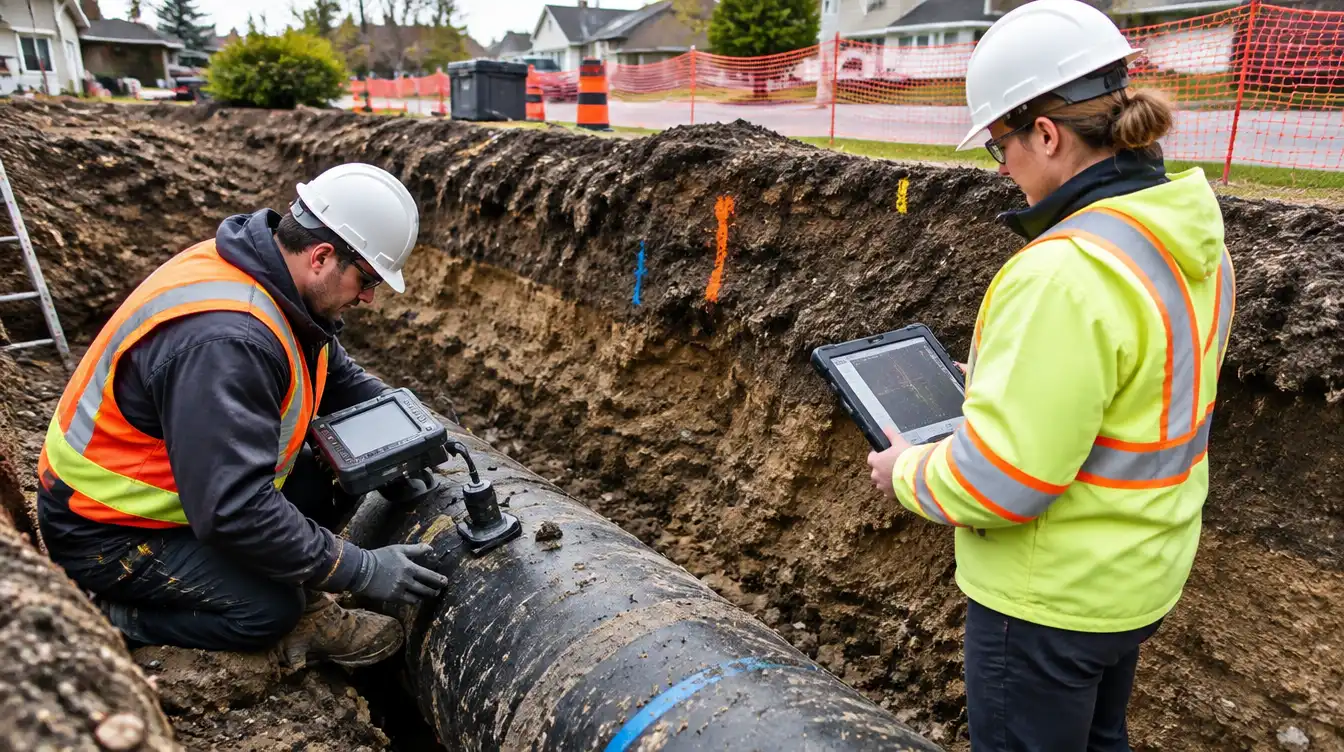
The rehabilitate-or-replace decision is only as good as the condition data behind it. The assessment should combine available records, operating history, and targeted investigation, with the level of detail matched to the decision and the consequences of failure.
CCTV inspection. A camera travels through the pipe and records visible defects, joint condition, and intrusions. Standardized coding supports consistent recording and comparison of observed conditions across a network. However, CCTV alone does not establish remaining wall thickness, external deterioration, structural capacity, or remaining service life. Cleaning, visibility, inspection coverage, and coding quality affect the reliability of the findings.
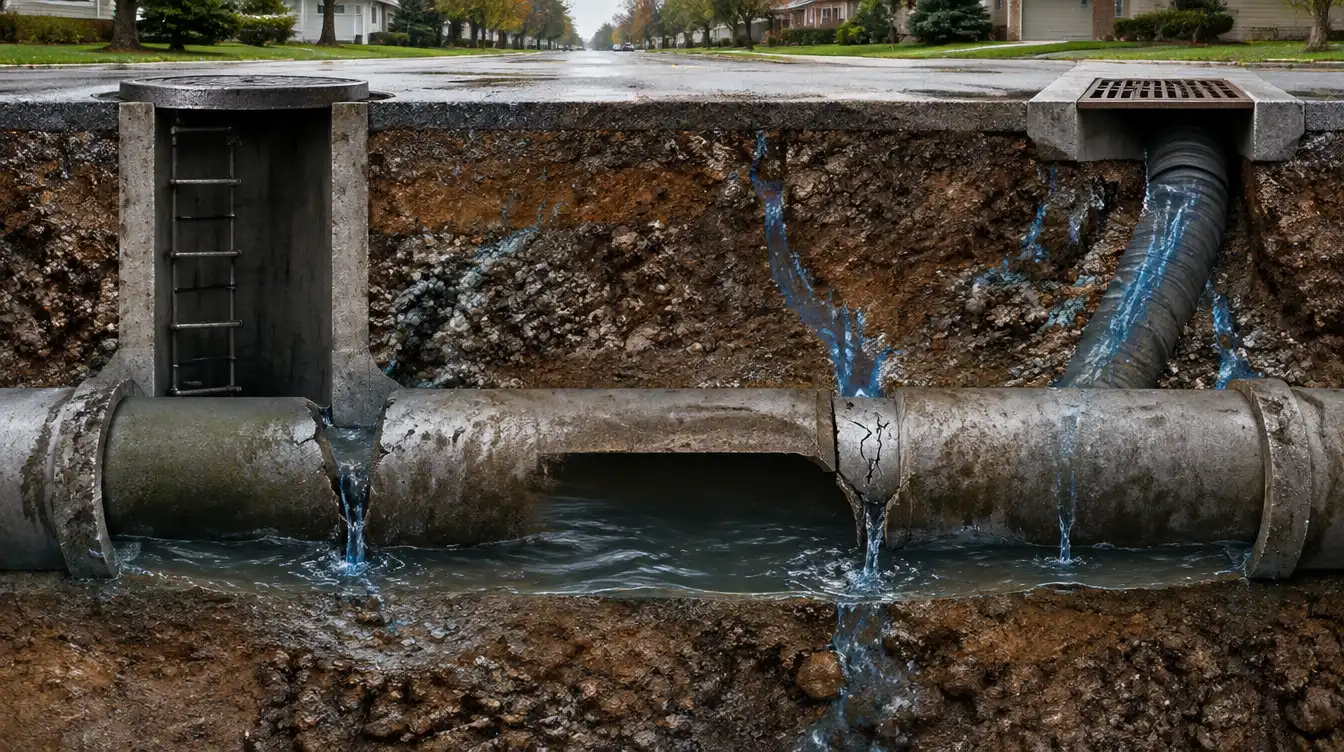
Inflow and infiltration assessment. Inflow and infiltration (I&I) are sources of unwanted water entering sanitary sewers. Infiltration commonly enters through defective pipes, joints, and connections. Inflow enters through direct pathways such as connected drains or manhole openings.
These flows can consume collection and treatment capacity and contribute to surcharge or overflow. Investigation should identify contributions from mains, laterals, and manholes so that improvements target the actual sources.
Structural and material testing. Depending on the pipe material and expected deterioration mechanisms, assessment may include wall-thickness measurement, corrosion investigation, material testing, or other specialized techniques. Leak detection can help locate leakage but does not independently establish structural adequacy. Additional investigation should address uncertainties that could change the rehabilitation or replacement decision.
Together, these findings support a defensible engineering decision and a clearer capital-budget justification, with the assumptions, uncertainties, and investigation limitations identified.
How to prioritize rehabilitation across an aging network
Choosing the right intervention for one pipe is a technical decision. Choosing which pipes to fund first, across an entire aging network on a limited capital budget, is a strategic one.
The goal is to move from reactive spending to a planned program that targets the right assets at the right time.
Prioritization should consider:
- condition information;
- failure history and operating conditions;
- likelihood and consequences of failure;
- achievable risk reduction;
- service benefits and whole-life cost; and
- opportunities to coordinate work.
A low-consequence pipe in poor condition may therefore have a different priority from a critical pipe in fair condition.
Done well, this helps owners allocate available funding and reduce the likelihood and consequences of unplanned failures. Priorities should be updated as new inspection findings, operating information, and project opportunities become available.
How Avodahtec helps, from assessment to construction
Avodahtec is an independent engineering advisor, not a contractor, and for owners that independence matters at every stage.
We start with condition assessment and engineering advisory: evaluating available information, identifying investigation needs, assessing condition, and recommending appropriate repair, rehabilitation, or replacement options. Because we are method-agnostic, our recommendations consider technical suitability, budget, service requirements, and risk.
From there we can carry the project forward as far as you need. That includes design and engineering support, project and construction management, and support through the tender process. As prime consultant, we can coordinate the engineering team and support tender preparation, bid evaluation, contract administration, and construction oversight, in accordance with the owner’s procurement process and our agreed scope.
Rehabilitation specifications should establish material requirements, installation controls, inspection, testing, and acceptance criteria appropriate to the selected method. These requirements help connect the assessment and design objectives to the quality of the completed work.
We help owners identify appropriate interventions, document the basis for their decisions, and carry those decisions through design and construction.
Frequently asked questions
Is pipe rehabilitation cheaper than replacement?
It can be, particularly where open-cut replacement would involve extensive excavation, traffic management, and restoration. However, access, preparation, bypass requirements, service reconnections, and expected service life can change the comparison. Replacement may be more economical when coordinated with other infrastructure work or when rehabilitation cannot meet the required performance.
How long does a rehabilitated pipe last?
Structural lining systems may be designed for a 50-year service period, depending on the system and project requirements. This is a design basis, not a guarantee of actual life. Performance depends on materials, design, installation quality, operating conditions, and maintenance. Other rehabilitation treatments may have different service-life expectations.
Can any pipe be rehabilitated?
No. Collapse, severe deformation, significant sags, unstable ground, inadequate capacity, or installation constraints may require repairs or replacement. However, substantial host-pipe deterioration does not automatically rule out structural lining. Condition assessment, hydraulic evaluation, and constructability review establish which options are feasible.
What is the difference between pipe lining and pipe bursting?
Lining installs a system inside the existing pipe to provide the required rehabilitation function, with some reduction in internal diameter. Pipe bursting replaces the existing pipe along its route and may permit upsizing where ground conditions, nearby utilities, and other constraints allow. Both approaches can limit excavation, but access and connection work may still require digging.
Does Avodahtec install the rehabilitation?
We assess assets, recommend suitable options, and can provide design, tender support, contract administration, and construction oversight within our agreed scope. Installation is performed by a qualified contractor, with inspection and acceptance requirements established for the selected system.
Book a free consultation
Whether to rehabilitate or replace an aging pipe is a decision that rewards good data and sound engineering judgment. If you are weighing that decision on your own network, an initial conversation can help identify the information needed and the options worth investigating.
Book a free consultation with Avodahtec to discuss your asset concerns, available information, and next steps for evaluating repair, rehabilitation, or replacement.