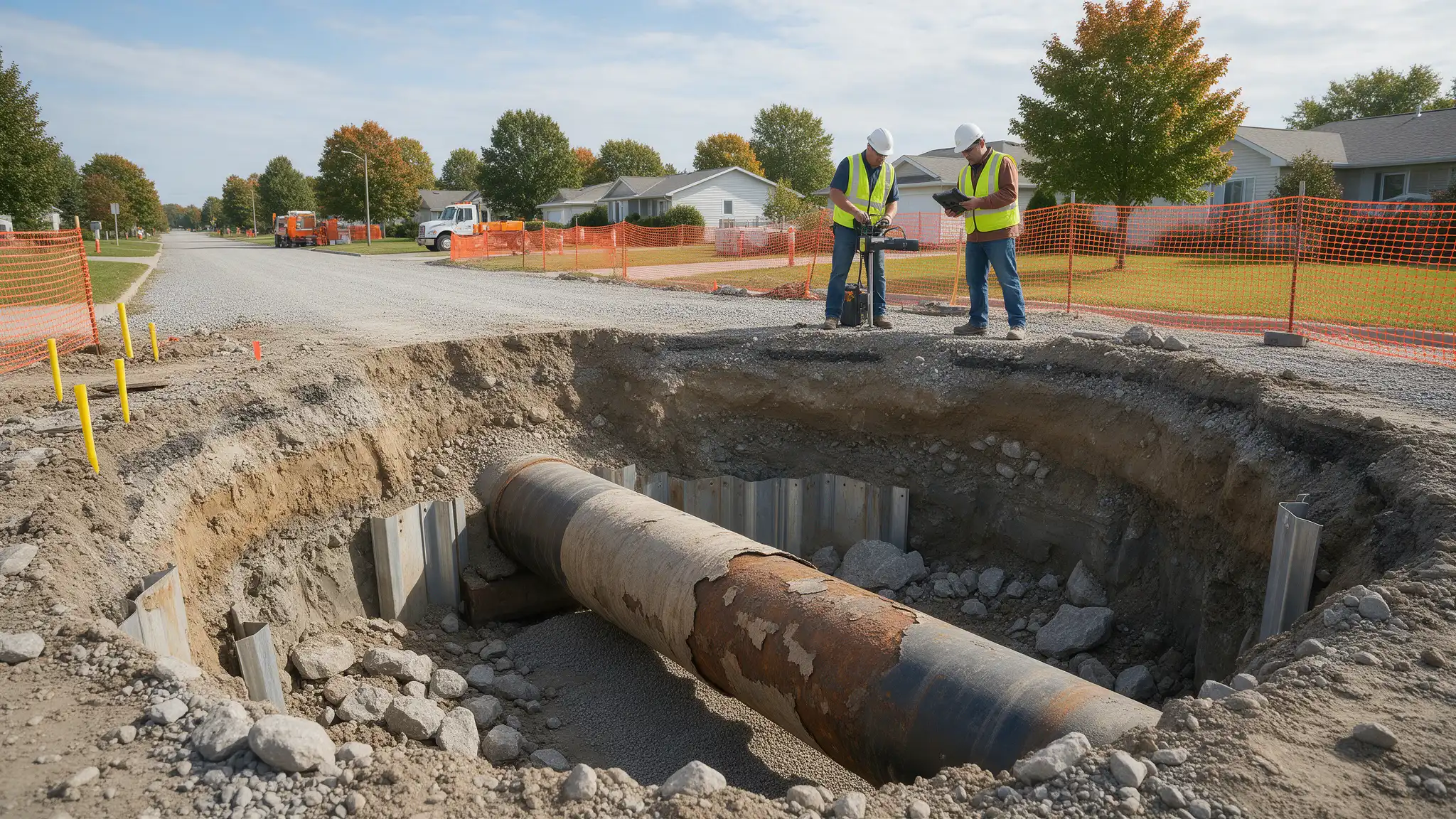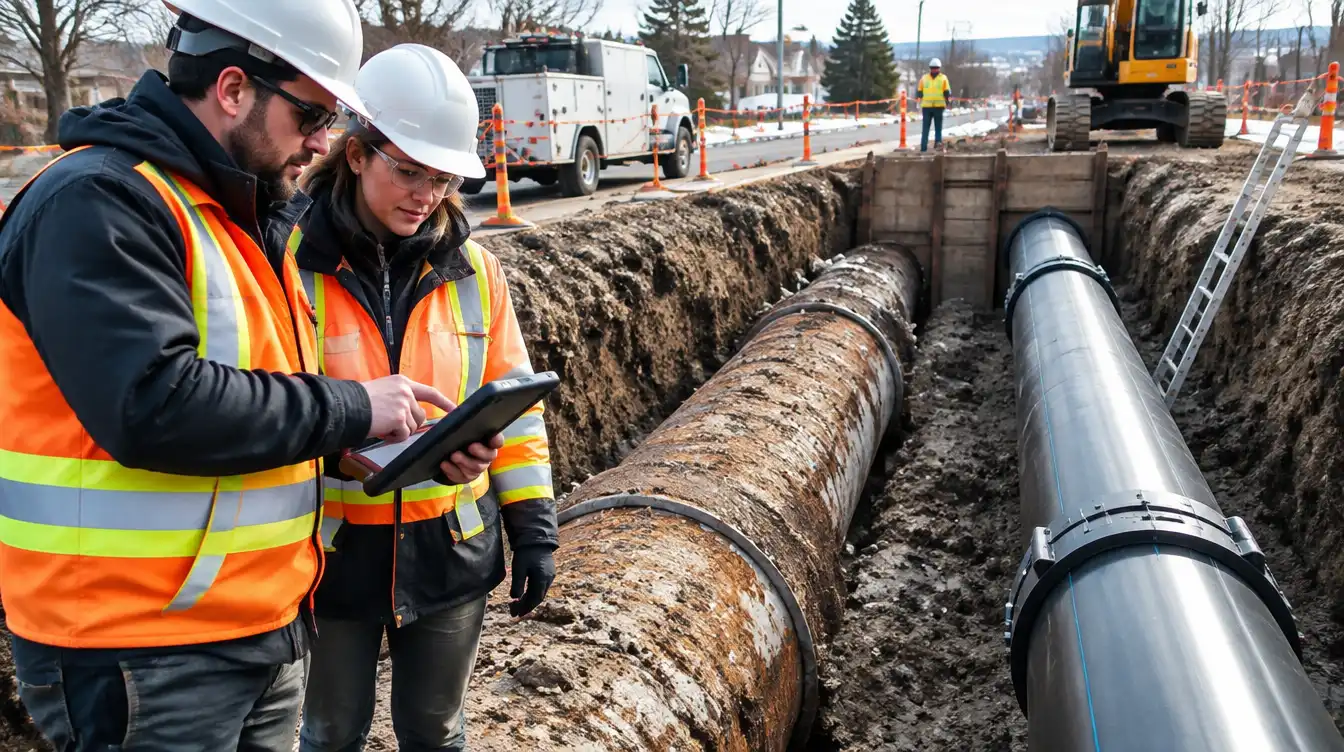
Designing reliable treated-effluent pipelines and outfalls around hydraulic performance, environmental protection, constructability, and long-term operation.
Effluent pipelines convey treated wastewater to a receiving environment, reuse system, or storage facility. Although treated, the pipeline remains critical infrastructure: failure can interrupt plant operation, cause an unintended release, or prevent compliance with approval requirements.
Effluent pipeline design in Canada must therefore connect process, hydraulic, civil, geotechnical, environmental, and operational requirements from the beginning.
Establish a Complete Design Basis
The design basis should define average, minimum, and peak flow; effluent quality; temperature; solids or gas potential; operating levels; pressure; route; receiving environment; design life; and future expansion.
It should also identify startup, shutdown, maintenance, emergency, and power-loss conditions. A pipeline sized for only one flow may perform poorly at low flow or during a pump trip.
Confirm the discharge location and regulatory conditions early because they affect alignment, hydraulics, outfall configuration, monitoring, and construction timing.
Hydraulic and Transient Design
Gravity systems require suitable grade, capacity, and control of sediment or gas accumulation. Pumped systems require coordinated pipe, pump, operating-level, and control decisions.
Hydraulic analysis should consider headloss, minimum and maximum velocities, air release, vacuum conditions, siphoning, surge, and the interaction between parallel units or future flows. Transient analysis may be needed to evaluate pump trips, rapid valve movement, check-valve response, and power failure.
Protection may include controlled valve operation, air and vacuum valves, surge vessels, flywheels, bypasses, or other measures selected for the actual system response.
Material and Structural Performance
Material selection should consider effluent chemistry, abrasion, temperature, pressure, external loading, groundwater, corrosion, ultraviolet exposure, installation method, and required design life.
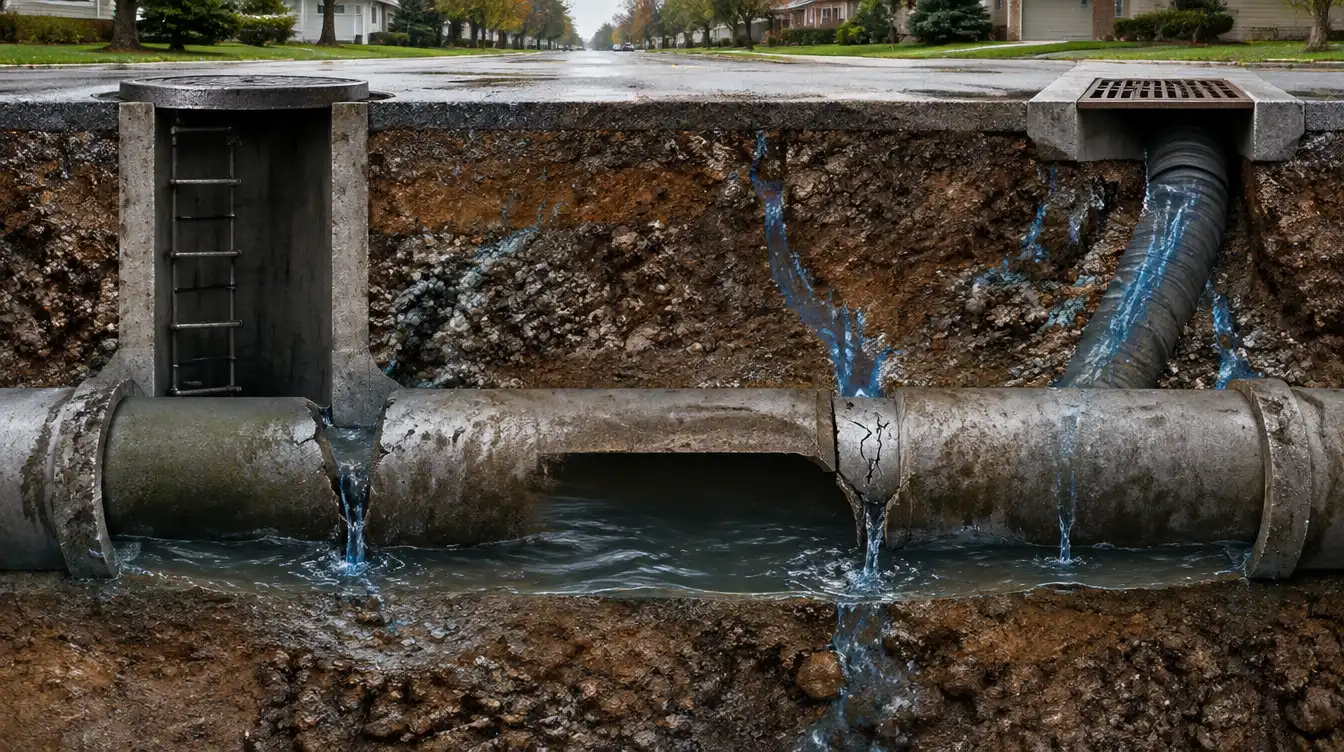
The structural design must address internal pressure and vacuum as well as soil, traffic, construction, and handling loads. At submerged or high-groundwater locations, buoyancy and anchorage may govern. Joints, fittings, thrust restraint, transitions, and penetrations should be designed as part of the system.
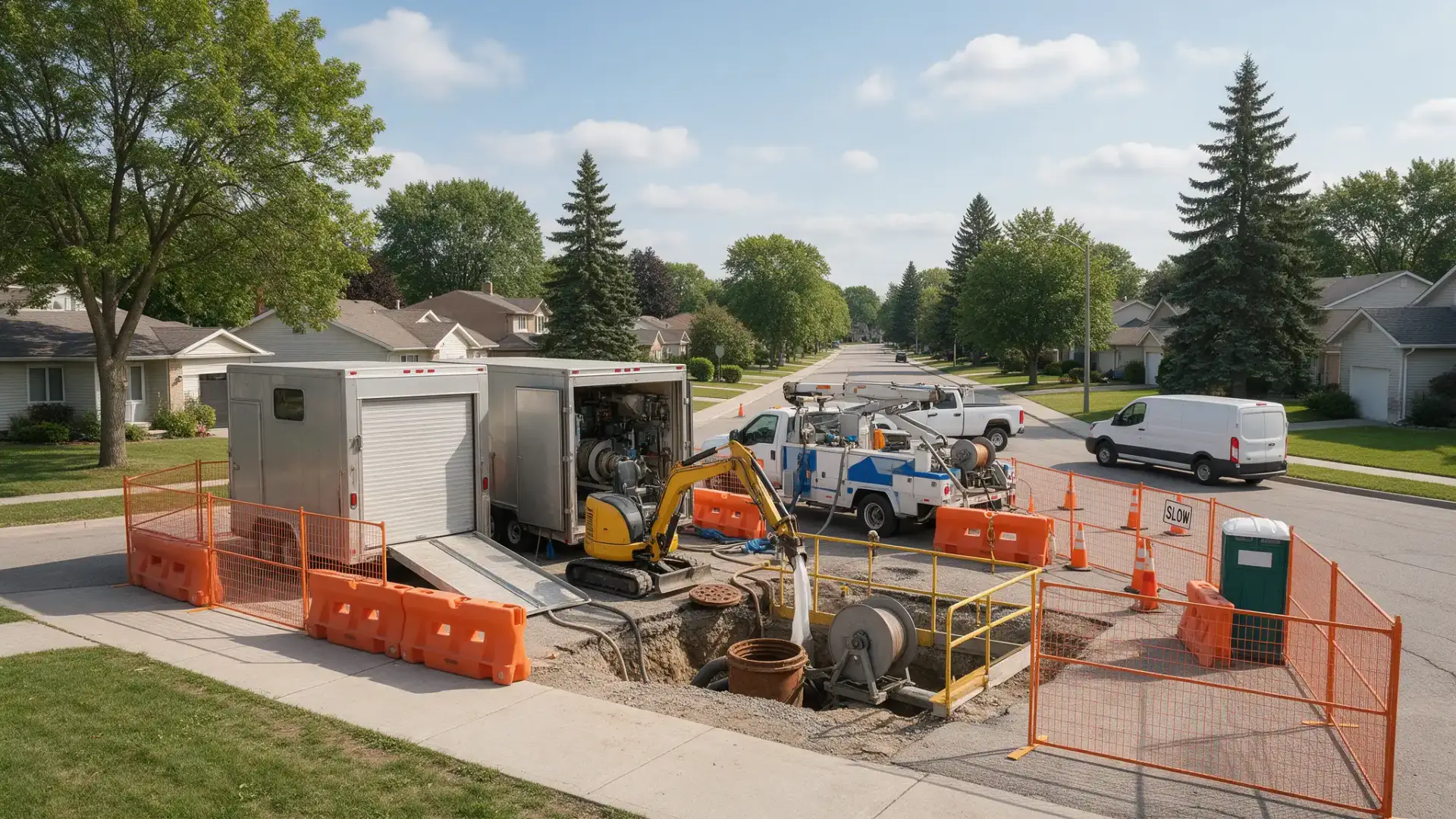
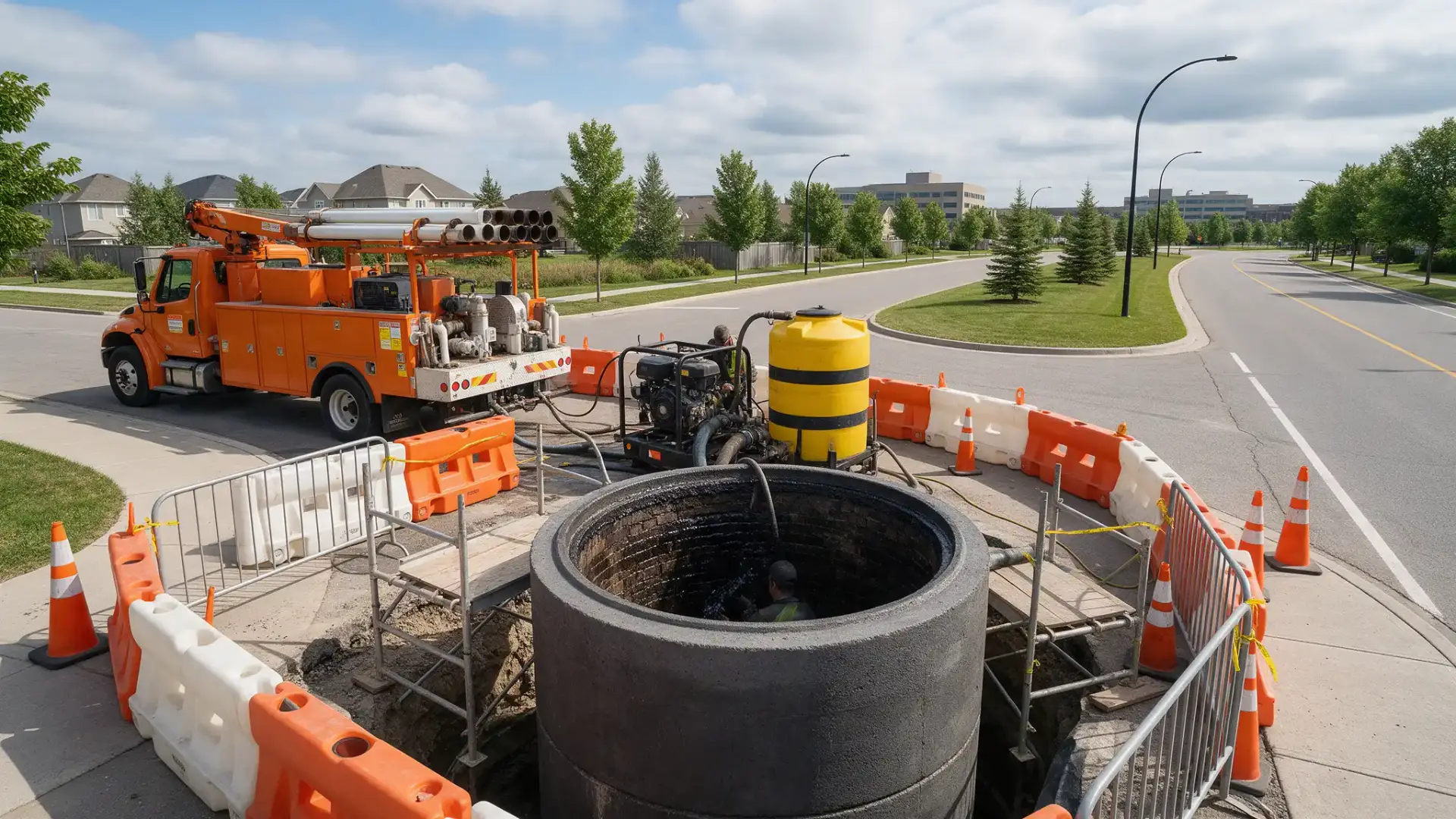
For trenchless installations, bore geometry, pulling loads, drilling risks, and constructability must be coordinated with product-pipe design.
Outfall and Receiving-Environment Considerations
An outfall must perform under changing water levels, currents, ice, waves, sediment movement, and shoreline conditions. Design may require evaluation of mixing, diffuser performance, scour, erosion, aquatic habitat, public access, and navigation.
The outlet should resist blockage and physical damage while remaining inspectable and maintainable. If the work is in or around navigable water, federal navigation requirements may also apply.
Environmental specialists, hydraulic engineers, geotechnical engineers, and pipeline designers should coordinate the outfall.
Canadian Standards, Approvals, and Operations
Canada does not have one design standard that governs every effluent pipeline. Applicable requirements depend on the province or territory, owner, receiving environment, pipeline material, and project configuration.
Municipal systems may be subject to provincial or territorial approvals and design standards. Where applicable, the federal Wastewater Systems Effluent Regulations establish national effluent-quality, monitoring, and reporting requirements under the Fisheries Act. Other federal requirements may apply to fish habitat, navigable waters, or work on federal lands.
CSA, AWWA, material-specific, municipal, and owner standards may also form part of the design basis. The project team should distinguish mandatory requirements from guidance and confirm the current editions adopted by the approving authority.
Reliable operation requires suitable isolation, access, sampling, flushing or cleaning provisions, drainage, air management, monitoring, and safe maintenance procedures. Owners should consider how the pipeline will be inspected, how a blockage or leak will be managed, and whether temporary storage or redundancy is required during an outage.
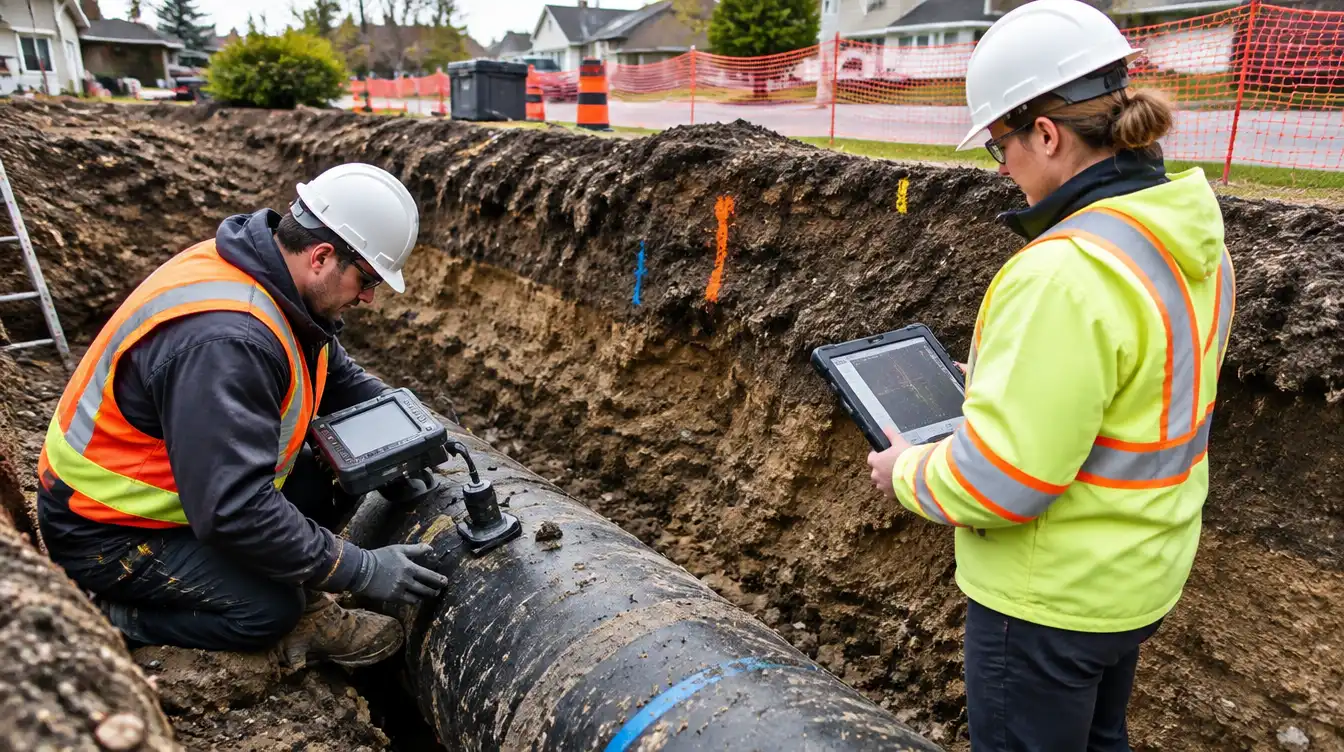
Commissioning should confirm construction quality, leakage or pressure performance, equipment operation, controls, monitoring, and outfall function. Verified as-built records and an inspection plan should be included in the handover.
An Integrated Approach
At Avodahtec, we support effluent pipeline design in Canada through design-basis development, hydraulic and transient analysis, material selection, route and crossing design, constructability, outfall coordination, commissioning, and lifecycle planning.
Conclusion
Successful effluent pipeline design requires more than selecting a pipe diameter and discharge location. Hydraulic behaviour, structural performance, environmental conditions, approvals, construction, and maintenance must work together.
An integrated design process helps owners achieve reliable discharge, protect the receiving environment, and operate the system safely throughout its intended life.