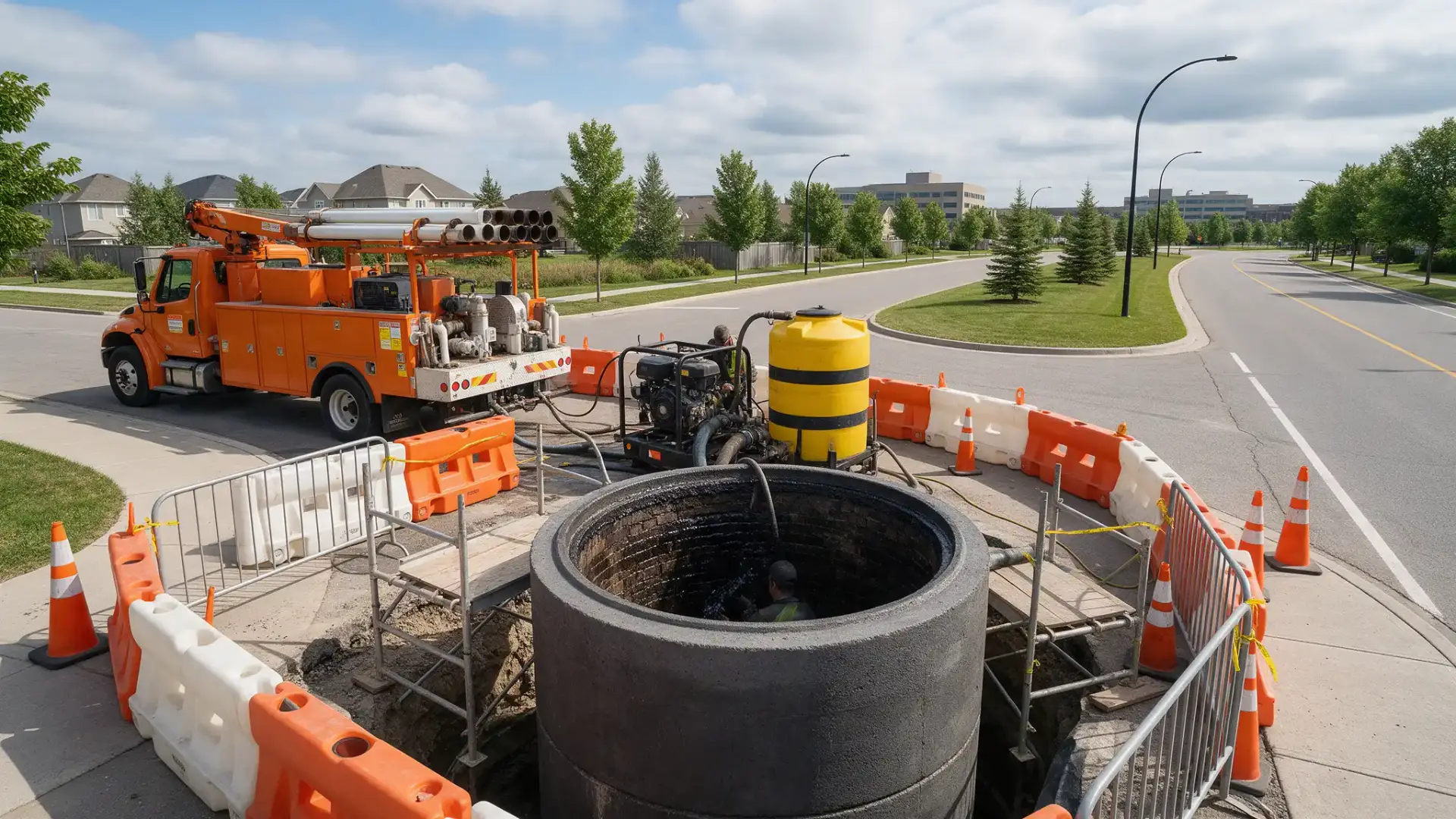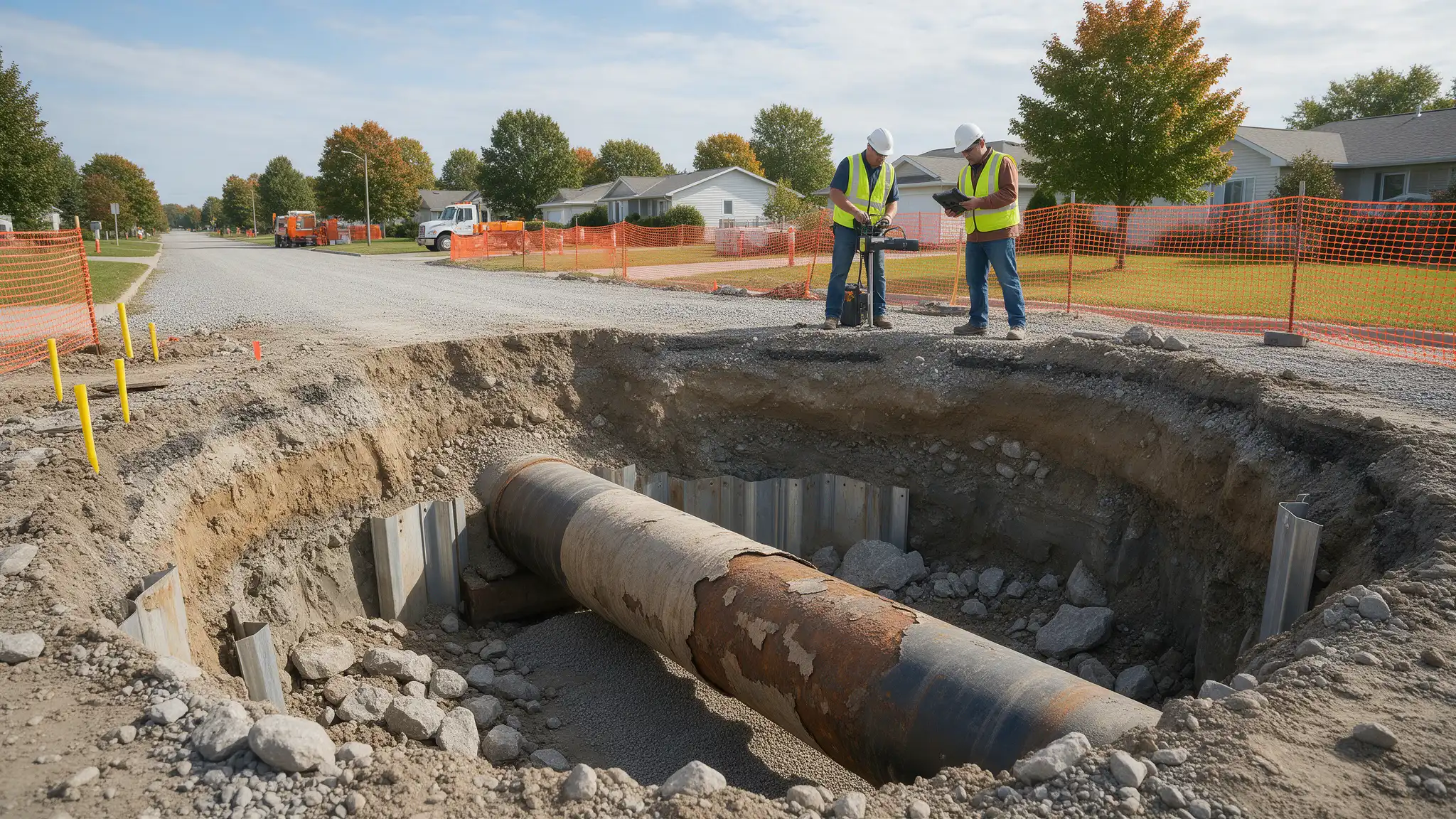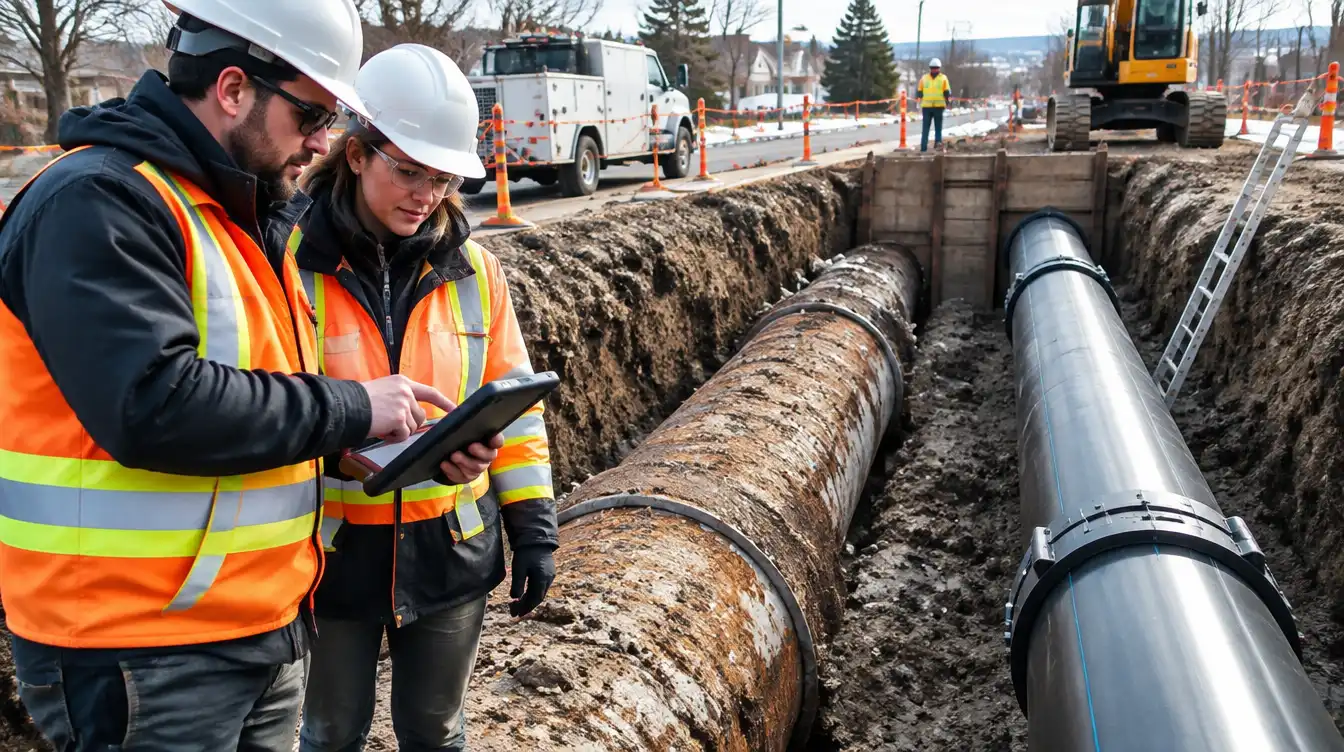
Trenchless methods let an owner renew or replace a buried pipe while limiting excavation along its length. That can reduce cost and disruption, but it raises a new question: which trenchless method is right? The main options, cured-in-place pipe, slip lining, and pipe bursting, solve different problems, and choosing the wrong one may leave the original problem unresolved or create new constraints.
This guide compares the methods, explains when each fits, and shows how the decision is made.
What trenchless rehabilitation means
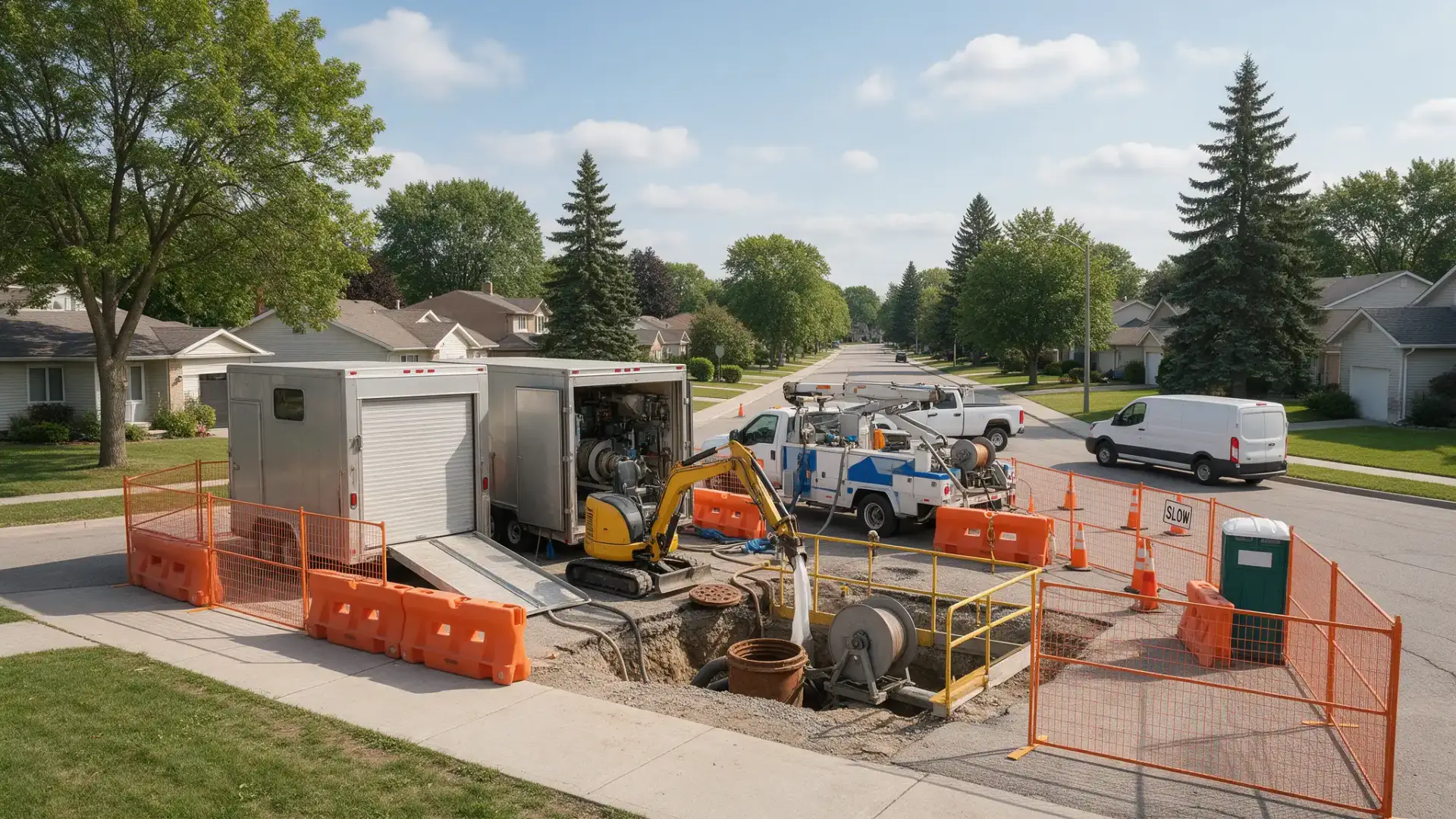
Trenchless methods renew or replace buried pipes with limited excavation, using existing access points where possible and excavated access pits where needed. CIPP and slip lining rehabilitate an existing pipeline by installing a liner or new pipe within it. Pipe bursting is a trenchless replacement method: it displaces the existing pipe while installing a new one along approximately the same route.
All three methods require a review of access, service connections, flow management, and the condition of the existing pipe. “Trenchless” does not mean excavation-free.
Cured-in-place pipe (CIPP)
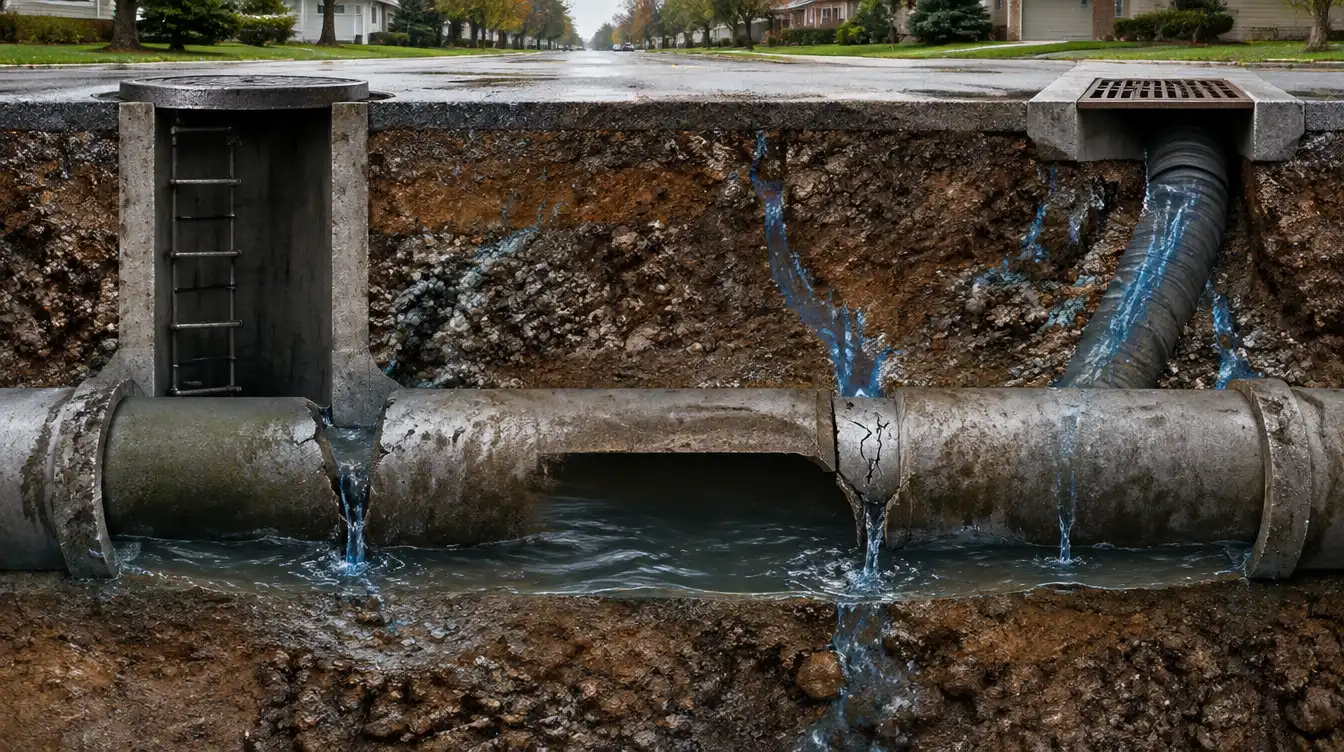
Cured-in-place pipe is a widely used trenchless method for sewers and stormwater mains. For a project-specific example where storm sewer condition data informed rehabilitation planning, see Avodahtec’s Storm Sewer Condition Assessment & Rehabilitation Analysis. A resin-saturated liner is inserted into the host pipe and cured in place, hardening into a new, continuous pipe within the old one. Curing can use hot water, steam, or ultraviolet light.
The curing method and liner design are selected for the pipe and project conditions. Structural performance depends on the specified materials, liner thickness, installation, curing, and acceptance testing. Some CIPP systems are designed for a 50-year service period, but that design basis is not a guarantee of actual life.
CIPP usually retains more internal diameter than conventional slip lining, although the liner still reduces the available diameter. It can cover cracks and joints along the host pipe, but reducing inflow and infiltration also depends on properly detailed connections and terminations. Existing sags and adverse grades generally remain because the liner follows the host pipe’s alignment.
CIPP can be designed for pipes with substantial structural deterioration; the host pipe does not always have to remain structurally sound. Collapse, severe deformation, or obstructions may prevent installation or require localized repairs first.
Slip lining
Slip lining is an established trenchless method. A new pipe of smaller diameter is inserted into the old one, and the annular gap between them is typically grouted as required by the design. The installed pipe can provide structural and leakage performance suited to the selected product, connections, and project requirements. Access, annular grouting, and service reconnections need careful planning.
The trade-off is diameter. Because the new pipe sits inside the old, slip lining reduces the internal cross-section, so it is best suited to pipes where the resulting hydraulic performance meets current and projected needs. The smoother surface of the new pipe may offset some capacity loss, but this must be checked rather than assumed. The method can also be constrained by bends, offsets, or inadequate space for inserting the new pipe.
Pipe bursting
Pipe bursting is a trenchless replacement option when the existing pipe can be displaced safely. A bursting head is pulled through the old pipe, breaking or splitting it and pushing it outward while pulling a new pipe into place. The old pipe material generally remains in the surrounding ground.
Its key advantage is that it can replace a pipe at the same size or potentially upsize it without excavating a continuous trench. The amount of upsizing and the method’s feasibility depend on pipe material, ground conditions, cover, nearby utilities, available access, and acceptable ground movement. Launch and receiving pits, flow diversion, and service reconnections may still be required.
Pipe bursting can be suitable where lining cannot meet capacity needs, but severe deterioration alone does not make bursting the automatic choice. Obstructions, certain pipe materials or repairs, a collapsed section, or closely spaced utilities can make it difficult or unsuitable. Like lining, it generally follows the existing route and is not a reliable way to correct a significant sag or adverse grade.
Pipe lining vs pipe bursting: which to choose
The clearest way to hold these methods apart is by what they do to the pipe. Lining, whether CIPP or slip lining, installs a new system within the existing pipe. Bursting displaces the existing pipe and installs a replacement along its route.
The decision requires more than asking whether the host pipe is structurally sound. A structural liner may be designed for a significantly deteriorated host pipe. The owner must establish the required structural and hydraulic performance, then check the existing alignment, access, connections, ground conditions, construction risks, and whole-life cost.
Where the existing capacity and alignment are adequate, lining may be feasible. Where additional diameter is needed, bursting may be an option if the site can accommodate ground displacement. Localized repair or open-cut replacement may be preferable where the grade must be corrected, access is poor, or nearby utilities make bursting unsafe.
Matching the method to the pipe
Beyond that headline choice, several factors narrow the field.
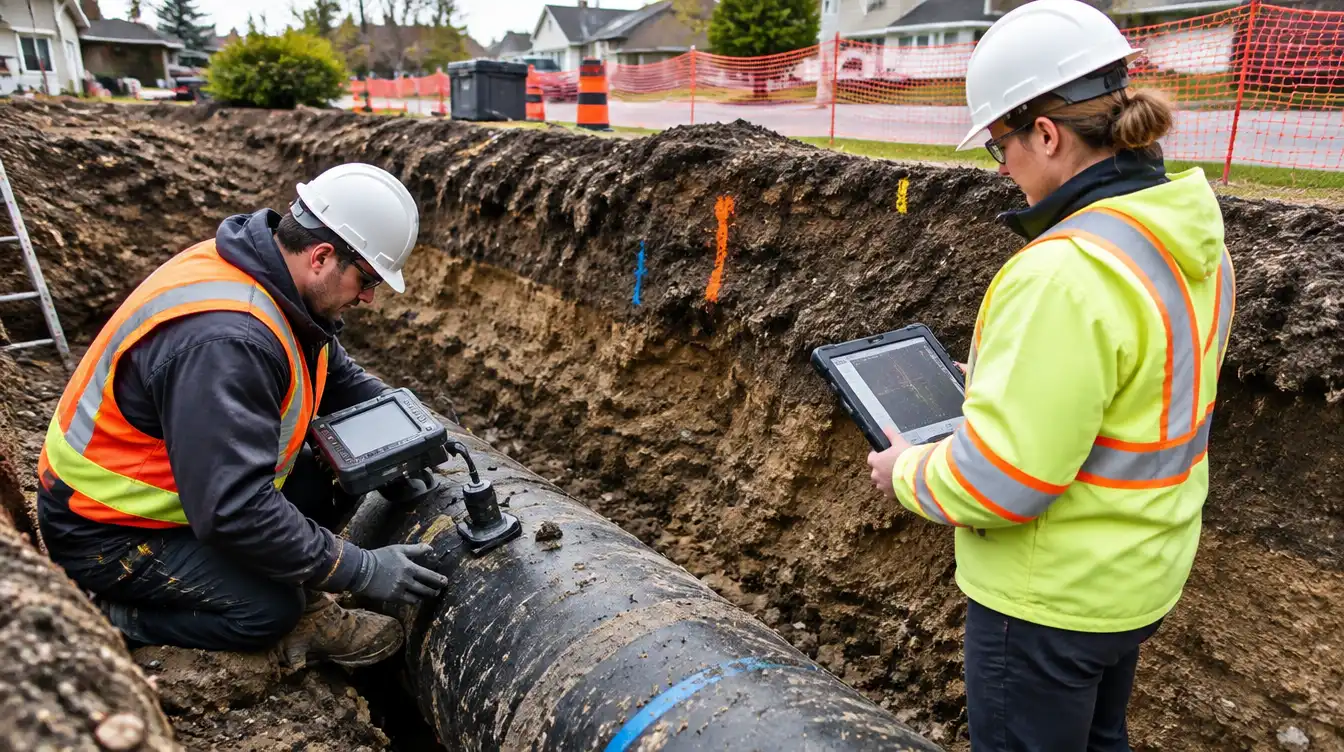
Pipe condition. Identify the defects, deformation, obstructions, and deterioration mechanisms. Structural lining may still be feasible for a badly deteriorated host pipe, while collapse or severe deformation may require preliminary repair or replacement.
Capacity needs. Compare the hydraulic performance after lining or replacement against current and projected flows. Bursting can sometimes provide additional diameter, but the feasible increase is site-specific.
Material and diameter. Some methods suit specific materials and size ranges better than others, which affects both feasibility and cost. The existing material also affects whether bursting is practical.
Gravity versus pressure. Sewers and pressure mains behave differently, and not every method is rated for pressure applications. Pressure-pipe options must account for operating and surge pressures, connections, structural requirements, and testing. Potable-water applications also require suitable materials and return-to-service procedures.
Access and site constraints. Available entry points, surface conditions, and nearby utilities all shape what is practical. Include the space needed for equipment and pipe insertion, as well as any excavation, bypass pumping, or temporary water supply.
Alignment and ground conditions. Liners and bursting generally follow the existing route; significant sags or adverse grades may need excavation. Groundwater, unstable soils, shallow cover, and nearby structures can affect constructability and risk.
Whole-life cost. Compare the complete scope, including preparation, access, flow management, connections, inspection, testing, surface restoration, expected service life, and future maintenance. The lowest installation price may not be the lowest-cost solution over the asset’s life.
Where an independent advisor fits
Contractors bring valuable installation expertise, often focused on the systems they provide. An independent engineering assessment allows the owner to compare feasible methods against the same performance, constructability, risk, and cost requirements. Avodahtec does not install or sell a trenchless system, so its recommendations can be based on the asset and the owner’s objectives.
We assess the pipe, evaluate feasible methods, and can then carry the work through design, project and construction management, tender preparation, bid evaluation, contract administration, and construction oversight. As prime consultant, we can coordinate the engineering team and support delivery in accordance with the owner’s procurement process and our agreed scope.
Frequently asked questions
What is the difference between pipe lining and pipe bursting?
CIPP and slip lining install a liner or new pipe within the existing pipe. Pipe bursting displaces the old pipe and pulls a replacement along its route. Bursting can sometimes allow upsizing, while lining reduces internal diameter to varying degrees. Neither approach is completely free of excavation.
How long does a CIPP liner last?
A CIPP liner may be designed for a 50-year service period, depending on the system and project requirements. Actual performance depends on design, material selection, installation quality, operating conditions, and maintenance. The design period is not a warranty or a prediction of the exact failure date.
Does slip lining reduce pipe capacity?
Slip lining reduces internal diameter because the new pipe sits inside the old one. Its smoother interior can offset some of the hydraulic effect, so the resulting capacity must be calculated for the specific pipe and design flows.
Is trenchless always cheaper than digging?
No. Trenchless methods can reduce excavation, traffic disruption, and surface restoration, particularly for deep pipes or constrained sites. Their costs still include access, preparation, flow management, connections, and testing.
Open-cut replacement may be more economical when work is coordinated with road reconstruction or when the pipe’s alignment must be corrected. The best value is the method that meets the pipe’s service requirements at the lowest total cost over its expected life.
Book a free consultation
Choosing a trenchless method is an engineering decision. As an independent advisor, Avodahtec helps municipalities and utilities assess their pipes, compare feasible rehabilitation and replacement options, and manage the project through to delivery, without a stake in which system gets installed.
Book a free consultation to discuss your pipe’s condition, performance requirements, and the information needed to select an approach.