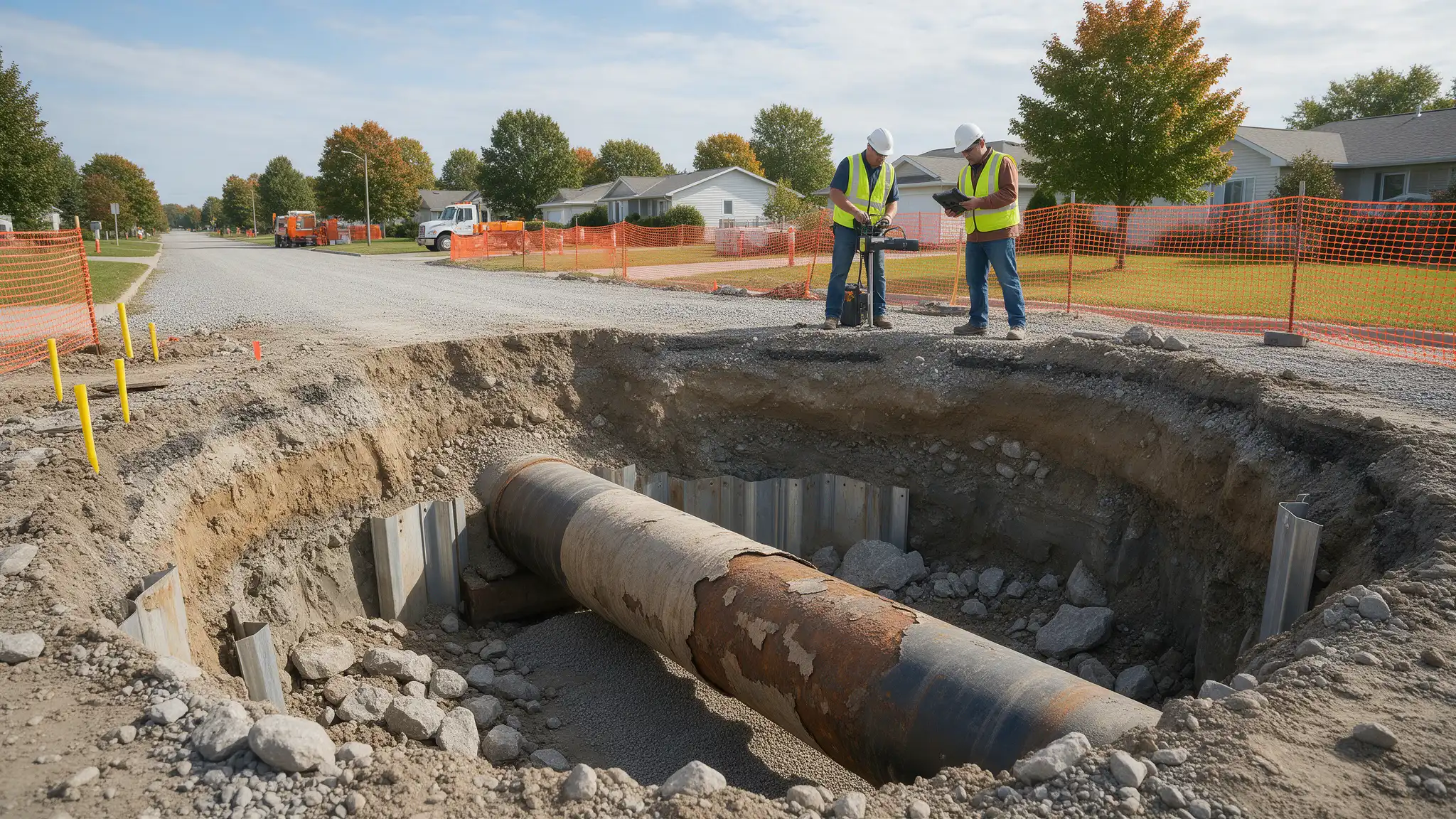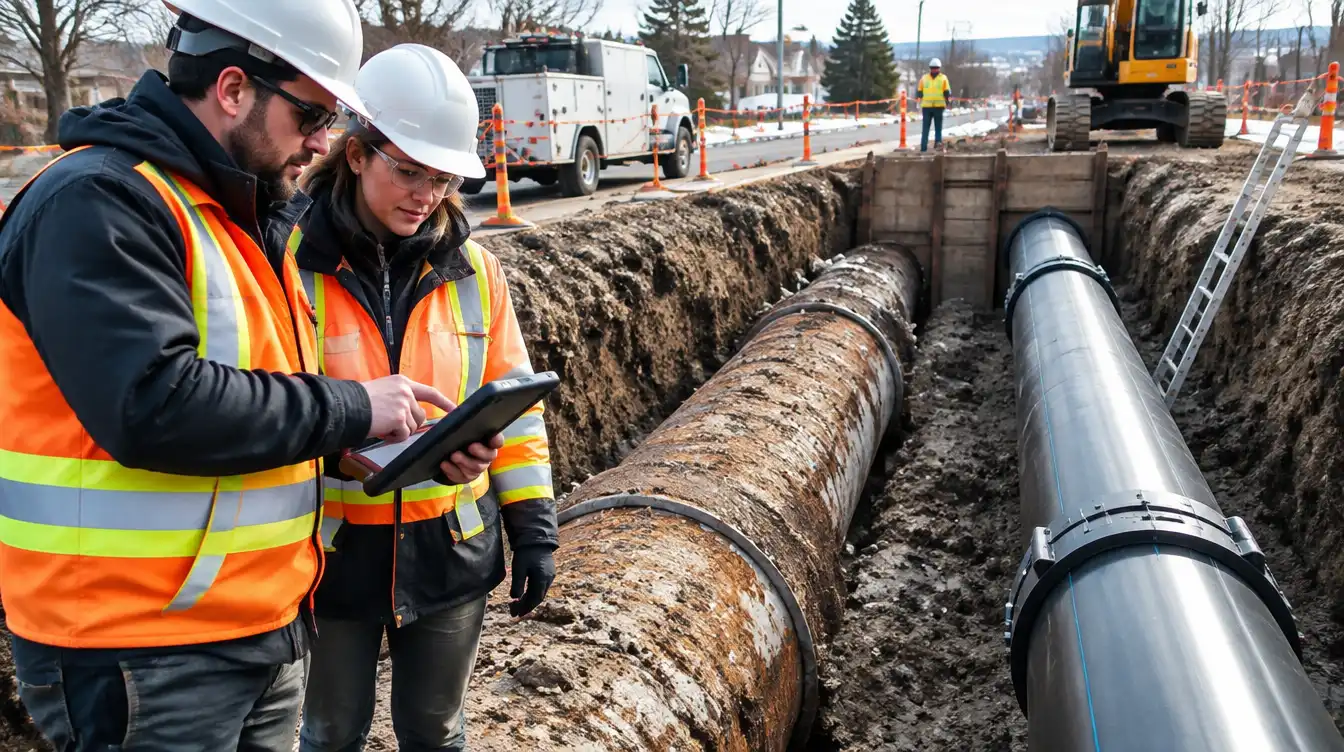
Corrosion is an important cause of deterioration in metallic pipelines, but it is not the only reason buried pipes fail. It can cause localized pitting, metal loss, and damage to metallic components. In some cases, this deterioration develops without obvious surface evidence.
Understanding the corrosion mechanism and detecting deterioration early can help owners manage the risk of leaks, breaks, and service interruptions. This guide explains the main causes of pipe corrosion, how it is detected, and the methods used to control it.
What causes pipe corrosion
Corrosion of metallic pipe generally involves electrochemical reactions between the metal and its environment. Water inside the pipe or moisture in the surrounding soil can support these reactions and gradually deteriorate the material.
Rust is a familiar corrosion product of iron and steel, but corrosion does not always appear as visible rust or uniform wall thinning. Oxygen can influence the process, but corrosion can also occur under oxygen-depleted conditions.
For buried water and wastewater pipes, important corrosion drivers include:
- soil and water chemistry;
- moisture around the pipe;
- stray electrical currents;
- microbial activity;
- electrical contact between dissimilar metals; and
- the condition of coatings and other protective systems.
The corrosion rate depends on the pipe material, its protection, and the surrounding environment. That is why two pipes of the same age can be in very different condition.
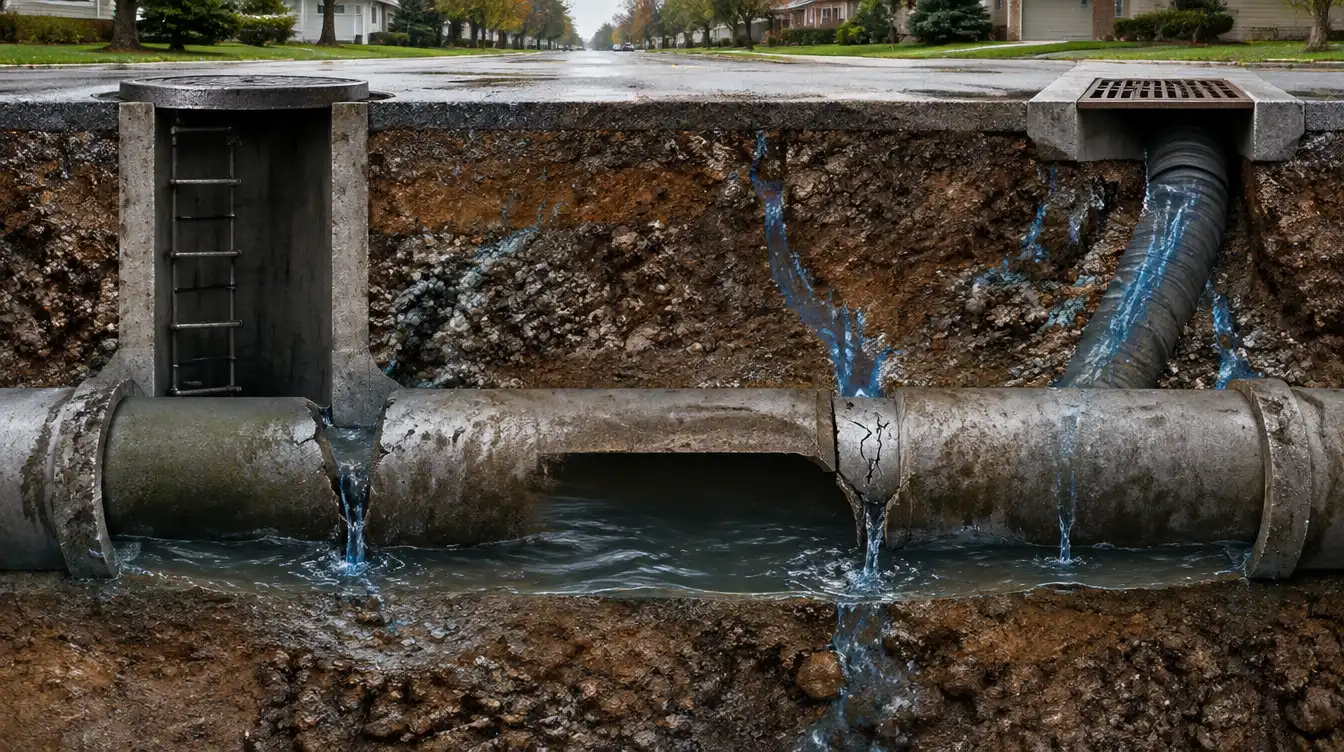
Corrosion can also be highly localized. A small area of deep pitting may cause leakage even when much of the surrounding pipe wall remains relatively intact.
Internal versus external corrosion
Corrosion can attack a pipe from both sides. Internal and external corrosion may involve different mechanisms, so they often require different controls.
Internal corrosion
Internal corrosion occurs on the inside surface of a pipe. It is influenced by water or wastewater chemistry, operating conditions, deposits, and microbial activity.
It can thin the wall and reduce hydraulic capacity through tuberculation. In drinking-water systems, it can also affect water quality. Tuberculation is the buildup of corrosion products on the internal surface of iron-based pipes, which can increase roughness and restrict the available flow area.
External corrosion
External corrosion occurs on the outside of the pipe. Factors include soil chemistry, moisture, electrical resistivity, oxygen availability, coating condition, and electrical interference.
Wet soil alone does not show how rapidly a pipe will corrode. External corrosion can be a major deterioration mechanism for buried metallic mains, but its significance must be assessed for the specific asset and environment.
A sound assessment considers both sides of the pipe. A pipe may look acceptable internally while corroding severely on the outside, or the reverse.
Microbially influenced corrosion in sewers
Microorganisms can influence corrosion through several mechanisms. Microbiologically influenced corrosion (MIC) is the general term. Sulphuric-acid attack in sanitary sewers is one important example, particularly for concrete pipes and manholes.
Under oxygen-depleted conditions, sulphate-reducing microorganisms can generate dissolved sulphide in wastewater and sewer deposits. Hydrogen sulphide can then escape into the sewer atmosphere.
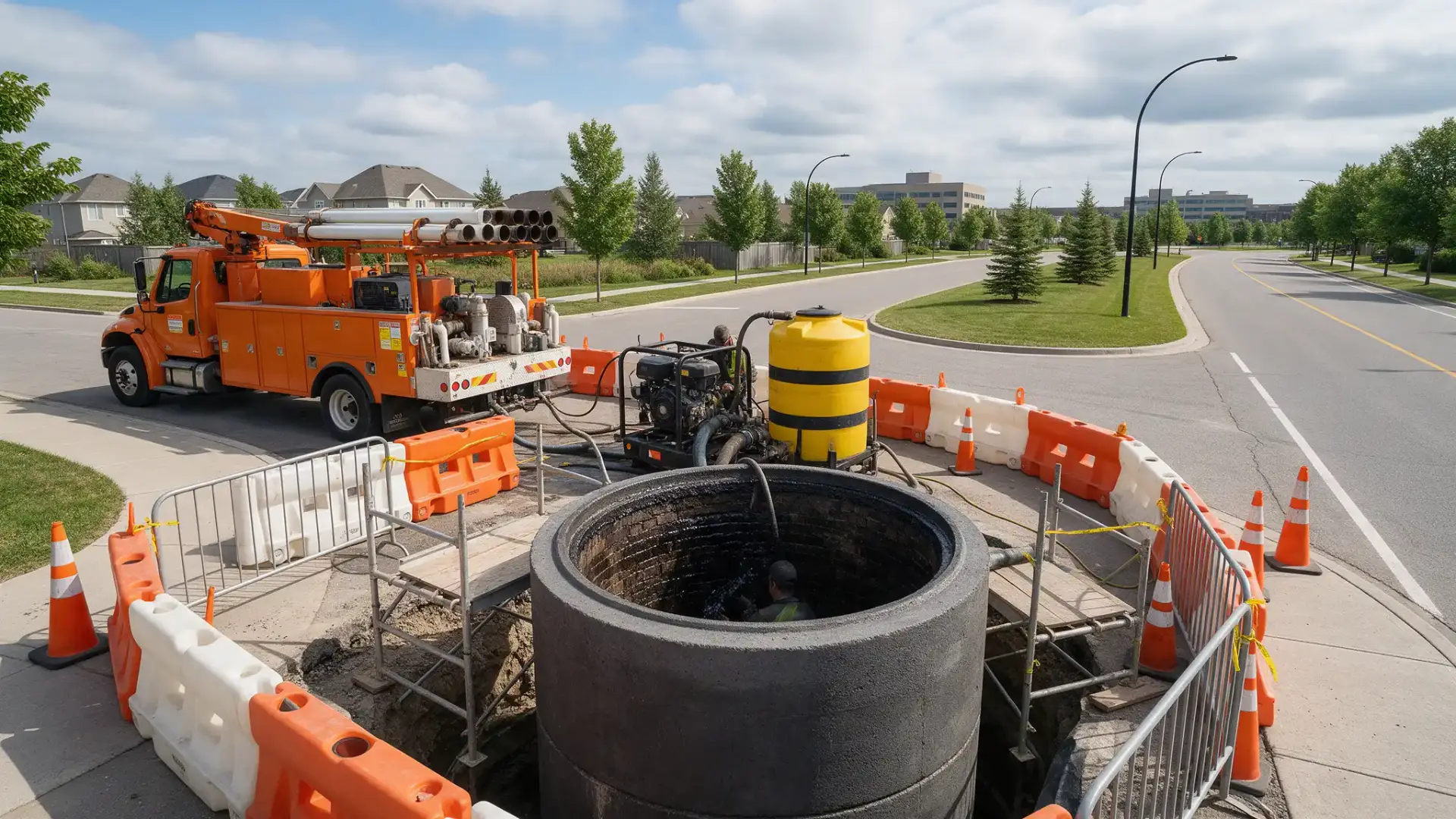
On moist surfaces above the wastewater, sulphur-oxidizing microorganisms can convert hydrogen sulphide into sulphuric acid where oxygen is available. The acid can attack susceptible materials, including the cementitious components of concrete.
This mechanism can cause severe deterioration at pipe crowns and on manhole walls. The location and rate depend on sulphide generation, gas release, moisture, temperature, and the materials present. Microbial corrosion of metallic pipes can involve other mechanisms and is not limited to surfaces above the waterline.
How corrosion is detected and assessed
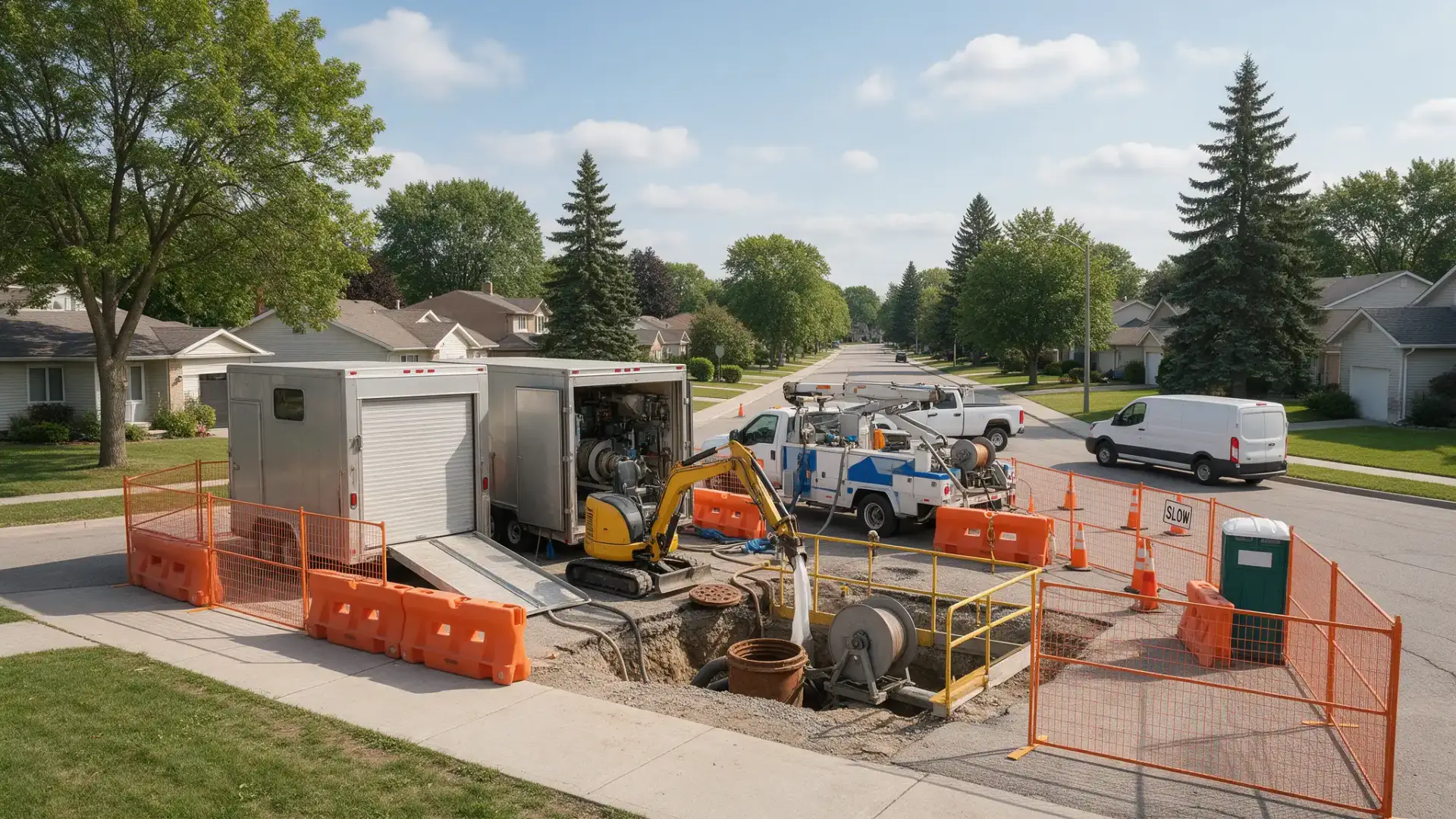
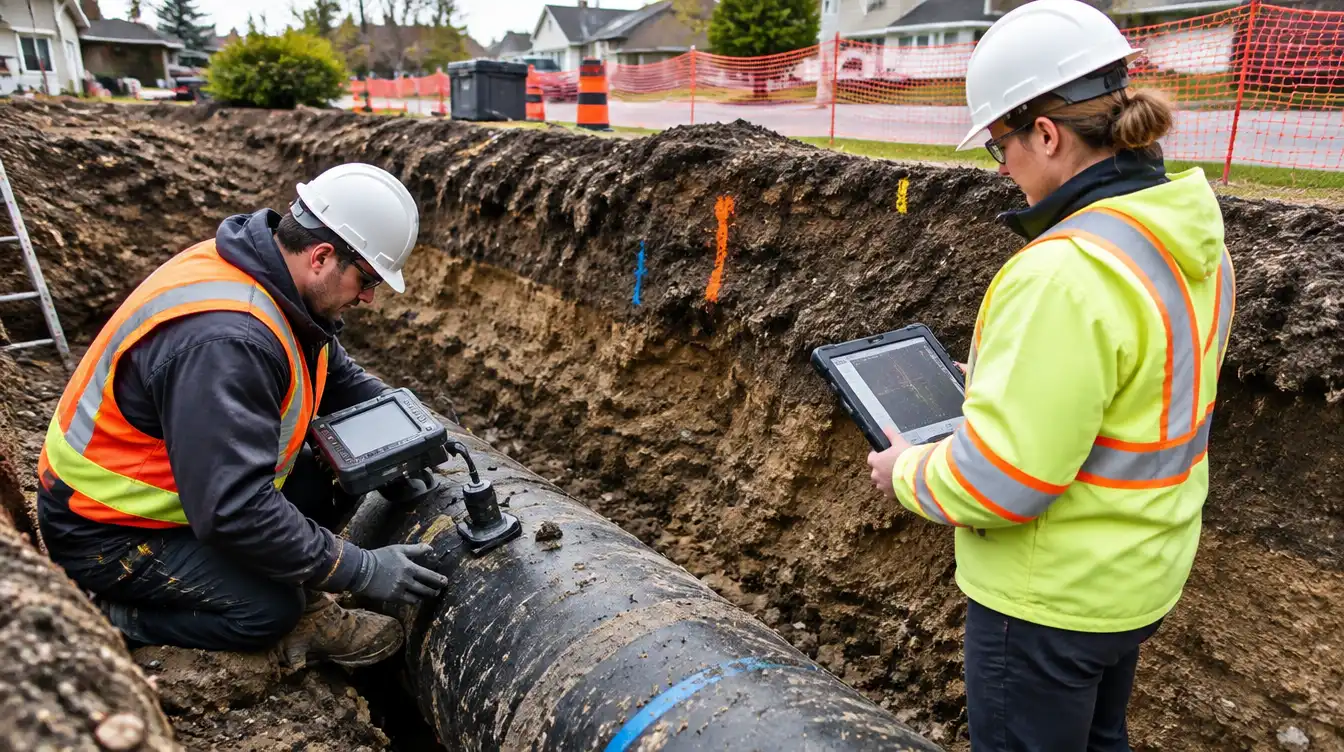
Corrosion assessment combines evidence about the pipe’s condition with information about its environment and operating history. Visual inspection can identify accessible deterioration, but it cannot reliably establish the condition of concealed surfaces or determine remaining wall thickness on its own.
Depending on the asset, assessment methods may include:
- ultrasonic thickness measurements;
- suitable electromagnetic inspection;
- examination of exposed pipe;
- coating assessment;
- cathodic-protection testing; and
- soil or water testing to identify potentially corrosive conditions.
The inspection method must suit the pipe material, lining, geometry, and access conditions. Local measurements describe only the areas tested and may miss deeper pits elsewhere.
For prestressed concrete cylinder pipe (PCCP), specialized electromagnetic inspection can detect and estimate broken prestressing-wire wraps. This is different from measuring metal-wall thickness and does not, by itself, establish the condition of every pipe component or the cause of the wire breaks.
Soil and water testing can identify potentially corrosive conditions, but it does not directly measure existing pipe damage. Repeat inspections or suitable monitoring can help evaluate deterioration trends. Establishing a corrosion rate requires evidence over time rather than a single inspection.
The findings support engineering decisions about structural adequacy, intervention needs, and monitoring priorities. Remaining-life estimates require assumptions about future deterioration and loading, so the associated uncertainty should be stated clearly.
Corrosion data is also an important input to pipeline condition assessment and to the decision to rehabilitate or replace a pipe.
Corrosion protection and control
Appropriate protection can prevent or reduce corrosion under the conditions for which it is designed. The selected measures must address the actual deterioration mechanism.
Corrosion control does not restore metal or structural capacity that has already been lost. In practice, several strategies may be used together.
Coatings and linings
Surface barriers separate the metal from the corrosive environment. External coatings protect against surrounding soil, while internal linings protect against the conveyed fluid.
Performance depends on material compatibility, surface preparation, application quality, and the condition of the barrier. A coating or lining should not be assumed to provide structural rehabilitation unless it is specifically designed for that purpose.
Cathodic protection
Cathodic protection uses sacrificial anodes or an impressed-current system to reduce electrochemical corrosion on a protected metallic surface. For buried pipelines, it is commonly used for external corrosion control and is often combined with coatings.
Suitability depends on the pipe system’s electrical characteristics and surrounding conditions. Design, commissioning, monitoring, and maintenance are needed to confirm that the system is providing effective protection.
An external cathodic-protection system does not automatically control internal corrosion or acid attack on concrete.
Avodahtec has applied these principles in municipal infrastructure work, including the City of Whitehorse Forcemain Corrosion Assessment and Cathodic Protection Design.
Material selection
Materials and protective systems should suit the conveyed fluid, soil conditions, loading, and service requirements. Connections, fittings, and other metallic components also need to be considered. A corrosion-resistant pipe material does not eliminate every possible failure mechanism.
Environment management
Depending on the system, corrosion management may include water-chemistry control, mitigation of stray-current interference, or control of sulphide generation and release in wastewater systems.
Treatment changes should be evaluated for their effects on water quality, downstream processes, and other assets.
The right combination depends on the pipe, the environment, and the consequence of failure. Options should be compared for technical suitability, expected effectiveness, and lifecycle cost.
What corrosion costs when it is ignored
Unmanaged corrosion can contribute to unplanned failures and significant costs. A corroded main that breaks may result in emergency repair, water loss, service interruptions, property damage, and risks to public safety or the environment.
Emergency work can also divert staff and funding from planned maintenance and renewal. The consequences depend on the asset’s location, function, operating conditions, and available redundancy.
Early detection and appropriate control can reduce risk and provide time to compare planned interventions. However, some assets may already require repair or replacement. The preferred response depends on condition, risk, and whole-life cost.
Frequently asked questions
What causes watermain corrosion?
Metallic watermains corrode through electrochemical reactions influenced by their environment. Relevant factors include soil and water chemistry, moisture, microbial activity, coating condition, dissimilar-metal connections, and stray electrical currents. The dominant mechanism varies between assets.
What is microbially influenced corrosion?
Microbiologically influenced corrosion, or MIC, is deterioration influenced by microbial activity. In sanitary sewers, one important mechanism involves sulphide generation in wastewater followed by sulphuric-acid production on moist surfaces above the flow. This can severely damage concrete and other susceptible materials.
Can you detect corrosion without digging up the pipe?
In some cases. Suitable in-line inspection tools and above-ground surveys can provide information about deterioration or corrosion-protection performance. Specialized electromagnetic tools can also assess prestressing-wire breaks in PCCP.
However, access excavations, exposed-pipe measurements, or targeted sampling may still be needed. Soil and water tests identify environmental conditions rather than directly measuring pipe-wall damage.
How is buried pipe protected from corrosion?
Protection may include coatings and linings, cathodic protection, corrosion-resistant material selection, and control of relevant environmental or operating conditions. The combination must suit the pipe material and the corrosion mechanism. Existing structural damage may require separate repair or rehabilitation.
Book a free consultation
Understanding the corrosion mechanism and the extent of existing damage helps owners select an appropriate response. As an independent engineering advisor, Avodahtec helps municipalities and utilities assess corrosion, evaluate its implications for performance and risk, and plan further investigation, protection, or renewal.
Book a free consultation to discuss your corrosion concerns, available asset information, and the next steps for assessment or control.