Manholes can become significant sources of unwanted water in a sanitary sewer and can deteriorate where corrosive sewer gases are present. Many can be repaired from the inside, but the appropriate work depends on the cause and extent of damage.
This guide explains why manholes deteriorate, the methods used to rehabilitate them, and how to choose the right one.
Why manholes fail first
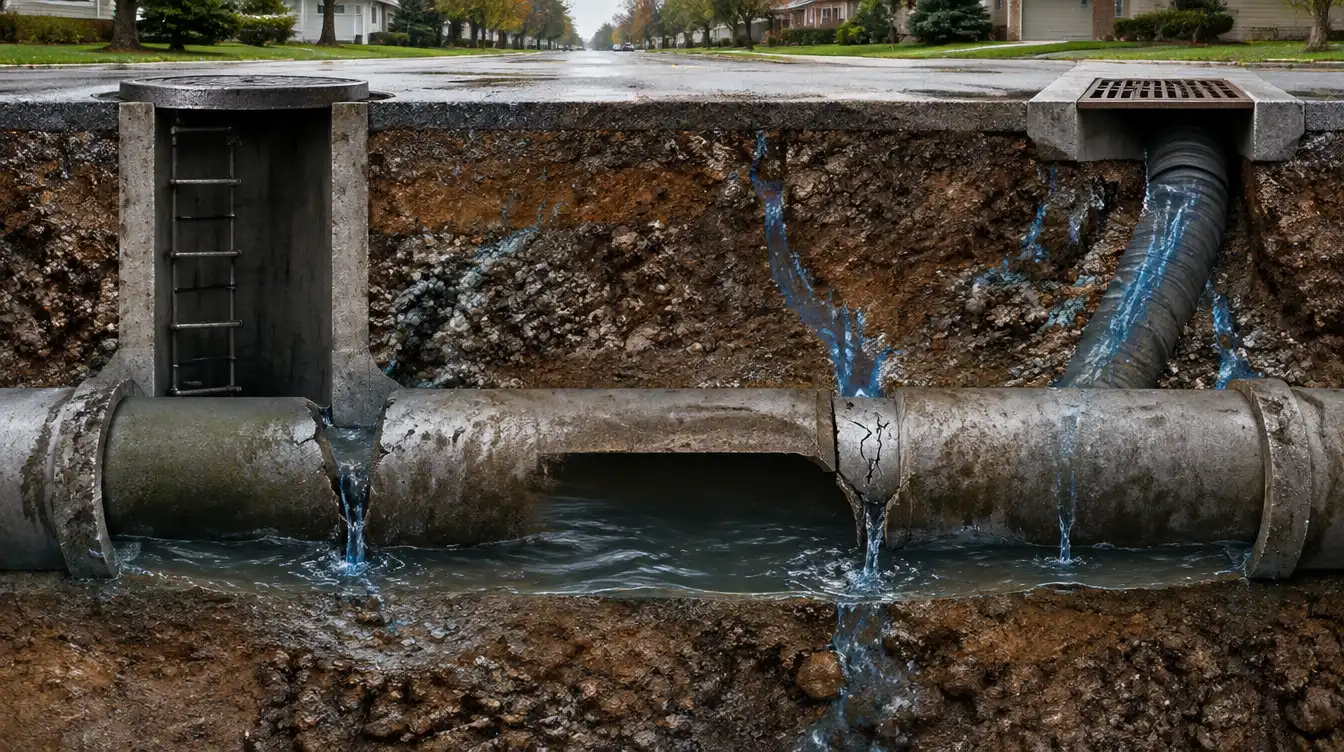
Manholes can deteriorate at their walls, joints, pipe connections, and around the frame and cover.
In some sewers, bacteria produce sulphides in the wastewater. Hydrogen sulphide can then enter the space above the flow and be converted by microorganisms on damp surfaces into sulphuric acid. The acid attacks concrete and brick mortar, especially where exposure is severe.
The rate and location of deterioration vary from one structure to another.
Manholes can also admit groundwater through cracks, joints, and pipe penetrations. Rainwater may enter directly through covers, frames, and other openings. A depression in the pavement around a manhole warrants investigation: it may indicate soil movement or loss, but it does not establish the cause on its own. For more on the corrosion mechanism, see our guide on watermain and pipeline corrosion.
Assess before you rehabilitate
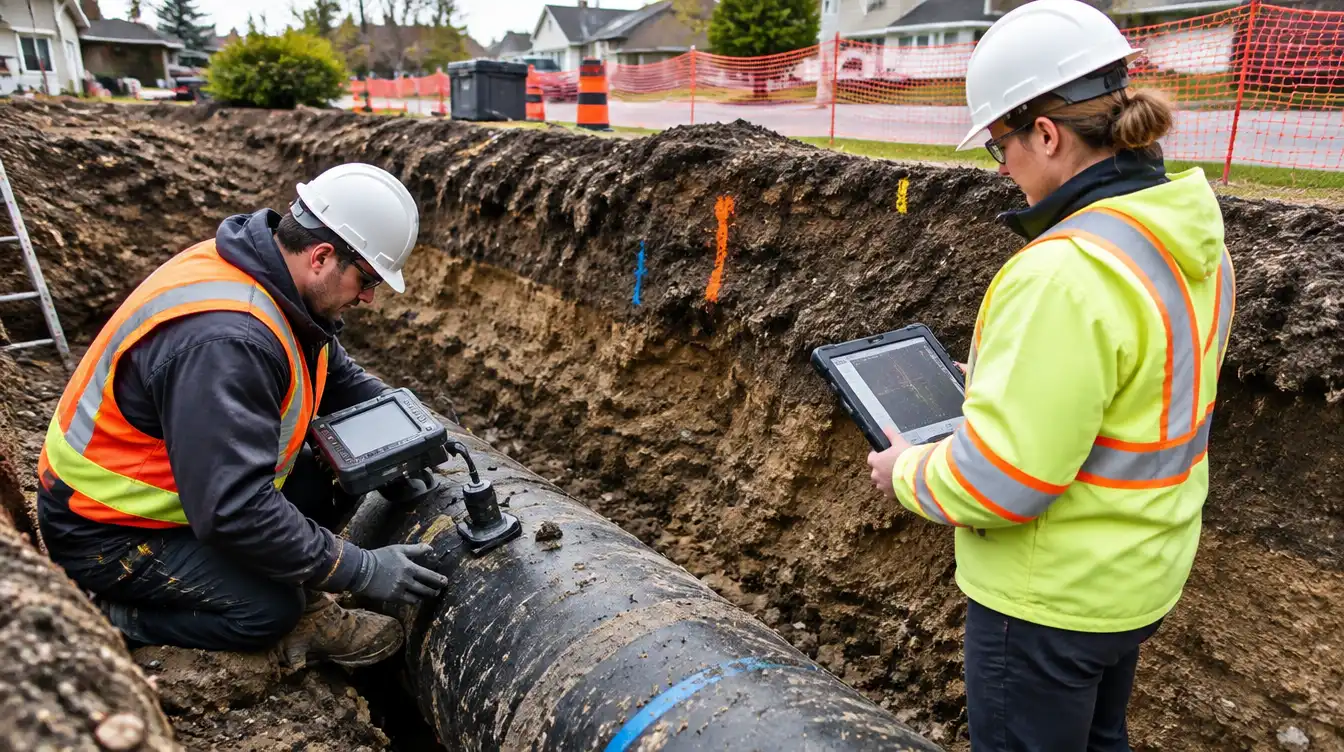
Every good rehabilitation starts with a condition assessment. The inspection should document:
- walls and cone condition;
- frame and cover condition;
- bench and channel condition;
- joints and pipe connections; and
- evidence of leakage or corrosion.
If structural deterioration is suspected, visual findings may need to be supplemented by measurements, testing, and engineering assessment. A visual inspection alone cannot establish the structure’s remaining capacity.
The assessment identifies which problems need attention: leakage, loss of structural material, corrosion, or a combination. It also establishes whether rehabilitation is feasible or replacement is warranted. The three steps below describe possible parts of a rehabilitation program; every manhole does not require all three.
Step one: stop the leaks
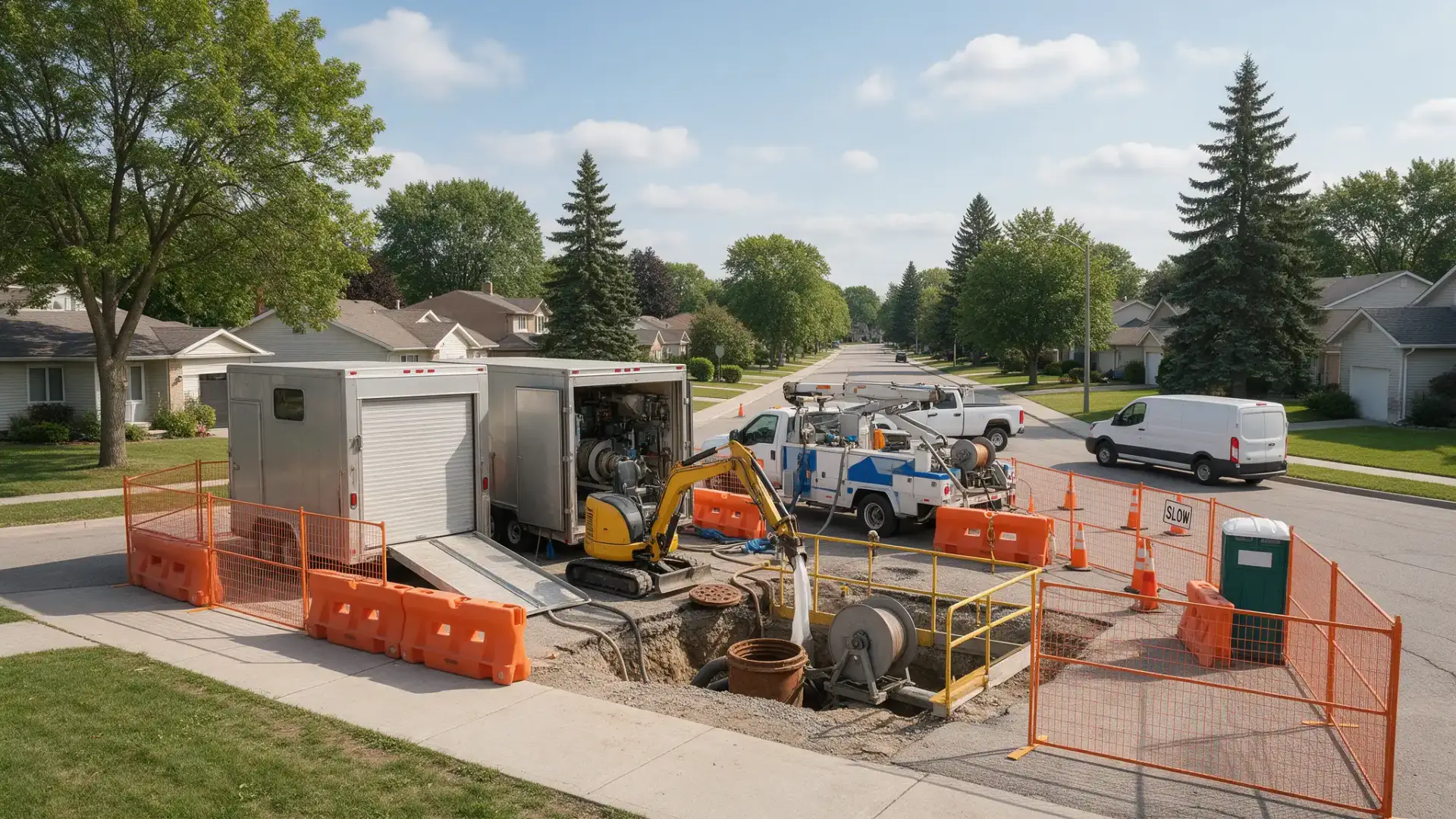
Active groundwater leaks may need to be controlled before a lining is installed. The requirements depend on the selected system and the surface preparation it needs.
Leak-control methods may include:
- sealing joints and penetrations;
- patching localized defects;
- injecting a suitable chemical grout; or
- using curtain grouting where leakage extends beyond individual cracks.
The grout and installation method must suit the site conditions.
Water entering at the frame or cover calls for a different repair, such as a frame adjustment or seal. Stopping a leak does not, by itself, restore lost structural capacity.
Step two: rebuild the structure
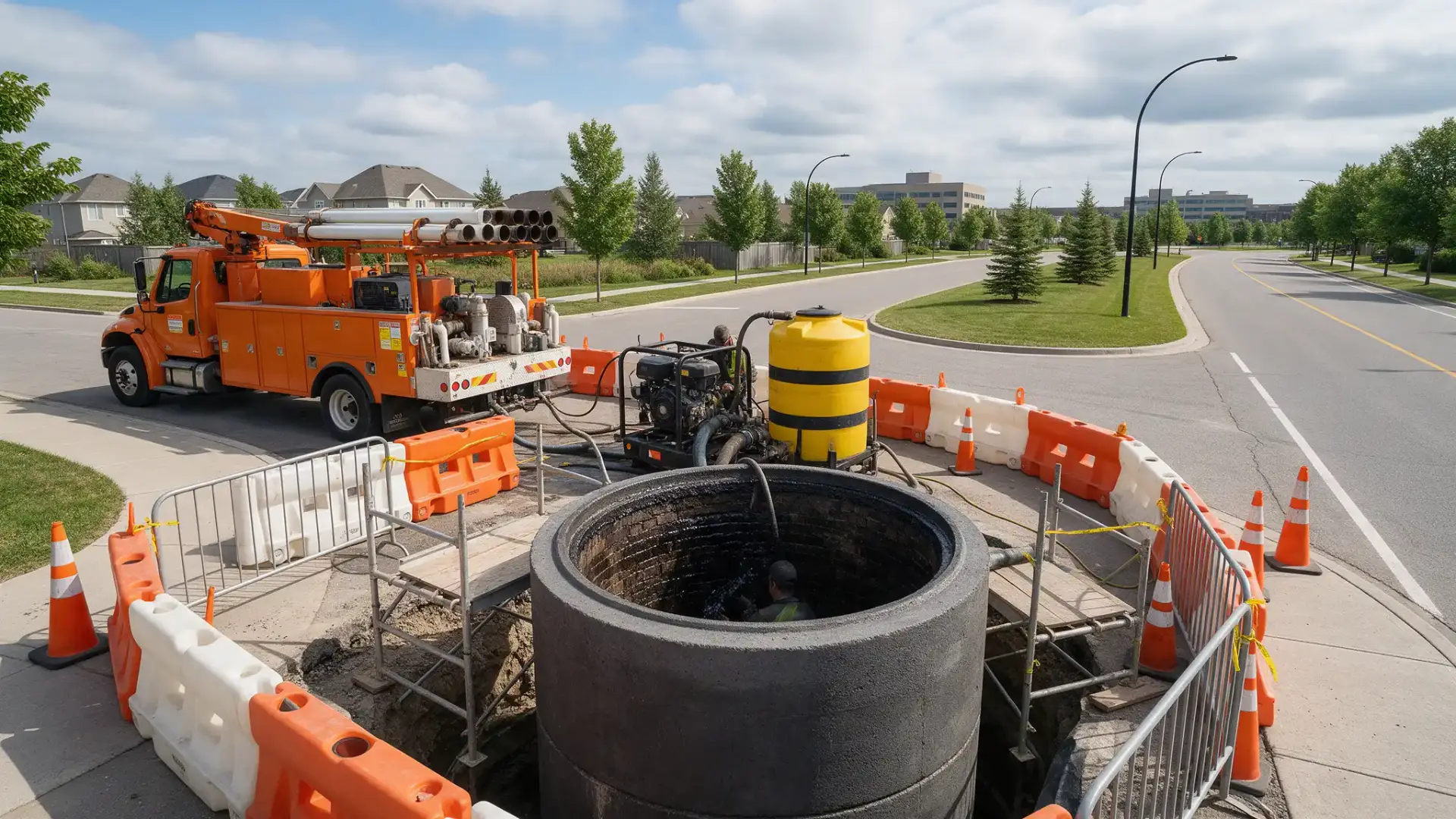
Where deterioration has reduced the wall or bench, a repair mortar or lining may be used to restore the required section and shape.
Options include cementitious, calcium-aluminate, and geopolymer formulations. Material choice and thickness depend on the existing structure, the loads it carries, and whether the new lining is intended to add structural capacity.
Surface preparation, sound substrate, application, and curing all affect performance. A lining should not be assumed to restore a severely damaged manhole to its original strength without a design that demonstrates it can do so. Some structures will require more extensive reconstruction or replacement.
Step three: protect against corrosion
Where acid exposure is expected, the rehabilitation system must provide suitable corrosion resistance.
Depending on the specification, protection may come from a corrosion-resistant cementitious lining, a polymer coating, or a compatible combination of materials. Epoxy, polyurethane, and polyurea are possible coating options. Their suitability depends on the product, substrate, exposure, and installation conditions.
An additional coating is not required for every lining system.
Quality assurance matters as much as material selection. Inspection should verify surface preparation, coverage, specified thickness, curing, and leakage control. Adhesion and holiday testing may also be required where they apply to the selected system. A claimed service life should be supported by the project design and product evidence, rather than assumed for every manhole.
Choosing the right system for the environment
There is no single best manhole lining. The right system depends on the conditions.
A manhole with active groundwater leakage needs a different repair from one with major wall loss or severe acid exposure. Some structures have all three problems.
Cementitious, geopolymer, and polymer systems differ in structural properties, corrosion resistance, substrate requirements, and cost. Selection should also consider access, groundwater, loads, expected service life, and the consequence of failure.
Where an independent advisor fits
Avodahtec does not install or sell a manhole rehabilitation product. We can assess the structure, compare suitable repair systems, develop a specification, and verify the work against it. As prime consultant, we can also support tendering, contractor selection, and construction management. Because manholes can be significant I&I entry points, their rehabilitation may form part of a wider inflow and infiltration program.
Frequently asked questions
Why do manholes deteriorate faster than pipes?
Because they sit where corrosive sewer gases collect. Bacteria turn those gases into sulphuric acid that attacks the concrete and mortar above the flow line, while the pipe below the waterline is less exposed.
Can a manhole be rehabilitated without digging?
Yes. Manholes are routinely restored from the inside using grouting to stop leaks, cementitious or geopolymer linings to rebuild the structure, and epoxy or polyurethane coatings for corrosion protection, all without excavation.
What is the best manhole lining?
It depends on the structure and the exposure. The selected system must address the identified leakage or structural defects and provide enough corrosion resistance for the site. An inspection and project-specific specification establish which option fits.
How long does manhole rehabilitation last?
Some manhole rehabilitation systems are designed for a service life of about 50 years. That is a design estimate, not a guarantee: the actual lifespan depends on the existing manhole, exposure conditions, material selection, installation quality, and maintenance.
Book a free consultation
A leaking or corroded manhole can affect the performance of the wider collection system. As an independent advisor with no product to sell, Avodahtec can assess the condition of your manholes, specify suitable repairs, and manage the work as prime consultant.
Book a free consultation to identify which manholes need attention and what each repair needs to accomplish.