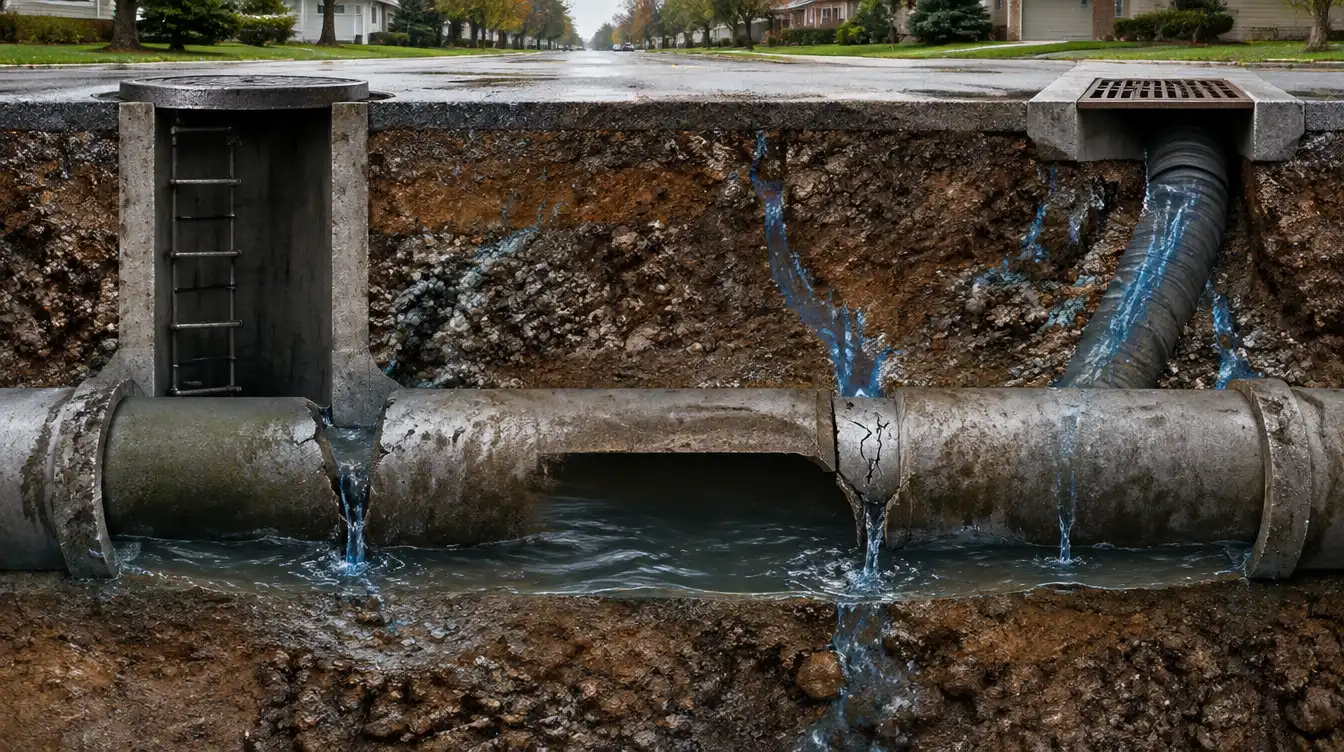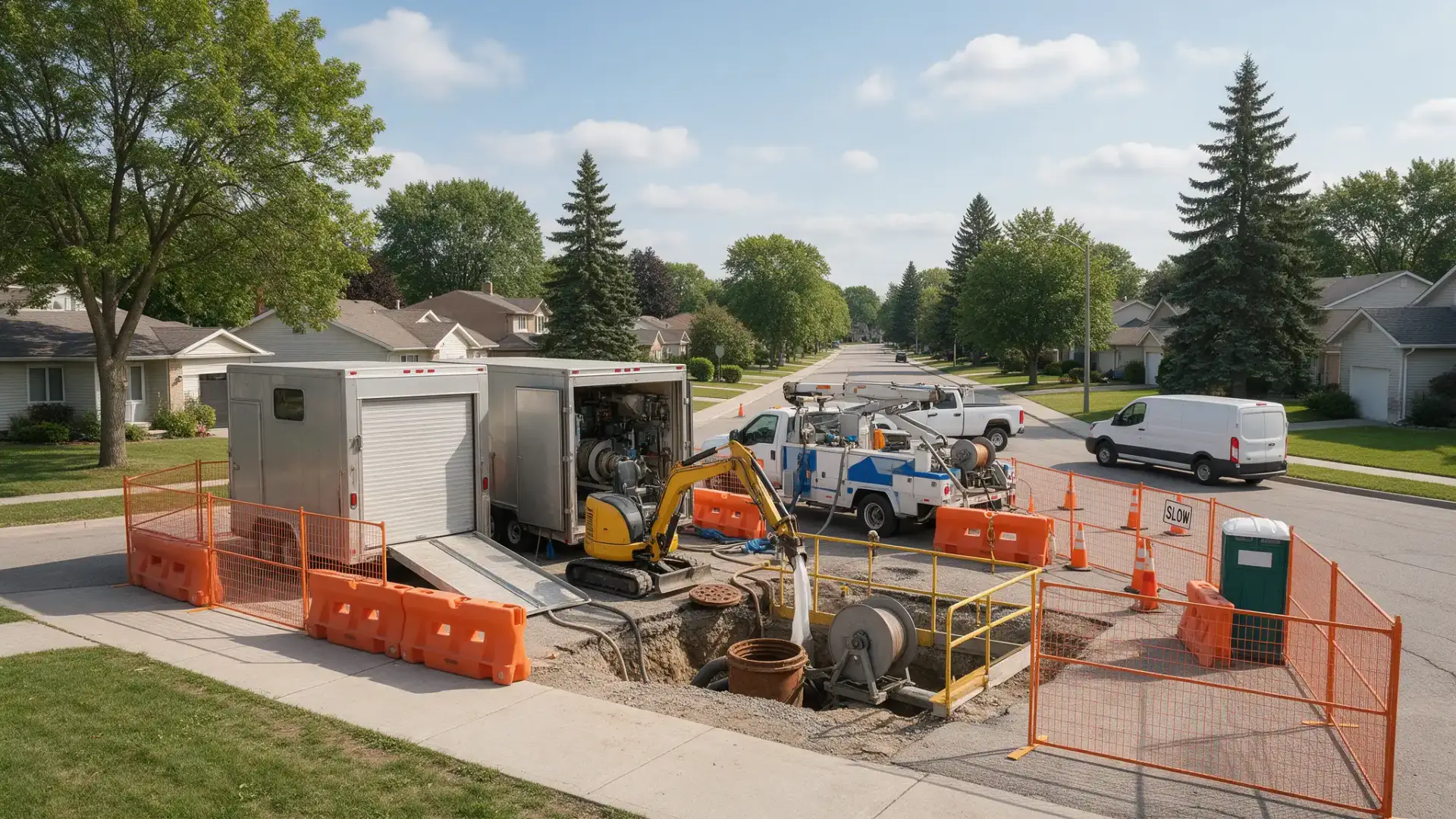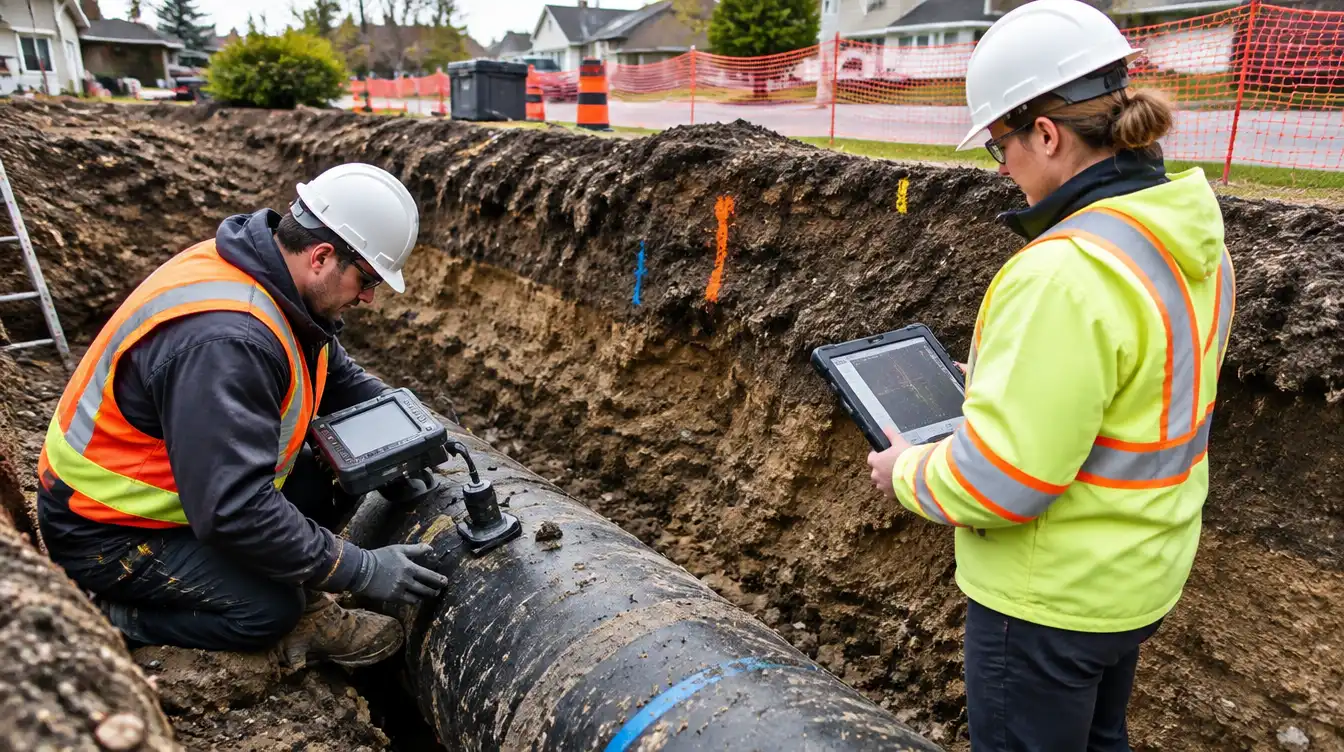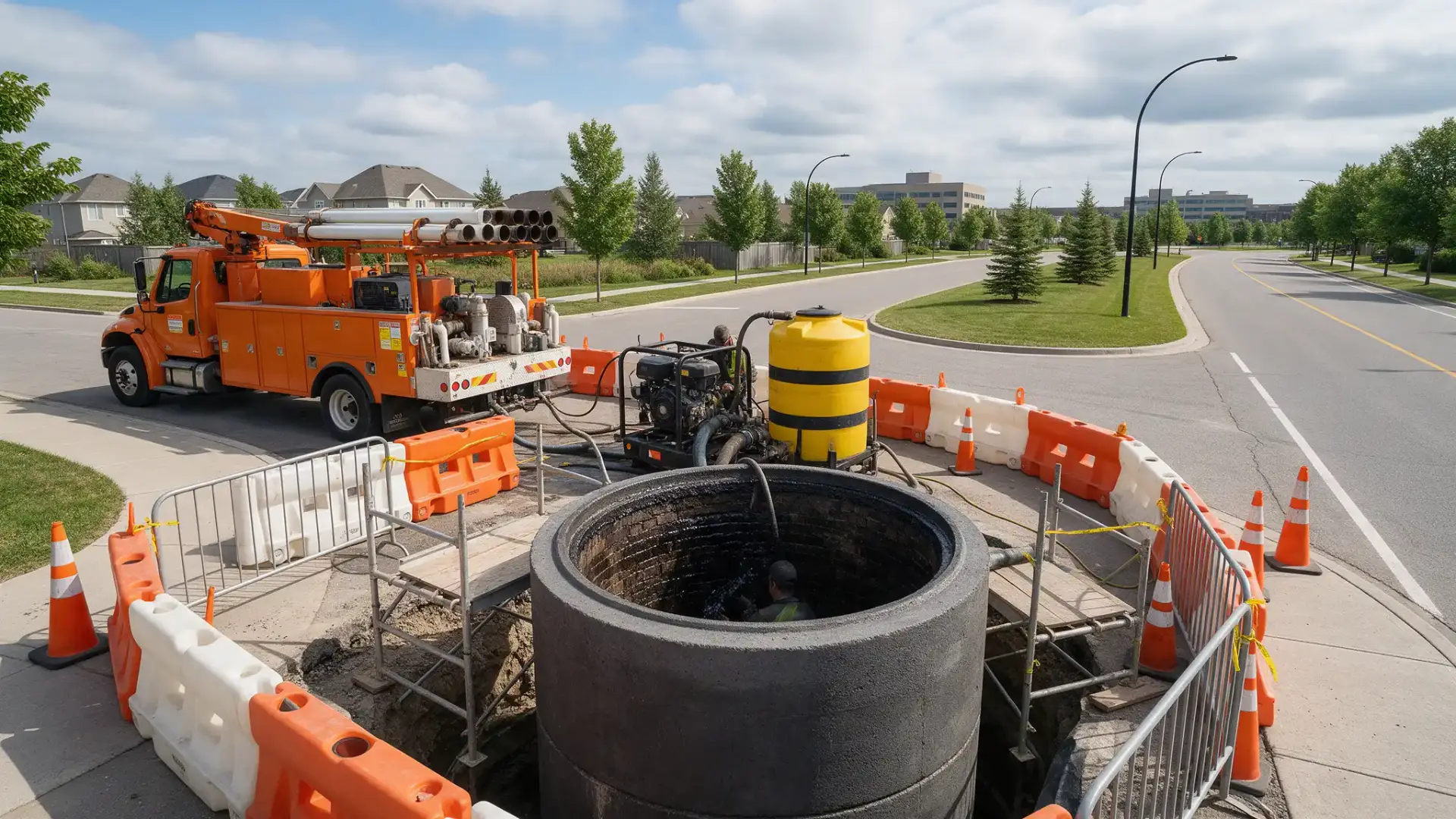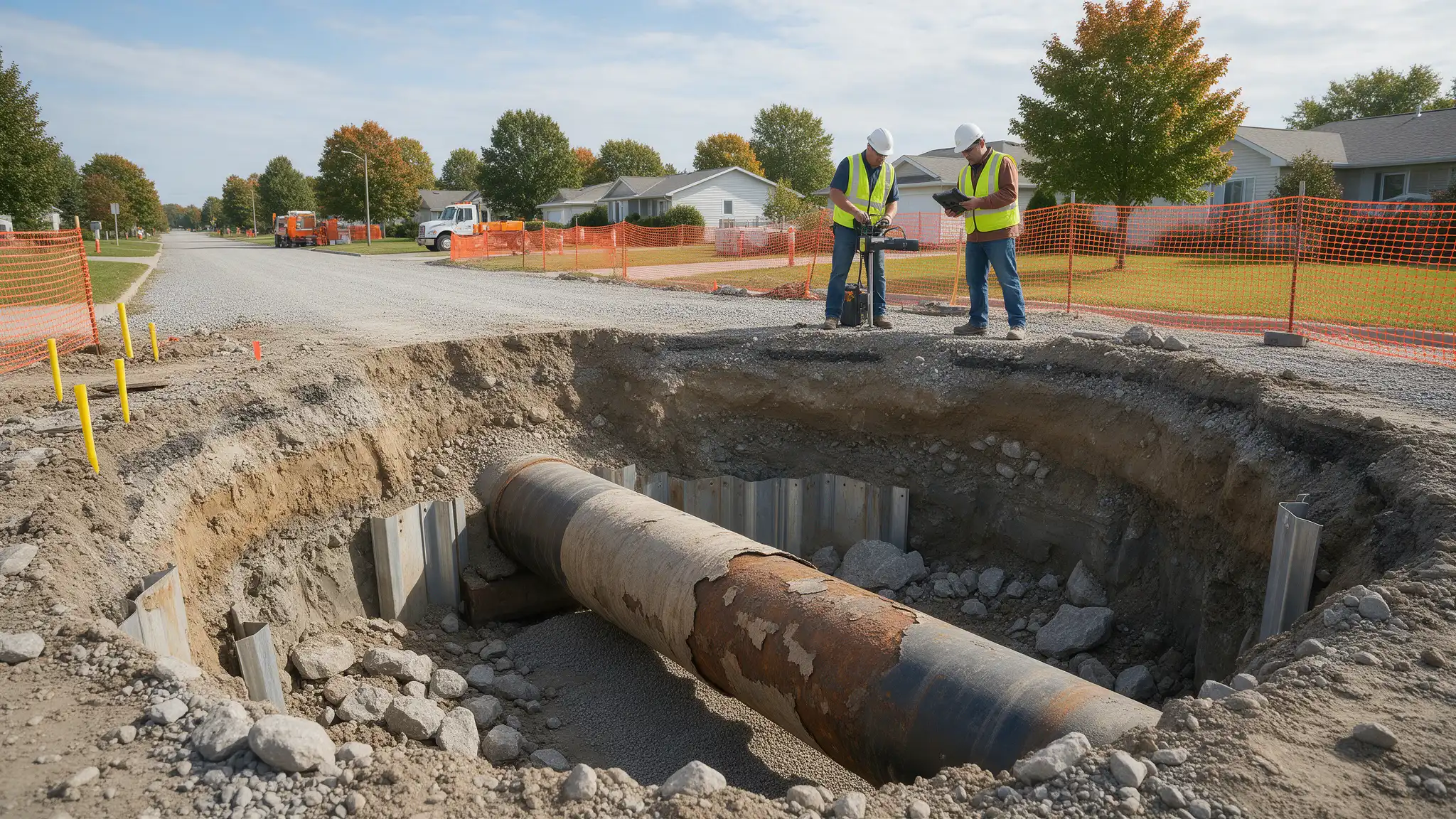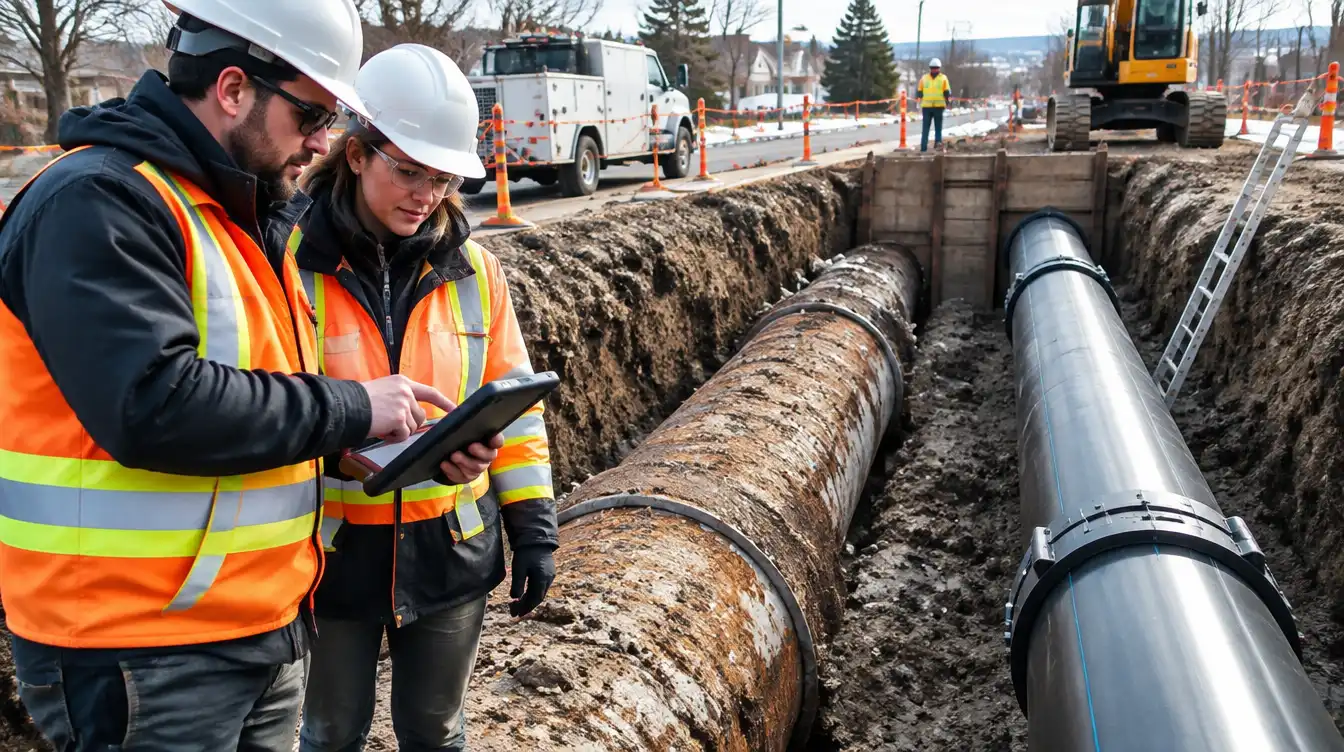
Most of a buried pipe is inaccessible to routine observation. Pipeline condition assessment helps an owner understand its condition before deciding what to do next.
A well-planned assessment reduces uncertainty and supports decisions about maintenance, repair, rehabilitation, replacement, or continued monitoring. It also makes clear what the available evidence cannot establish.
This guide explains the main assessment methods, when to use them, and how inspection data becomes a defensible engineering decision.
What pipeline condition assessment means
Condition assessment is the structured process of gathering and interpreting data about a pipe’s physical state. This includes observed deterioration, defects, and other characteristics that affect performance.
It is more than a quick camera inspection. A complete assessment may combine inspection findings with records, operating information, and engineering analysis. Standardized condition coding can support comparison, while structural adequacy or hydraulic capacity may require additional testing.
The distinction matters. An inspection records what the selected equipment can detect under the inspection conditions. A condition assessment interprets those findings in the context of the asset’s function, loading, deterioration mechanisms, and failure consequences. It identifies appropriate actions and any further investigation needed. It does not necessarily establish remaining service life or predict when failure will occur.
Why you cannot manage what you cannot see
Buried pipes can deteriorate or leak without obvious surface evidence. Depending on the material and failure mechanism, the first visible sign may be a service interruption, ground movement, or a major leak. An unplanned failure can increase disruption and restrict the time available to investigate and compare repair options.
Condition assessment provides evidence that can help an owner identify deterioration before failure, target further investigation, and justify maintenance or renewal spending. Its value depends on selecting methods that can detect the relevant problems and recognizing their limitations. Existing records and operating history remain important, particularly where direct inspection is difficult or incomplete.
CCTV inspection and defect coding (PACP)
For a municipal example of condition assessment feeding directly into rehabilitation planning, see Avodahtec’s Storm Sewer Condition Assessment & Rehabilitation Analysis project for the City of Grande Prairie.
Closed-circuit television inspection is the workhorse of sewer and stormwater condition assessment. A camera, mounted on a crawler or float, travels the pipe and records its interior, capturing visible evidence of cracks, fractures, root intrusion, corrosion, joint separation, and blockages.
Clear video and consistent coding work together. NASSCO’s Pipeline Assessment Certification Program (PACP) provides a standardized framework for recording pipe conditions and classifying applicable defects.
PACP supports comparison and condition summaries, but reliable results still depend on inspection quality, trained personnel, and quality control. The original footage should remain available for reviewing observations and interpretations.
CCTV does not directly measure remaining wall thickness, reveal all external deterioration, or establish structural capacity. Water, deposits, poor lighting, and restricted access can obscure defects. Inspection reports should clearly identify sections that were not inspected or could not be adequately observed.
Where the assessment includes connected structures, manhole and lateral inspections can provide additional evidence. NASSCO’s MACP and LACP programs provide corresponding coding frameworks for manholes and laterals.
Beyond the camera: methods for what CCTV cannot see
Conventional CCTV is most effective where the internal surface is visible. Submerged areas, hidden deterioration, and questions about material strength or wall thickness may require complementary methods.
Acoustic leak detection. Sensors detect sounds associated with leakage in pressurized mains and can help locate suspected leaks. Effectiveness depends on pipe material, pressure, background noise, access, and the selected equipment. Locating a leak does not, by itself, quantify the leakage rate or establish the pipe’s structural condition.
Sonar and profiling. Sonar can profile submerged internal surfaces and sediment in full or partly full pipes. It helps assess geometry and obstructions below the waterline.
However, sonar does not generally measure remaining wall thickness or reliably characterize fine cracks. Sediment can also obscure the pipe surface beneath it.
Laser profiling. Laser profiling measures visible internal geometry, helping quantify dimensions, ovality, deformation, and deposits. Accuracy depends on calibration, positioning, visibility, and the equipment used. Geometry alone does not establish remaining wall thickness; interpreting apparent material loss requires a reliable reference profile and consideration of measurement uncertainty.
Electromagnetic and wall-thickness testing. The technique must match the pipe material and the deterioration being investigated. Suitable electromagnetic or ultrasonic methods can assess metal loss or wall thickness in certain metallic pipes.
For prestressed concrete cylinder pipe (PCCP), specialized electromagnetic inspection can detect and estimate broken prestressing-wire wraps. Wire-break detection is not a general measurement of concrete condition or remaining pipe-wall thickness. Results must be interpreted against the pipe’s construction, loading, and the method’s detection limits.
For a real-world example involving critical steel forcemain infrastructure, see Avodahtec’s City of Whitehorse Forcemain Corrosion Assessment and Cathodic Protection Design project.
Smoke and dye testing. These methods help identify unwanted connections and pathways through which extraneous water can enter a sanitary sewer. Smoke testing can reveal potential pathways, while dye testing can help confirm connections. They form part of an inflow-and-infiltration investigation alongside CCTV, manhole inspection, and flow monitoring; they do not establish every source or its flow contribution on their own.
Choosing the right method for the pipe
There is no single best assessment method. The right method depends on the question that needs to be answered.
Key factors include:
- whether the pipe is a gravity sewer or pressure main;
- pipe material and diameter;
- whether the pipe can be taken out of service; and
- whether the priority is structural integrity, leakage, hydraulic capacity, or another concern.
The assessment should begin with available drawings, previous inspections, failure and maintenance records, and operating information. Access, flow conditions, cleaning requirements, service continuity, and inspection risks then help determine which techniques are practical.
Often, the best assessment uses more than one method:
- CCTV to record visible defects;
- acoustic testing to help locate leaks;
- profiling to measure internal geometry;
- flow or pressure data to assess operating performance; and
- material testing or structural analysis where load-carrying capacity is uncertain.
Matching the toolset to the asset and the decision is where independent engineering judgment adds value: it targets the evidence needed to resolve the decision while identifying significant gaps that remain.
From inspection data to a condition grade
Raw inspection output is not a decision. Coded defects and measurements can be summarized into condition grades using a defined assessment framework. A condition grade describes the findings captured by that framework; it is not a direct measurement of failure probability or remaining service life. Pressure-pipe assessments may also require material-specific indicators and structural evaluations that cannot be adequately represented by a single grade.
Before grading, quality checks should confirm asset identification, inspection coverage, coding consistency, and the validity of measurements. Structural defects and operation-and-maintenance defects should be distinguished so that a blockage is not treated as equivalent to structural deterioration. Uninspected or obscured sections should remain identified as uncertain rather than being assumed to be in good condition.
Condition grades help owners compare assessed assets and identify candidates for maintenance, further investigation, or renewal. For investment planning, they must be considered alongside failure consequences, operating history, service requirements, and data confidence. The supporting observations and assessment date should remain traceable so that a summary score does not conceal important details.
How condition assessment feeds every renewal decision
Condition assessment is not an end in itself. It is an important part of the evidence base for the decisions that follow.
At the asset level, it helps determine whether maintenance, repair, rehabilitation, replacement, or further investigation is appropriate. Significant host-pipe deterioration does not automatically rule out structural lining. Suitability also depends on geometry, ground support, hydraulic requirements, installation constraints, and the proposed system’s design.
We cover that decision in our guide on pipe rehabilitation versus replacement.
At the network level, condition grades support risk-based capital planning. We cover that process in our guide to prioritizing infrastructure renewal.
The assessment should distinguish observations from engineering interpretations and state the limitations of its recommendations. Where evidence is insufficient for a final renewal decision, the next step may be targeted testing, monitoring, or further analysis.
Frequently asked questions
What is pipeline condition assessment?
It is the structured process of collecting and interpreting information about a pipe’s condition and performance to support maintenance, repair, rehabilitation, replacement, or monitoring decisions. It combines inspection findings with relevant records and engineering analysis, while identifying uncertainties and any further investigation required.
What is PACP?
PACP, the Pipeline Assessment Certification Program from NASSCO, is a standardized framework for recording and classifying pipe conditions, commonly used with sewer CCTV inspections. It supports consistent reporting and comparison when applied correctly, with appropriate inspection quality and coding checks.
Is CCTV enough on its own?
It depends on the decision. CCTV may be sufficient to identify visible defects and support some maintenance or repair decisions. It does not directly establish remaining wall thickness, external condition, or structural capacity, and visibility may be limited by water or deposits. Sonar, profiling, leak detection, material testing, or engineering analysis may be needed to answer additional questions.
How often should pipes be assessed?
The interval should reflect failure consequences, known condition, deterioration rate, operating history, and confidence in previous findings. Higher-risk assets may warrant closer monitoring or more frequent assessment, but criticality alone does not determine the interval. New failures, performance changes, or inspection findings should trigger a review of the program.
Book a free consultation
Avodahtec is an independent engineering advisor. We help municipalities and utilities plan condition assessments, interpret inspection findings, and use the results to support maintenance and renewal decisions.
Because we do not sell inspection equipment or construction, our recommendations focus on the asset’s requirements, the owner’s objectives, and the evidence needed for the decision.
From there we can support design, project and construction management, tender preparation, bid evaluation, contract administration, and construction oversight. As prime consultant, we can coordinate the engineering team and support delivery in accordance with the owner’s procurement process and our agreed scope.
Book a free consultation to discuss your asset concerns, available information, and the assessment approach best suited to your next decision.