Helping municipalities understand pipeline condition, manage failure risk, prioritize investment, and navigate Alberta’s regulatory environment.
Municipalities across Alberta depend on pipeline networks to deliver drinking water, collect wastewater, manage stormwater, and support essential services. Many systems include aging assets, incomplete records, and increasing demands from growth.
Municipalities also interact with regulated energy pipelines in utility corridors and development areas. Pipeline integrity management in Alberta therefore requires a clear understanding of asset condition, service risk, ownership, and regulatory responsibility.
What Is Pipeline Integrity Management?
Pipeline integrity management is a structured process for maintaining a pipeline’s ability to provide its intended service safely and reliably.
For municipalities, this means connecting asset information, condition assessment, maintenance, risk analysis, and capital planning. An effective program helps determine what assets are owned, how they are performing, which pipelines present the greatest risk, and when inspection, rehabilitation, or replacement should occur.
The objective is not to eliminate every possible failure. It is to understand risk and intervene before deterioration reaches an unacceptable level.
Understanding Alberta’s Regulatory Framework
The requirements applicable to a pipeline depend on its service, ownership, location, and jurisdiction.
Municipal drinking-water, wastewater, and stormwater systems are regulated under Alberta’s environmental and public-health framework, including applicable approvals and standards.
Energy pipelines governed by Alberta’s Pipeline Act and Pipeline Rules are regulated through the Alberta Energy Regulator. Pipelines crossing provincial, territorial, or international boundaries are generally regulated by the Canada Energy Regulator.
CSA Z662 provides lifecycle requirements for oil and gas pipeline systems. It does not automatically apply to municipal water, wastewater, or stormwater pipelines. Municipalities should confirm pipeline ownership and jurisdiction before beginning work near an existing pipeline or applying a particular standard.
Condition and Risk Are More Important Than Age Alone
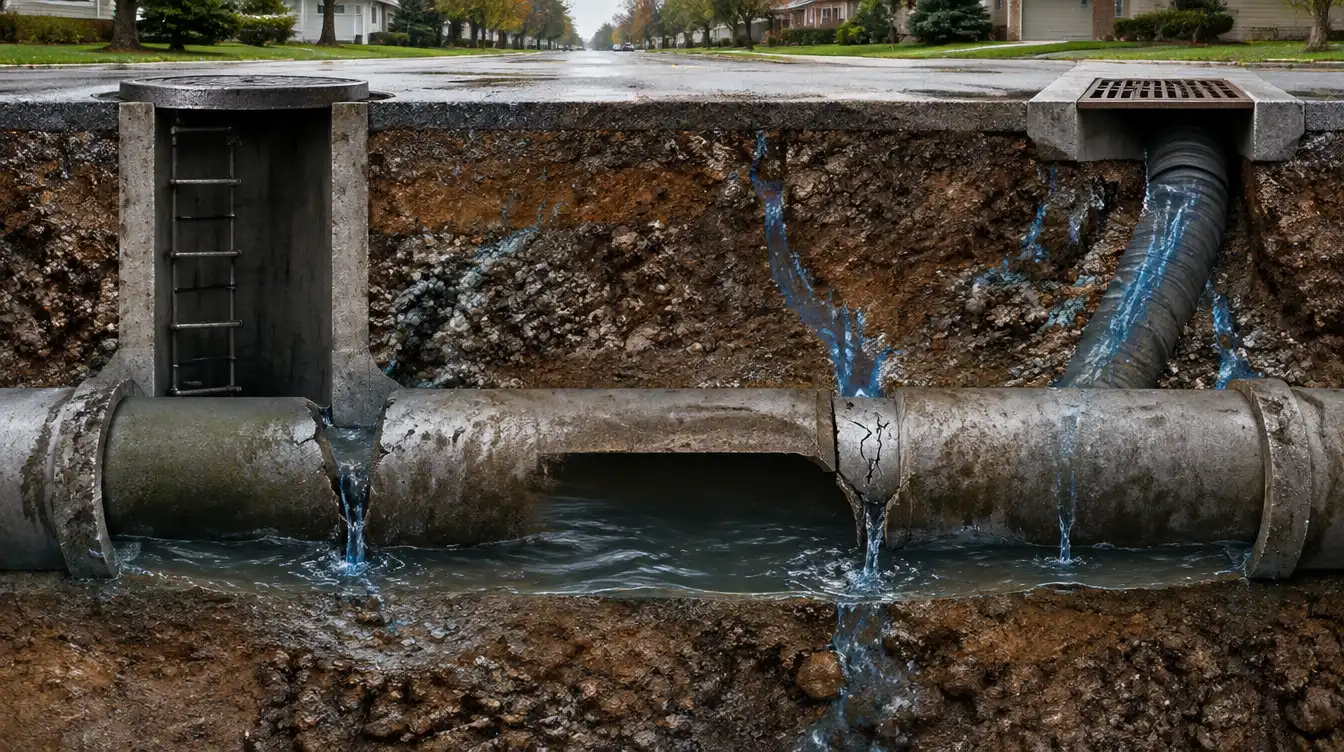
Pipeline age is an important planning indicator, but it does not provide a complete picture of condition or remaining service life. Performance may also be influenced by material, installation quality, operating pressure, corrosion, soil and groundwater conditions, frost action, external loading, previous repairs, and hydraulic transients.
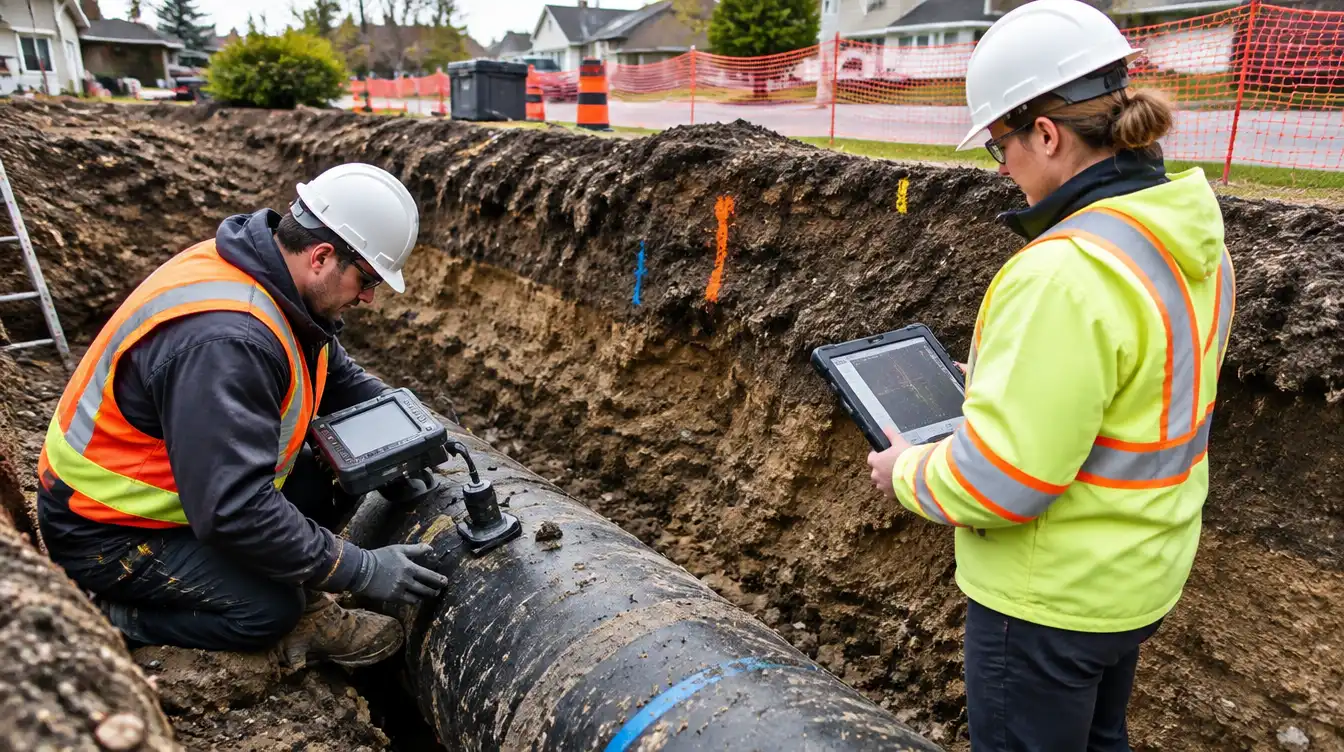
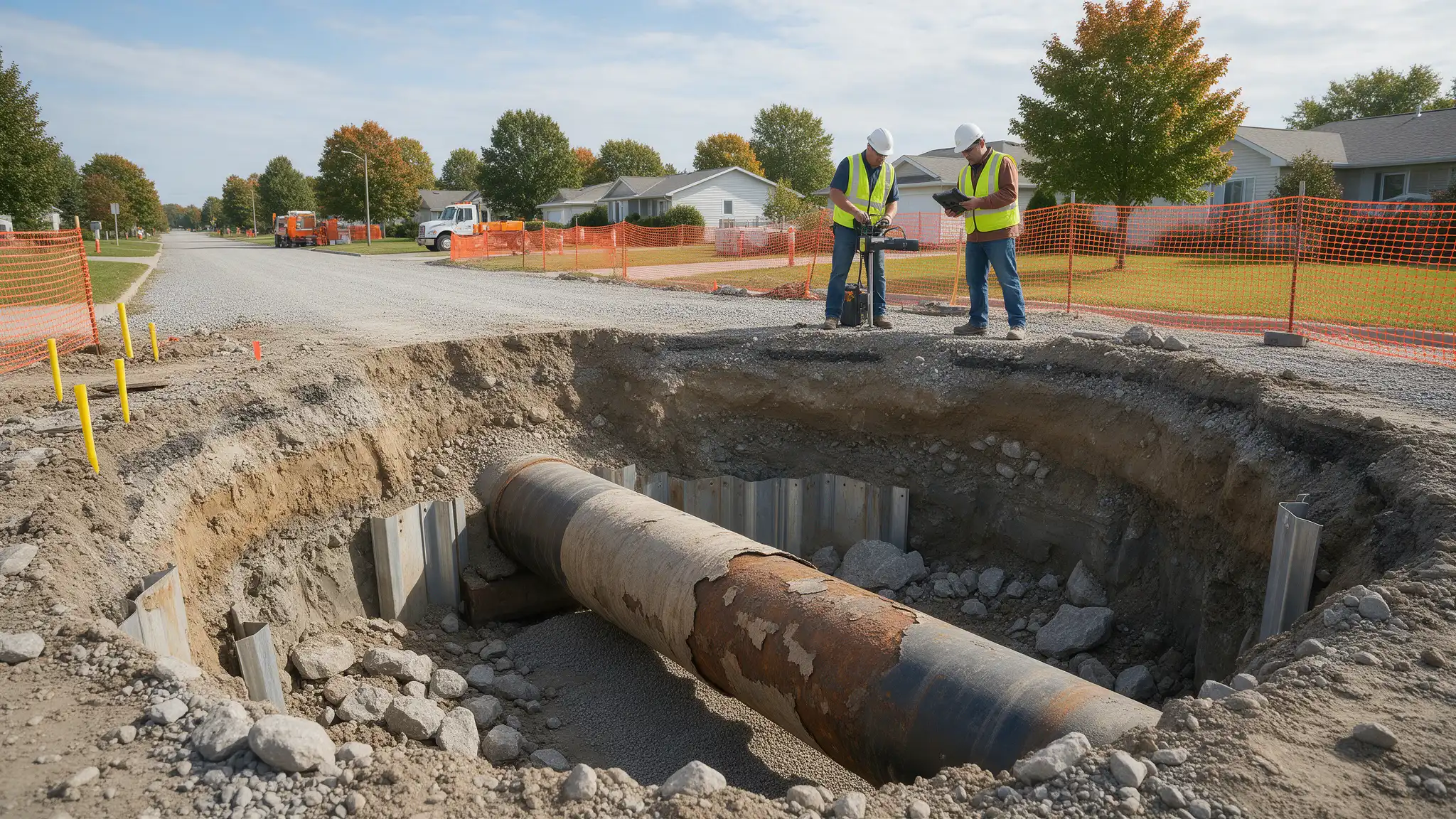
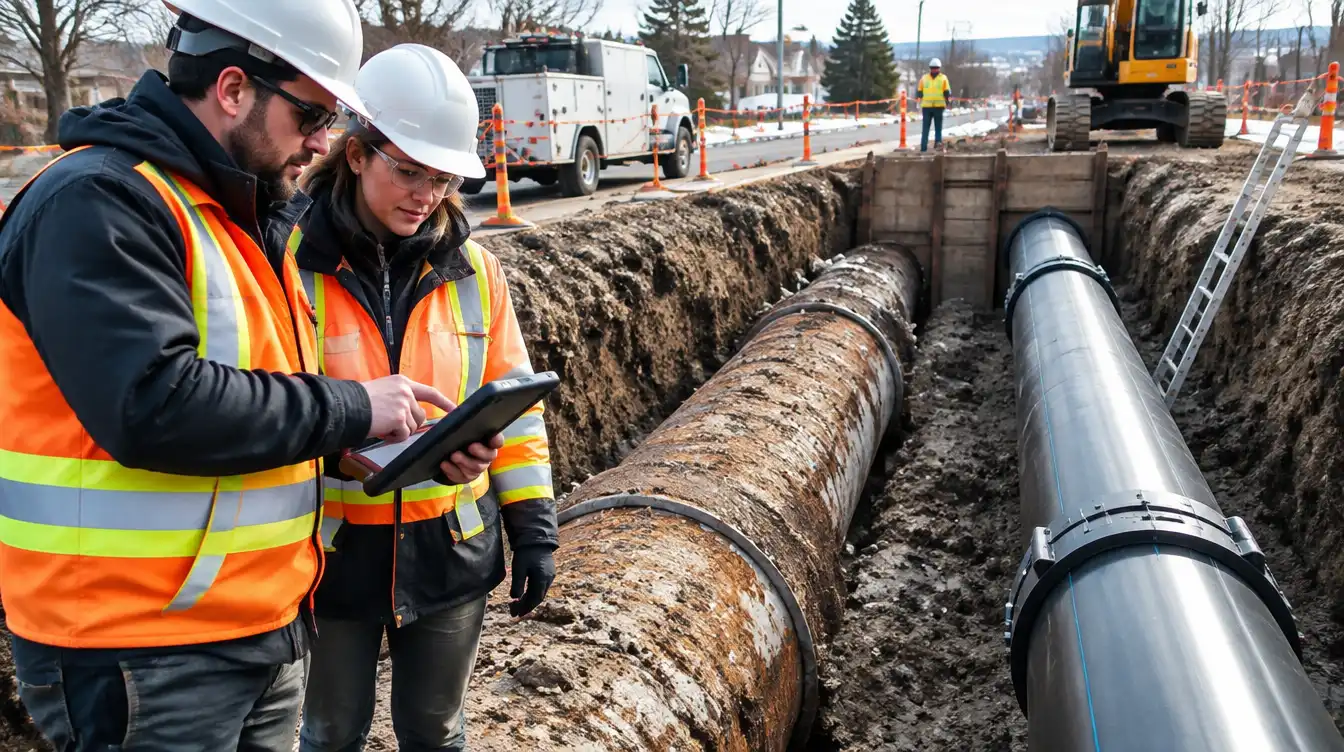
Condition assessment may include records review, CCTV, leak detection, pressure monitoring, internal inspection, external surveys, non-destructive testing, material sampling, or investigative excavations. The selected method should match the pipeline material, expected failure mechanism, accessibility, and decision being made.
Municipalities can then prioritize pipelines by considering both the likelihood and consequences of failure. Consequences may include loss of essential service, public-health impacts, flooding, environmental damage, road disruption, and emergency repair costs.
Building a Practical Municipal Program
A municipality does not need to inspect its entire network at once. A practical pipeline integrity management program can begin with:
- Compiling available asset, inspection, maintenance, and failure data
- Identifying critical pipelines and major information gaps
- Screening assets based on likelihood and consequence of failure
- Developing targeted condition-assessment plans
- Evaluating monitoring, repair, rehabilitation, and replacement options
- Preparing a prioritized multi-year capital program
Operations, engineering, maintenance, GIS, and finance teams should work from a shared understanding of pipeline risk. Information collected during repairs and construction should also be used to improve asset records and future decisions.
Municipal Interaction With Energy Pipelines
Road projects, utility installations, drainage improvements, and new developments may affect energy pipeline rights-of-way or required setbacks. Municipalities should coordinate early with the pipeline operator to confirm location, crossing requirements, ground-disturbance restrictions, and required approvals.
Early coordination helps prevent redesign, construction delays, pipeline damage, and conflicts between municipal infrastructure and existing energy corridors.
An Integrated Approach
At Avodahtec, we support Alberta municipalities and infrastructure owners with pipeline data review, risk analysis, condition-assessment planning, inspection-technology evaluation, rehabilitation options, and capital prioritization.
By connecting technical condition with service risk and financial planning, we help municipalities make defensible decisions about where to inspect, when to intervene, and how to direct limited funding.
Conclusion
Pipeline integrity management in Alberta requires municipalities to understand both their own infrastructure and the regulatory environment surrounding other pipelines in their communities.
Reliable asset information, fit-for-purpose condition assessment, risk-based prioritization, and timely intervention provide the foundation for safer, more reliable, and more financially sustainable pipeline systems.