
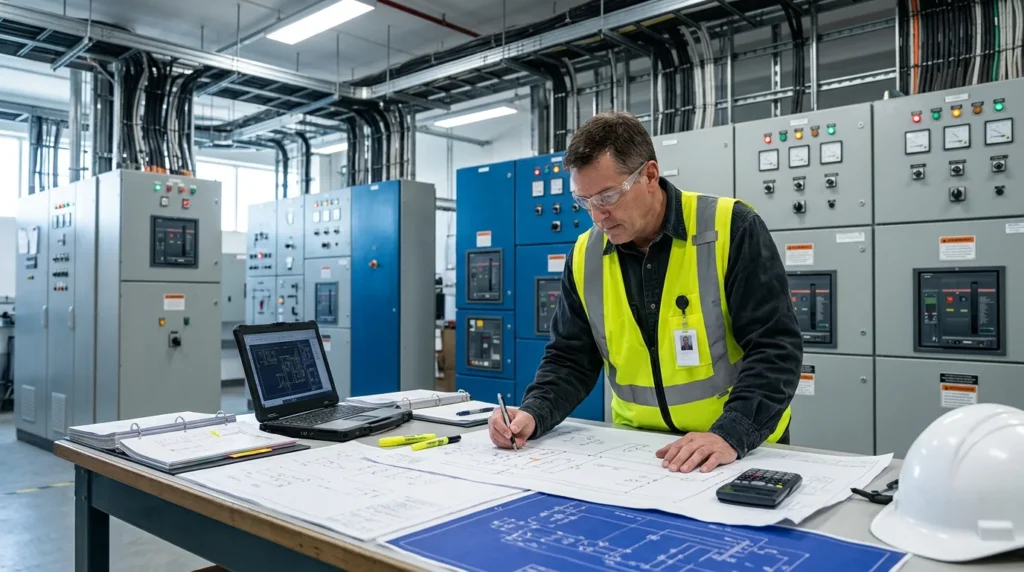
Electrical systems power everything a facility depends on, and a flaw in the electrical design can undermine safety, reliability, and operations. An independent electrical engineering design review assesses a project’s electrical documentation against its requirements and the applicable codes and standards before construction or equipment procurement. It helps identify discrepancies and coordination gaps while changes are generally easier to make. This guide explains what an electrical design review examines, why it is done independently, and where it adds value.
What is an independent electrical design review?
An independent electrical engineering design review is a structured technical assessment of a project’s electrical drawings, calculations, and specifications by a qualified reviewer who was not involved in preparing the original design. The reviewer checks the documentation against the project’s design basis, the electrical code and edition applicable to the jurisdiction, and relevant standards. The findings identify discrepancies, incomplete information, and matters requiring further engineering consideration. The scope, reviewer qualifications, and independence requirements should be established before the review begins.
An independent review supplements the design team’s own quality processes; it does not replace the responsibilities of the engineer of record, regulatory approval, or installation testing. Its role is to provide a documented assessment within an agreed scope, with findings the responsible design team can address.
What does an electrical design review check
Depending on the agreed scope and the project stage, an electrical design review typically examines the following.
Distribution design. Whether the electrical distribution system is arranged appropriately for the loads, the facility, and its operational needs.
Load calculations and equipment sizing. Whether connected loads, demand assumptions, operating scenarios, and equipment ratings are reasonable and consistent with the design requirements.
Single-line diagrams and schedules. Consistency and completeness of the single-line diagrams, panel schedules, and equipment specifications, and their agreement with the calculations.
Protection and coordination. Whether protective devices and equipment ratings suit the available fault current and operating conditions. Where included in scope, the review also examines coordination studies and selective coordination where required.
Cable sizing and routing. Whether conductor ampacity, installation conditions, voltage drop, and routing have been appropriately addressed.
Grounding and bonding. Whether grounding and bonding arrangements are complete and consistent with requirements.
Emergency and standby power. Whether supply capacity, transfer arrangements, and connected loads meet the applicable requirements and support the systems that depend on them.
Equipment locations and access. Whether electrical equipment locations provide the required clearances for installation, operation, and maintenance.
The scope should identify which calculations and studies will be checked and whether any independent calculations are included. Drawings, schedules, and specifications need to be read together because their assumptions and requirements may differ.
Why independent, and why before construction
Electrical design errors are generally easier to address before equipment is ordered or installed. An undersized feeder, an inconsistent panel schedule, or an incomplete emergency-power interface can require redesign, procurement changes, or field rework. An independent review creates an opportunity to identify these issues before those commitments are made.
A reviewer who was not involved in preparing the design can question assumptions that the design team may have accepted. This additional perspective complements the team’s internal checks. The reviewer may be retained by an owner, lender, insurer, or design firm; the agreed engagement determines whom the reviewer advises and what the assessment covers.
Where electrical review meets the other disciplines
Electrical design requires coordination with other disciplines. Mechanical equipment power and control requirements must align with electrical schedules. Fire pumps, emergency systems, and fire alarm interfaces need the appropriate electrical provisions. Equipment locations must also preserve installation and maintenance clearances. A multidisciplinary assessment can examine these interfaces across the relevant documents and assign findings to the responsible designers. We cover that approach in our guide to independent engineering design review.
These interfaces are particularly important in data centres with power and uninterruptible power supply (UPS) infrastructure, industrial plants with motors and process equipment, power and energy facilities, battery energy storage systems, and hospitals with essential electrical services. Review priorities should reflect each facility’s hazards, operating needs, and consequences of failure.
What documents are reviewed
A useful electrical review looks beyond the drawings to the documents that establish the design’s assumptions and requirements: single-line diagrams and schematics, load calculations, panel schedules and equipment data sheets, cable schedules, specifications, the design basis, and applicable codes and standards. Protection, short-circuit, and other studies should be supplied where they form part of the review scope. Reviewing these documents together can reveal disagreements between an equipment schedule and a calculation, or requirements omitted from the drawings.
What you receive from a review
The deliverable is a clear, structured record of findings. Each finding should identify the affected document and revision, the relevant requirement or engineering basis, its priority, and the action or clarification needed. Where response review is included, a comment register records the design team’s response, supporting revisions, and closure status. Unresolved issues and review limitations should remain visible to the client.
How Avodahtec helps
Avodahtec provides independent electrical engineering design review as part of its multidisciplinary design QA/QC service within our core engineering and design practice. Our specialists review the agreed electrical documentation against project requirements and applicable codes and standards, then document discrepancies and coordination issues for the design team to address. We work with owners and with design and engineering, procurement, and construction (EPC) firms seeking an external assessment. Where the scope includes mechanical and fire protection, we also examine the interfaces between those disciplines.
Frequently asked questions
What is an electrical engineering design review?
An independent technical assessment of a project’s electrical drawings, calculations, and specifications by a qualified reviewer who was not involved in preparing the design. Within the agreed scope, it checks distribution, loads, protection, and coordination against applicable codes and project requirements.
How is a review different from designing the electrical system?
A designer prepares the electrical system design. An independent reviewer assesses that design within an agreed scope and documents findings for the responsible designer to address. The review supplements the design team’s checks and leaves the engineer of record’s responsibilities in place.
When should an electrical design review happen?
At appropriate design milestones and before relevant equipment is procured or drawings are issued for construction. Allow time for the design team to respond and for significant findings to be checked against revised documents.
Can electrical review be combined with mechanical and fire protection?
Yes. A multidisciplinary review can assess the electrical design alongside mechanical and fire protection documents, with particular attention to equipment power, emergency systems, controls, and other shared interfaces.
Book a free consultation
An electrical design issue discovered after procurement can affect equipment selection, cost, and schedule. Avodahtec’s specialists provide a documented review of the agreed design scope, helping your team address significant findings before they become installation problems.
Book a free consultation and we will help you scope an electrical design review for your project.