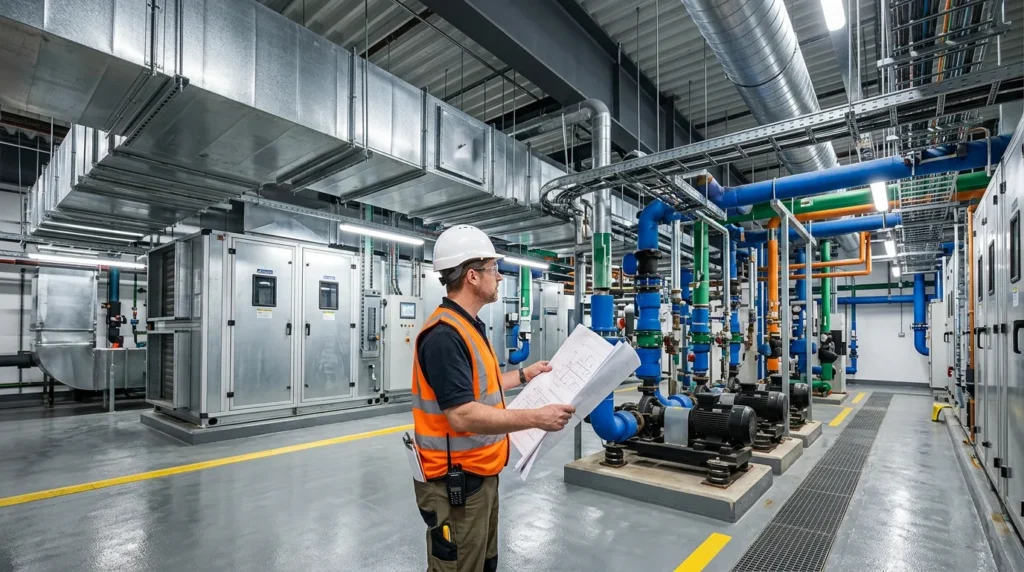

A sound engineering design must address the project’s requirements and the interfaces between its systems. Even detailed drawings can contain gaps or inconsistencies that become apparent during procurement, construction, or operation.
An electrical system may be technically sound on its own, but conflict with mechanical equipment requirements. A ventilation arrangement may interfere with a fire protection strategy. Equipment specifications may not align with engineering drawings, while critical details between disciplines remain unresolved.
Independent engineering design review provides an additional assessment of these technical details and interfaces.
For organizations investing in complex infrastructure, buildings, industrial facilities, equipment, or engineered systems, identifying design deficiencies before construction or fabrication can help prevent avoidable rework, delays, additional costs, and operational risks.
At Avodahtec, our multidisciplinary design QA/QC services focus on independent technical reviews across three critical engineering disciplines: mechanical, electrical, and fire protection. Our approach recognizes that engineering systems do not operate in isolation. Their designs must work individually and collectively to support the intended functionality, safety, reliability, and performance of the completed project.
What Is an Independent Engineering Design Review?
An independent engineering design review is a structured technical assessment of drawings, calculations, specifications, and related documentation by qualified reviewers who were not involved in preparing the original design. Their competence, review scope, and degree of independence should match the project and applicable professional requirements.
The purpose is to provide an objective assessment of whether the design adequately addresses its stated requirements and to identify potential deficiencies that may have been overlooked during development.
Depending on the project and agreed review scope, an engineering design review may evaluate:
- Technical accuracy and completeness appropriate to the design stage.
- Consistency between drawings, specifications, schedules, and calculations.
- Alignment with the project’s design basis and performance requirements.
- Compliance with applicable code editions, referenced standards, and jurisdictional requirements.
- Coordination between engineering disciplines.
- Equipment selection, accessibility, and system integration.
- Constructability, maintainability, and potential operational challenges.
- Design assumptions, omissions, and unresolved technical issues.
An independent reviewer can question design assumptions and assess the documentation from a different technical perspective. It provides an additional layer of scrutiny, helping project owners and design teams identify issues before the design progresses further.
An independent review supplements the original designer’s quality processes and does not transfer the engineer of record’s responsibilities. Internal checks and independent review may have different scopes; the required activities should be defined for the project.
Understanding Design QA/QC: Quality Assurance vs. Quality Control
Although frequently used together, quality assurance (QA) and quality control (QC) serve different purposes in engineering design.
Design quality assurance focuses on the processes established to achieve design quality. It considers whether appropriate procedures, review stages, technical requirements, and verification processes are in place.
Design quality control focuses on examining the actual engineering deliverables to identify errors, omissions, inconsistencies, or departures from specified requirements.
In practical terms, quality assurance establishes how design quality should be achieved, while quality control examines whether the design documentation meets its requirements. A technical review primarily examines deliverables; assessing the effectiveness of the quality process itself requires an agreed QA scope.
A multidisciplinary design QA/QC process should define both the checking activities and how findings and revisions will be managed across disciplines.
Why Independent Design Review Matters Before Construction or Fabrication
Some design deficiencies emerge only when related documents and system interfaces are examined together. Missing equipment clearances, inconsistent calculations, conflicting specifications, and incomplete interfaces can affect more than one discipline.
Once procurement, fabrication, or construction begins, resolving these issues may require equipment changes or field rework. Review at the appropriate milestone gives the design team time to respond before those commitments are made.
1. Identify Errors and Omissions Early
A review checks whether the required technical details are present and consistent across the documentation. A design review can identify missing information, inconsistent dimensions, calculation discrepancies, incomplete specifications, and other potential deficiencies requiring clarification or correction.
Identifying these concerns before construction or fabrication allows the design team to address them before they affect subsequent project activities.
2. Improve Coordination Between Engineering Disciplines
Mechanical, electrical, and fire protection systems frequently share physical spaces, equipment dependencies, and operational requirements. A change in one discipline can affect another.
For example, the placement of electrical equipment may affect mechanical ventilation requirements, while mechanical layouts may influence access to fire protection equipment. Multidisciplinary design reviews examine these relationships to identify potential coordination issues that may not be apparent through individual discipline reviews alone.
3. Support Regulatory and Technical Compliance
Engineering designs must address the codes and editions applicable to the jurisdiction, referenced standards, and project specifications. Within the agreed scope, an independent review can identify potential nonconformities and matters requiring further technical justification. It does not itself grant regulatory approval or certify that every requirement has been met.
This additional assessment is particularly relevant for systems involving electrical safety, fire protection, emergency systems, and other critical infrastructure.
4. Reduce Potential Rework and Project Disruption
An unresolved design issue can lead to requests for information, redesign, construction changes, equipment modifications, or installation delays. Although an independent review cannot eliminate every project risk, identifying potential deficiencies during design development may reduce the likelihood of avoidable downstream changes.
5. Provide Greater Confidence in Engineering Deliverables
For project owners, developers, and other stakeholders, an independent assessment provides additional technical insight before major project commitments are made. It also creates a documented record of review findings, recommended actions, and outstanding issues.
This information can support project decision-making, design coordination, and quality management.
What Does Multidisciplinary Engineering Design QA/QC Cover?
Mechanical, electrical, and fire protection systems share equipment, space, and operating dependencies. Their combined performance depends on coordinated layouts, capacities, controls, and emergency sequences.
Avodahtec’s multidisciplinary engineering design review services bring together three important areas of technical assessment.
Mechanical Engineering Design Review
Mechanical systems affect facility operation, environmental conditions, and maintenance access. Mechanical engineering design review involves examining the relevant drawings, calculations, specifications, equipment selections, and system arrangements against defined project requirements.
Depending on the project scope, a mechanical design review may address:
- Heating, ventilation, and air conditioning (HVAC) system design.
- Heating and cooling loads and the assumptions supporting them.
- Mechanical equipment duty, sizing, and operating range.
- Piping and ductwork sizes, pressure losses, materials, and routing.
- Equipment accessibility and maintenance clearances.
- System capacity and performance requirements.
- Ventilation, pressure relationships, and environmental control requirements.
- Coordination with electrical and fire protection systems.
- Consistency between mechanical drawings, schedules, and specifications.
Example: Mechanical Design Coordination
Consider an HVAC system that needs electrical power, control connections, and specified responses to a fire alarm. The documents need to agree on equipment ratings, connection points, operating sequences, and installation and maintenance access.
An independent review may identify inconsistent equipment schedules, insufficient access clearances, or missing coordination details between the respective engineering documents. Addressing these issues during design development can support a more coordinated installation.
Electrical Engineering Design Review
Electrical systems support the safe and reliable operation of buildings, industrial processes, machinery, and infrastructure. Deficiencies in electrical design can affect equipment performance, operational continuity, maintenance, and safety.
An independent electrical engineering design review examines the technical documentation to identify potential discrepancies, incomplete information, and areas requiring further engineering consideration.
Depending on the project, review activities may include:
- Electrical distribution system design.
- Load calculations and equipment sizing.
- Single-line diagrams.
- Panel schedules and electrical equipment specifications.
- Cable sizing and routing considerations.
- Protective device selection, equipment fault-current ratings, and coordination where required.
- Grounding and bonding arrangements.
- Emergency and standby power requirements.
- Electrical equipment locations and access clearances.
- Interfaces with mechanical equipment and fire protection systems.
- Applicable electrical codes and project requirements.
Example: Electrical System Coordination
An industrial facility may rely on electrical systems to power ventilation equipment, fire pumps, process machinery, and emergency systems. If the relevant electrical drawings, mechanical equipment schedules, and fire protection requirements are developed independently without adequate coordination, inconsistencies may arise.
A multidisciplinary review can assess the documented interfaces and highlight potential discrepancies requiring resolution before equipment procurement or installation.
Fire Protection Engineering Design Review
Fire protection is a critical consideration in the design of buildings, industrial facilities, equipment, and complex engineered systems. It is also an area in which design decisions made by other engineering disciplines can directly influence safety and system performance.
An independent fire protection review assesses the documented strategy against the hazards, project requirements, and applicable building and fire codes and referenced standards.
Depending on the nature of the project, this may include:
- Fire detection, alarm, and documented sequences of operation.
- Fire suppression system arrangements.
- Automatic sprinkler coverage and applicable design criteria.
- Fire protection water supply, hydraulic calculations, and required duration.
- Fire pump and associated equipment requirements.
- Fire-rated assemblies, compartmentation, and penetration protection.
- Fire protection equipment accessibility.
- Emergency system interfaces.
- Applicable building and fire codes and referenced standards, using the editions governing the project.
- Coordination with mechanical ventilation and electrical systems.
Fire Protection Design Review Beyond Conventional Buildings
Fire protection design considerations extend beyond commercial and residential buildings. Depending on the engineering application, independent review may be relevant to aircraft hangars and associated ground facilities, battery energy storage installations, data centres, industrial manufacturing facilities, oil and gas processing facilities, power generation and electrical infrastructure, warehouses and distribution facilities, transportation infrastructure, and specialized equipment and machinery within the reviewers’ relevant expertise.
The hazards, protection strategies, and governing standards vary considerably between applications; the review scope and specialist competence need to reflect those differences. For example, a battery energy storage review may examine thermal runaway, gas hazards, propagation, ventilation, and emergency access, supported by relevant product listings and fire-test data.
An industrial processing facility may require particular attention to flammable inventories, equipment separation, firewater demand, drainage, and emergency shutdown interfaces. Independent review helps assess whether the selected fire protection measures have been appropriately integrated into the overall design.
Why Multidisciplinary Design Coordination Is So Important
An individual system can meet its design criteria while its interfaces with other systems remain incomplete or inconsistent. Multidisciplinary review examines these dependencies across the relevant documents.
Engineering disciplines are often developed by different specialists, consultants, contractors, or departments. Although each discipline may undergo its own internal QA/QC process, important issues can emerge at the interfaces between systems.
Consider the following examples:
- Mechanical and Electrical: HVAC equipment power requirements do not match electrical schedules.
- Mechanical and Fire Protection: Ventilation or smoke-control arrangements conflict with the intended fire protection strategy.
- Electrical and Fire Protection: Required emergency power or fire alarm interfaces are incomplete.
- Mechanical, Electrical, and Fire Protection: Equipment locations create access or clearance conflicts affecting installation and maintenance.
- All disciplines: Technical specifications, drawings, and equipment schedules contain contradictory information.
A multidisciplinary review assesses individual systems and checks how their documented interfaces support combined operation. This coordinated perspective can help identify gaps between disciplines and support the development of more complete and consistent engineering documentation.
What Engineering Documents Should Be Included in a Design Review?
A comprehensive engineering design review extends beyond examining drawings. Drawings illustrate the proposed arrangements, but other technical documents establish the assumptions, specifications, calculations, and requirements underpinning the design.
Depending on the review scope and project stage, relevant documentation may include:
- Engineering drawings and layouts.
- Design basis documents.
- Technical specifications.
- Engineering calculations.
- Equipment schedules and data sheets.
- Single-line diagrams and schematics.
- Process or system flow diagrams.
- Control narratives and sequences of operation.
- Applicable code editions, referenced standards, decisions of the authority having jurisdiction (AHJ), and project requirements.
- Relevant design reports.
- Previous review comments and design revisions.
Reviewing these documents together helps identify discrepancies that may not be apparent when individual drawings are examined in isolation. For instance, equipment capacities shown in a mechanical schedule should be consistent with the corresponding design calculations and relevant electrical requirements.
Similarly, fire protection drawings should align with applicable specifications, system requirements, and relevant interfaces identified in other engineering documents. A review limited to drawings alone may overlook issues arising from inconsistencies between these related deliverables.
When Should an Independent Engineering Design Review Be Conducted?
Independent design review can add value at different stages of project development. Timing should reflect the design stage, project complexity, procurement decisions, and the time needed to resolve findings.
During Concept or Preliminary Design
Early review can help identify concerns relating to fundamental design assumptions, system selection, overall feasibility, and project requirements. This can be particularly useful where important technical decisions may influence subsequent design development.
During Detailed Design Development
At this stage, engineering drawings, calculations, specifications, and system configurations become more defined. An independent technical review can assess design completeness, consistency, and coordination across the relevant disciplines.
Before Issuing Drawings for Construction or Fabrication
Review before issue for construction or fabrication allows outstanding concerns to be addressed before the affected work proceeds. Equipment packages being procured earlier may need an earlier review. This stage is particularly important when changes to engineering documentation may have significant downstream implications.
Following Significant Design Modifications
Changes in equipment selection, project requirements, operating conditions, or system arrangements can affect previously coordinated design elements. A review of significant changes can identify affected calculations and interfaces, including findings that need to be reopened or checked against revised documents.
What Does the Independent Engineering Design Review Process Involve?
A structured engineering review should establish clear objectives, define the review boundaries, and provide a transparent method for documenting and addressing findings. At Avodahtec, our multidisciplinary design QA/QC service is centred on independent technical assessment of the agreed engineering scope.
The following framework illustrates the principal stages of an effective design review engagement.
Step 1: Define the Review Scope. Establish objectives, reviewer competence and independence, disciplines, documents and revisions, applicable requirements, depth of checking, exclusions, and deliverables.
Step 2: Review Engineering Documentation. Examine the agreed drawings, specifications, calculations, and supporting information against the review criteria. Record missing information and clarify which calculations or studies will be independently checked.
Step 3: Conduct Discipline-Specific Technical Assessments. Evaluate the relevant mechanical, electrical, and fire protection design elements.
Step 4: Assess Multidisciplinary Coordination. Examine interfaces between systems and identify potential conflicts, omissions, or inconsistencies requiring clarification.
Step 5: Document Review Findings. Record each finding with the affected document and revision, applicable requirement or engineering basis, priority, and action or clarification needed.
Step 6: Support Review Resolution and Closeout. Where included in scope, examine design-team responses and revised documents, record the basis for closure, and keep unresolved issues visible. The responsible designers determine and implement the required design changes.
The specific review activities and deliverables should be established for each engagement based on project requirements, available information, and the level of technical assessment requested.
What Should Clients Expect from an Independent Design QA/QC Review?
A useful design review should provide more than a collection of drawing annotations. Its findings should be understandable, traceable, and sufficiently documented to support action by the responsible design team.
Depending on scope, deliverables may include a consolidated report, drawing comments, and a response register. They should identify the reviewed document revisions, findings, relevant requirements, limitations, and outstanding matters.
For multidisciplinary projects, consolidating findings across disciplines can be particularly valuable. It allows project stakeholders to distinguish between issues affecting an individual design component and those involving multiple interconnected systems.
The objective is to provide a clear basis for technical discussion, informed decision-making, and the resolution of identified design concerns.
Which Projects Benefit from Independent Multidisciplinary Design Review?
Independent engineering design review is relevant wherever technical complexity, system interdependencies, or potential consequences of design deficiencies justify additional scrutiny. The precise review requirements depend on the engineering application.
Examples include:
- Commercial and institutional buildings: HVAC, electrical distribution, fire protection, and system coordination.
- Data centres: cooling, electrical infrastructure, backup power, fire detection, and suppression.
- Hospitals and healthcare facilities: critical mechanical and electrical services, emergency systems, and fire protection.
- Industrial facilities: equipment layouts, process-support systems, electrical infrastructure, and fire hazards.
- Battery energy storage facilities: electrical systems, ventilation, fire protection, and equipment integration.
- Manufacturing facilities: mechanical equipment, electrical systems, controls, and fire protection.
- Power and energy infrastructure: electrical equipment, mechanical systems, and applicable fire protection arrangements.
- Specialized equipment and engineered products: design interfaces, equipment protection, safety requirements, and technical documentation.
The value of independent review is determined by the complexity of the design, the project requirements, and the consequences of unresolved technical deficiencies.
Is Independent Design Review the Same as Regulatory Approval or Commissioning?
No. While these activities may complement one another, they serve different purposes.
An independent engineering design review focuses on assessing the defined technical design scope and identifying concerns that require consideration by the responsible design team. Regulatory plan review or approval follows the processes of the relevant authority having jurisdiction (AHJ). An independent review does not confer that approval.
Commissioning is a planned process for verifying and documenting that systems meet the owner’s project requirements. It can begin during planning and design and continue through installation, testing, occupancy, and operation; it is broader than an inspection of the completed installation.
An independent design review does not automatically replace regulatory approvals, the responsibilities of the engineer of record, construction inspections, or commissioning requirements. Its purpose is to provide additional technical assurance within the agreed review scope.
How Avodahtec Supports Multidisciplinary Engineering Design QA/QC
Useful engineering documentation states the design requirements and shows how the proposed systems address them. Its drawings, calculations, schedules, and specifications need to agree and provide coordinated information for procurement and construction.
Avodahtec offers independent engineering design review and multidisciplinary design QA/QC services covering mechanical, electrical, and fire protection engineering. By examining technical documentation from an independent perspective, we help project stakeholders identify potential design deficiencies, review system interfaces, and address technical concerns before they progress into subsequent project stages.
Our multidisciplinary approach considers both the individual engineering systems and the relationships between them. Whether you require a focused third-party design review of a particular discipline or a broader multidisciplinary engineering assessment, Avodahtec can work with you to establish an appropriate review scope based on your project’s technical requirements.
We provide documented findings that identify what needs clarification or correction and help the responsible design team track its response.
Get an Independent Perspective on Your Engineering Design
Before procurement, construction, or fabrication, an independent review can help identify unresolved technical issues in the agreed design scope.
Avodahtec provides multidisciplinary design QA/QC services across mechanical, electrical, and fire protection engineering.
Book a free consultation to discuss the documents, disciplines, and review milestones your project needs.
Frequently Asked Questions
What is an independent engineering design review?
An independent engineering design review assesses drawings, calculations, specifications, and related documentation. Qualified reviewers who were not involved in preparing the design identify discrepancies and matters requiring attention within an agreed scope.
What is the difference between design QA and design QC?
Design QA establishes and monitors the quality process. Design QC applies checks and controls to meet requirements. These activities overlap and can be performed internally or externally, as appropriate to the project.
What is a multidisciplinary engineering design review?
A multidisciplinary engineering design review assesses two or more engineering disciplines and examines how their respective systems interact. For example, it may evaluate coordination between mechanical equipment, electrical infrastructure, and fire protection requirements.
When should an independent design review be conducted?
At appropriate design milestones, before affected equipment is procured or drawings are issued for construction or fabrication, and following significant changes. Allow time to address findings and check revisions.
What is the difference between an engineering peer review and an independent design review?
The terms can overlap. Peer review describes assessment by suitably qualified professionals; independent review also specifies separation from the design preparation. Some professional frameworks permit review within the same firm, while others require an external reviewer. The engagement and applicable professional rules determine the scope and independence required.
What documents are required for an engineering design review?
Typical documents include engineering drawings, design calculations, specifications, equipment schedules, design basis information, and relevant project requirements. The exact documentation depends on the project and the agreed review scope.
Does an independent engineering review replace the engineer of record?
No. The engineer of record remains responsible for their design, and the reviewer is responsible for the agreed review work. The engagement and applicable professional requirements define each role.
Can mechanical, electrical, and fire protection drawings be reviewed together?
Yes. A multidisciplinary review can assess these engineering disciplines individually while also evaluating their interfaces, helping identify technical inconsistencies and coordination issues between systems.
Does an independent design review guarantee that a design is free from errors?
No. The review provides additional scrutiny within a defined scope, based on the information available. The report should identify limitations and unresolved findings as well as the issues addressed.
How can Avodahtec help with independent design QA/QC?
Avodahtec reviews mechanical, electrical, and fire protection documentation, checks coordination, and records findings for the responsible design team to address.