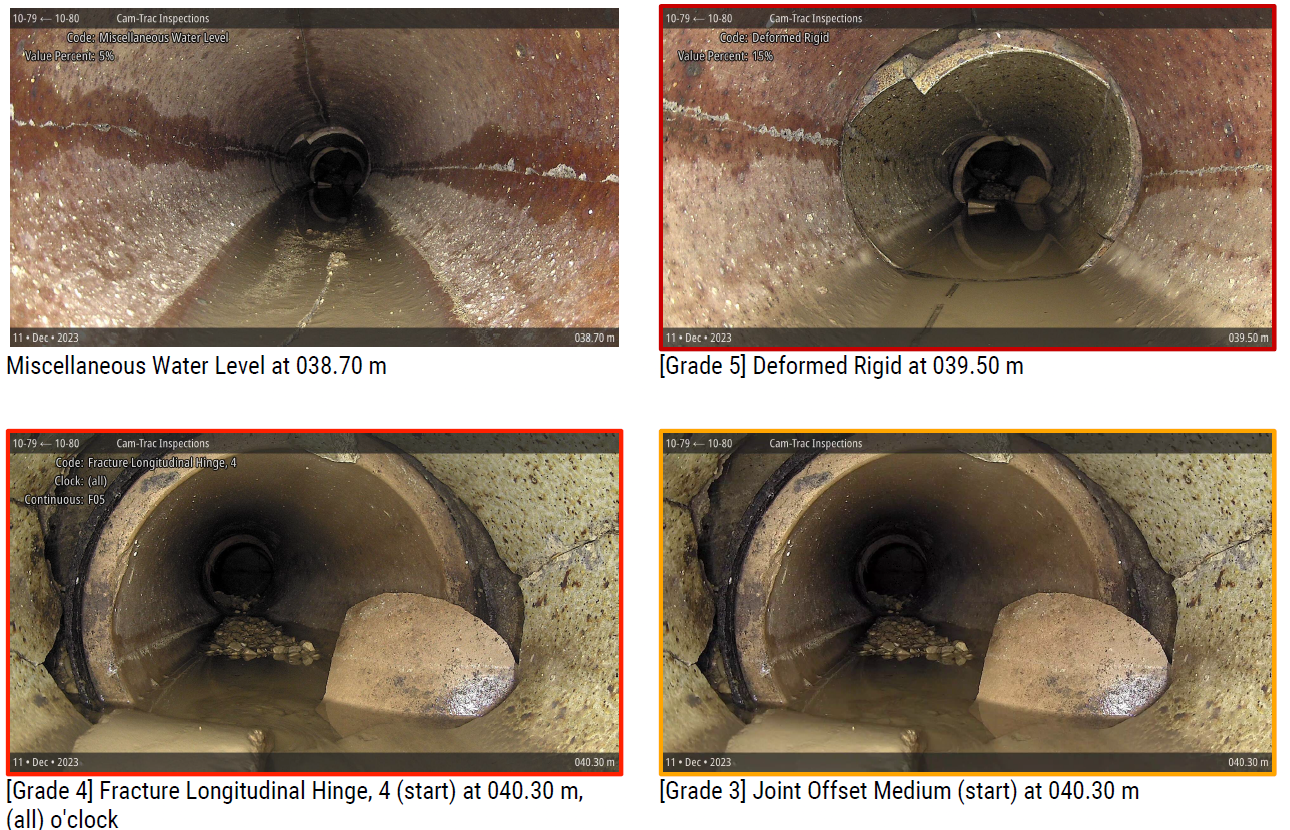
Town of Stony Plain Sanitary Sewer Condition Assessment Program
Risk-based condition assessment of four sanitary sewer segments using NASSCO PACP inspections and Avodahtec’s PCOF and SSR scoring framework.
View Project
A pilot condition assessment of eleven sanitary sewer segments from the Town of Morinville's 2024 and 2025 CCTV inspection programs, applying Avodahtec's in-house Risk and Condition-Based Assessment Framework to turn existing inspection data into clear maintenance priorities.
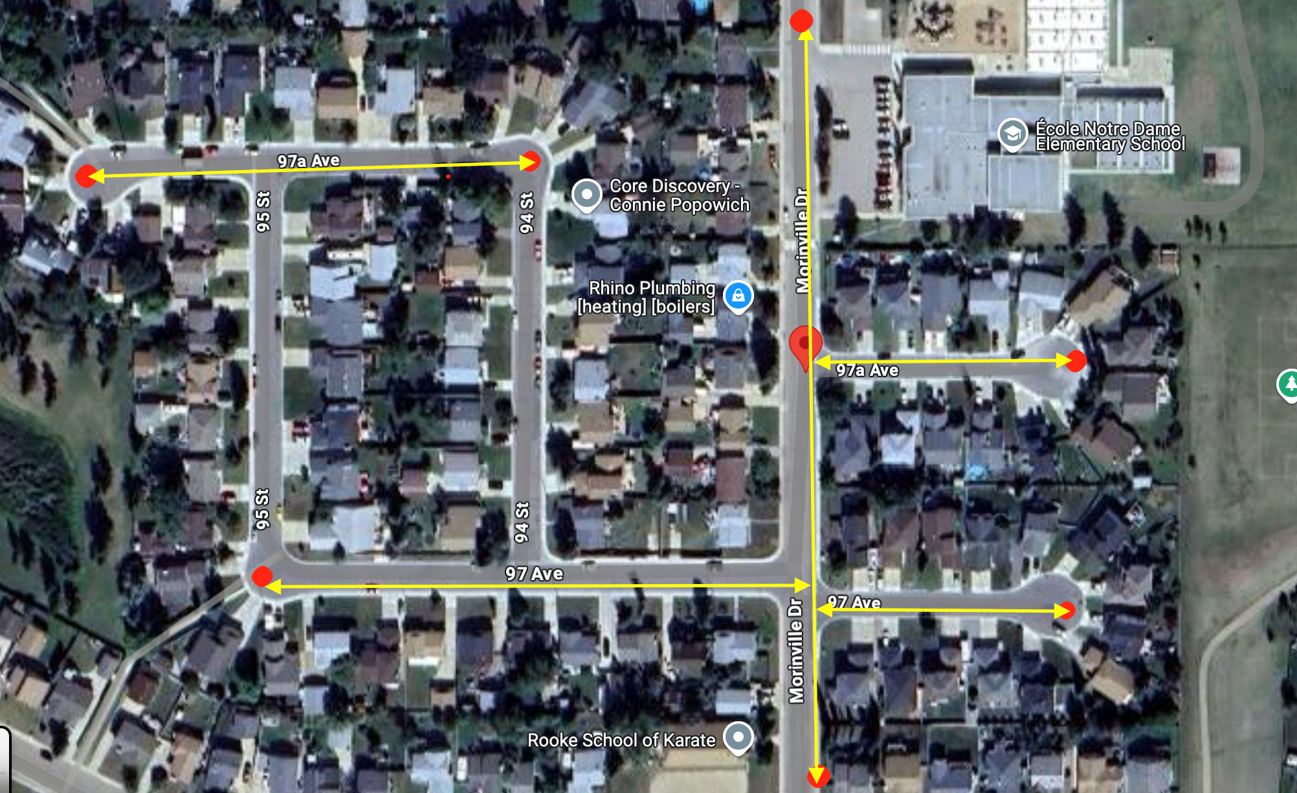
The Town of Morinville holds a growing library of CCTV inspection data for its storm and sanitary sewers, coded to the NASSCO Pipeline Assessment Certification Program (PACP) standard. To demonstrate the value of its Risk and Condition-Based Assessment Framework for Sewers, Avodahtec invited the Town to share a sample of this data for a pilot assessment. The Town provided inspection records for seven segments from 2024 and four segments from 2025. The assessed sewers are 250-mm and 300-mm vitrified-clay mains. They were found to be in good to fair condition with no immediate structural concerns, but attached deposits consistent with fats, oils, and grease (FOG) emerged as the dominant operational issue.
11 Sewer Segments
Eleven 250 mm and 300 mm VCP segments, with about 570 m of inspected pipe
2024–2025 CCTV Data
2024 and 2025 CCTV footage and PACP inspection reports
NASSCO PACP
NASSCO PACP condition grading and Quick Ratings
PCOF & SSR Scoring
Avodahtec's Probable Contributor of Failure (PCOF) and Structural Severity Rating (SSR) scoring
Standard PACP outputs record every observation, so low-severity defects can mask what actually matters. The inspection records also had gaps, including undocumented segment lengths, unrecorded depths of cover, and segments that were only partly surveyed, which limited what could be concluded from the data alone. Like many smaller municipalities, the Town had invested in CCTV inspection but needed a practical way to convert that data into decisions, separating structural risk from maintenance issues so that limited budgets go to the right intervention.
Standard PACP outputs record every observation, so low-severity defects can mask what actually matters. The inspection records also had gaps, including undocumented segment lengths, unrecorded depths of cover, and segments that were only partly surveyed, which limited what could be concluded from the data alone.
Like many smaller municipalities, the Town had invested in CCTV inspection but needed a practical way to convert that data into decisions, separating structural risk from maintenance issues so that limited budgets go to the right intervention.
We compiled the 2024 and 2025 PACP reports and CCTV footage, documenting segment attributes and flagging data gaps for the Town to address in future inspection programs.
We quantified structural, operational, and maintenance (O&M) defects by type, grade, and frequency for each segment.
We calculated structural and O&M pipe ratings, rating indices, and Quick Ratings for every segment to benchmark condition consistently.
We applied our modified PCOF and SSR scoring to filter out low-severity noise (Grades 1 to 3) and isolate the defects that drive real risk.
We confirmed no immediate structural integrity concerns and identified the specific segments needing O&M attention, where all Grade 4 and higher defects related to attached deposits.
We presented a practical FOG strategy covering public education, commercial grease interceptor enforcement, scheduled cleaning, and a municipal FOG policy, and recommended a full risk-based assessment as the program expands.
The pilot extracted clear, decision-ready insight from inspection data the Town already owned, with no new field work required.
PCOF and SSR scoring separated the defects that matter from routine low-grade observations, sharpening priorities.
Identifying FOG deposits, rather than structural failure, as the main issue pointed the Town toward targeted maintenance instead of premature rehabilitation.
Flagging gaps in length, depth, and coverage records helps the Town strengthen the quality and value of future CCTV programs.
The pilot demonstrated a repeatable approach that can grow into a full risk-based prioritization of the Town's sewer network.
Explore more of our work
Risk-based condition assessment of four sanitary sewer segments using NASSCO PACP inspections and Avodahtec’s PCOF and SSR scoring framework.
View Project
An ergonomics assessment of the existing Little Potato Company wash line in Nisku to inform safer, more efficient design of the second processing line.
View Project
Engineer of Record services for ROV-based submerged inspections of six railway culverts across three Ontario rail subdivisions, translating video and sonar findings into risk-based engineering recommendations.
View Project